
Being busy can feel productive, especially when the day is filled with completed tasks, answered messages, and back-to-back meetings. Yet activity alone does not guarantee that meaningful priorities are moving forward.
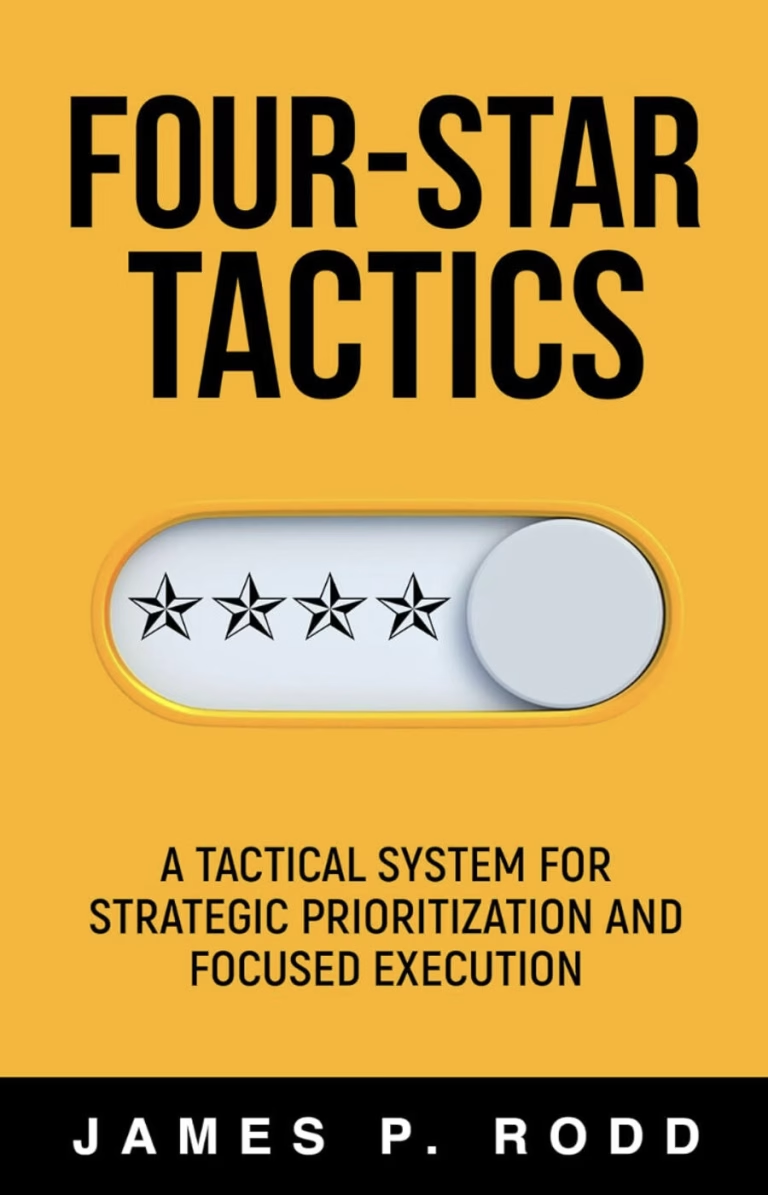
In Four-Star Tactics: A Tactical System for Strategic Prioritization and Focused Execution, James P. Rodd introduces a practical method for professionals who want to direct their time toward work that creates lasting value.
The Hidden Cost of Misplaced Attention

Modern workplaces reward responsiveness. Emails invite immediate replies, meetings occupy the most useful hours of the day, and small requests regularly appear with urgent language. Professionals may respond to every demand and still feel dissatisfied with what they have accomplished.
This frustration often becomes personal. People may assume that they need more willpower, stricter habits, or a better morning routine. James focuses on the structure guiding their decisions. When a working system provides little distinction between strategic goals and incoming requests, attention naturally becomes scattered.
Four-Star Tactics was created to help readers make that distinction. It offers a clear way to recognize work that deserves priority and establish focused periods for completing it. The approach is particularly relevant for professionals who manage complicated responsibilities and experience regular changes in their schedules.
The system draws from the Eisenhower Matrix and the Pomodoro Technique. The Eisenhower Matrix supports decisions based on urgency and importance. The Pomodoro Technique encourages focused effort through defined working intervals. James combines their strengths to address two connected questions: Which task deserves attention, and how can a person protect enough concentration to make progress?
Turning Priorities Into Daily Action
One of the book’s central tools is the Four-Star Rating System. It gives readers a practical method for evaluating tasks according to their value. This makes high-impact work easier to identify before routine demands consume the day.
The rating system can also provide stability when circumstances become difficult. A professional may begin Tuesday with a thoughtful plan and encounter an urgent meeting, a technical issue, or an unexpected client request before lunch. Once the disruption has passed, the Four-Star structure helps that person identify where attention should return.
James also examines the role of a backlog. Many task lists grow continuously and offer limited help with deciding what to do next. A well-organized backlog can store future responsibilities while keeping immediate priorities visible and manageable. This creates a stronger connection between long-range objectives and daily effort.
Planning within the system takes approximately ten minutes each day. That short process allows readers to assess current responsibilities, select valuable tasks, and reserve periods of focused execution. The method is designed for realistic schedules filled with obligations, interruptions, and changing demands.
Meetings and workplace fire drills are treated as expected parts of professional life. Readers learn how to respond to genuine needs, preserve awareness of strategic goals, and restart focused work after an interruption. This ability to return matters because a productive system must continue functioning after the day changes direction.
The book includes a 30-day challenge that introduces its practices gradually. Readers can build familiarity with each element and observe how the system fits their individual responsibilities. Installing one habit at a time can make the overall method easier to maintain beyond the first month.
About Author James P. Rodd
James P. Rodd is a U.S. Army Counterintelligence veteran and Principal Cloud Architect with more than twenty years of experience in military service, federal technology, cloud modernization, and enterprise program delivery.
After leaving the Army, James applied the discipline and situational clarity developed through Counterintelligence work to complex technology environments. He has led major programs across federal agencies, the Department of Defense, and regulated industries, with initiatives valued at more than one billion dollars.
James also served as the architect behind FEMA’s Cloud Brokerage Office. There, he created a cost-recovery model that recouped 30 percent of cloud spending during its second year.
Throughout his career, James observed skilled professionals working under intense pressure. He repeatedly saw valuable projects delayed because urgent demands received the strongest hours of the day. Those experiences shaped Four-Star Tactics and its emphasis on disciplined prioritization, protected concentration, and practical execution.
Where Meaningful Progress Begins
Four-Star Tactics speaks to people who carry significant responsibilities and want their effort to produce clearer results. Its methods acknowledge crowded calendars, shifting priorities, demanding workplaces, and the reality that interruptions will continue to happen.
Through its rating system, backlog structure, daily planning method, and implementation challenge, the book gives readers a repeatable path from intention to completion. Each component supports a larger goal: helping professionals decide what deserves their best attention and follow through with purpose.
For readers who finish busy weeks with important work still waiting, James provides a useful framework for changing that pattern. Four-Star Tactics encourages them to create order, focus their energy, and make steady progress on responsibilities capable of creating the greatest impact.
We had the privilege of interviewing the author. Here are excerpts from the interview:
Thank you so much for joining us today! Please tell us the strategies that helped you become successful in your journey.
The first was learning to distinguish motion from movement. It’s easy to mistake a full calendar and a busy day for progress — I call it the Busywork Mirage. The most capable people are often the most stuck, because they’re the ones everyone hands work to. Recognizing that trap was step one.
The second was building a simple way to identify the work that actually deserves my best hours. In the book I call it the Four-Star Rating System — a method for rating what’s in front of you so the highest-value work gets protected time, even on your worst days.
The third was treating execution as a closed loop: Decide, Plan, Tactic, Review, Adjust. A decision about what matters is worthless without protected time to finish it, and a plan is worthless if you never review and adjust it. That loop is built for real Tuesdays, not ideal ones.
And underneath all of it: systems beat willpower. I don’t rely on motivation — I rely on a repeatable process. That’s what two decades in high-stakes environments taught me.
Any message for our readers
You don’t need more hours in the day — you need to protect the hours you already have. The important work in your life will never demand your attention; only the urgent work does that. If you wait for the important thing to raise its hand, you’ll reach the end of every day exhausted with it still sitting there, untouched. Decide what deserves your best hours, protect that time like it’s an operation, and review honestly. Small, disciplined choices, repeated daily, are what compound into a career — and a life — you’re proud of.
Thank you so much, James P. Rodd, for giving us your precious time! We wish you all the best for your journey ahead!
Knowledge grows when shared. Please Pass it on!

Discover more from Paxjones
Subscribe to get the latest posts sent to your email.