
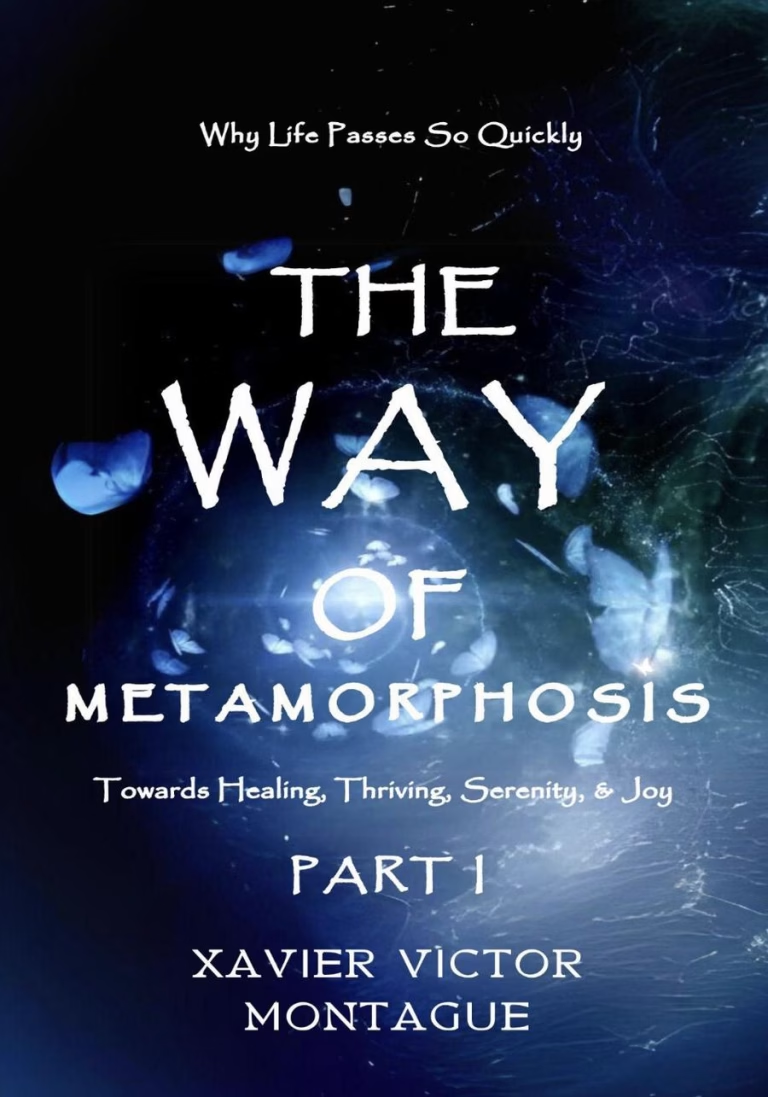
Rediscovering Time Through The Way of Metamorphosis
Every person has asked themselves why life feels so short. Days pass in a blur, years vanish before we notice, and milestones seem to arrive too quickly. Philosopher Xavier Victor Montague tackles this universal mystery in The Way of Metamorphosis, a trilogy that reflects on time, loneliness, and the meaning of transformation.
The series, written in the engaging style of Socratic dialogue, is a journey that blends wisdom from ancient traditions with questions that matter in today’s fast-paced world. Part I of the trilogy is available for free, inviting readers to explore the ideas without hesitation.
Exploring the Questions That Matter Most
Montague frames his trilogy around questions that cut to the heart of the human condition. Why do relationships so often falter, even when society advances? What connects the passage of time with feelings of stress and exhaustion? Can slowing life down create a greater sense of peace?
These questions are woven into the narrative with deliberate care. They’re not presented as abstract riddles but as openings into a dialogue about how people live, what they value, and why happiness feels elusive.
At the center of the trilogy is the practice of metamorphosis. This is described as a way of clearing away inner clutter, making space for serenity, nurturing love, and cultivating real friendships. For Montague, the secret lies in living meaningfully without being tethered to success, ambition, or past mistakes. Metamorphosis equips people with strength to endure when life feels overwhelming.
Time, Mortality, and the Spirit
One of Montague’s most memorable images is the idea that humans are given roughly 1,000 months at birth. By the time a person reaches their mid-twenties, their physical decline has already begun. Skin changes, energy shifts, and aging becomes more noticeable with each passing decade.
This may sound bleak, yet Montague insists that while the body deteriorates, the spirit does not. The human spirit holds an unlimited potential for growth. It can deepen in empathy, compassion, and wisdom, even when the body weakens. It can heal from loneliness, grief, and rejection. It can learn to love again.
In moments when despair feels heavier than hope, Montague points to courage as the essential virtue. He reminds readers of Seneca’s wisdom that sometimes survival itself is a courageous act. For those who feel lost, the trilogy offers a light, urging them to keep growing in spirit even when the world feels unbearable.
The Philosopher’s Story
Xavier Victor Montague’s life experience informs his work in rich and personal ways. He earned his doctorate in philosophy while living in India, focusing on epistemology and conflict prevention. Now living in Canada as he approaches eighty, Montague has spent a lifetime asking questions that reach beyond theory.
When he isn’t writing, he enjoys simple pleasures: walking in nature, skiing, visiting museums, and preparing meals with loved ones. His interest in opera, history, and meaningful conversation finds its way into his writing, which often blends personal insight with broader cultural concerns.
What drives him most is one persistent question: why do human relationships remain dysfunctional despite all of humanity’s progress? This question has become more urgent as loneliness has been recognized by the United Nations as a global epidemic. For Montague, the answer is not just personal but societal, and education plays a vital role in addressing it.
Rethinking Education for the Future
Montague believes that education should not be limited to knowledge and skills. It must also nurture emotional intelligence, resilience, and character development. For him, education is the foundation of a thriving democracy. Without emotionally intelligent citizens, societies fall into cycles of neglect, insecurity, and disconnection.
He reflects on thinkers like Tolstoy, who reminded parents that giving children time and attention is the greatest gift. He also recalls H.G. Wells’ stark warning that civilization’s fate depends on whether education can outpace catastrophe. Montague applies these ideas to modern challenges, suggesting that reimagining education could break cycles of loneliness and prepare young people to build healthier relationships.
Without change, people will continue to channel loneliness into aggression, addiction, or violence. But with foresight, education can become the tool that shifts society toward connection and healing.
An Invitation to Transform
The Way of Metamorphosis offers a path of reflection and transformation. It asks readers to see time differently, to value the spirit’s potential for growth, and to understand that metamorphosis is possible for everyone.
Montague calls on people to recognize that while the body has limits, the human spirit does not. In his trilogy, he reminds us that transformation is the destiny of every person willing to embrace it.
Knowledge grows when shared. Please Pass it on!

Discover more from Paxjones
Subscribe to get the latest posts sent to your email.