

The Hour of Lost Words: Conversations Beyond Time
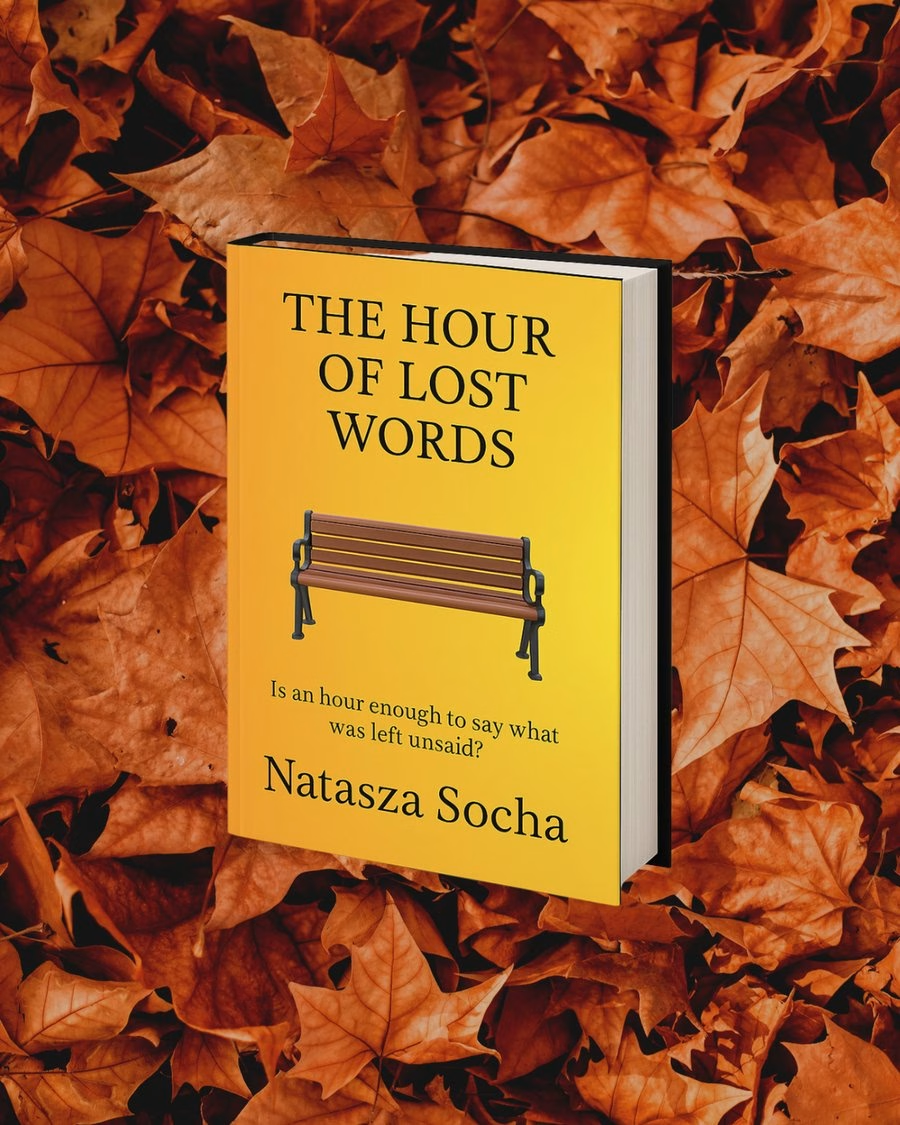
Is an hour enough to say what was left unsaid? That’s the haunting question at the heart of The Hour of Lost Words by Natasza Socha. Through warmth, humour, and raw emotion, this internationally acclaimed novel opens a door to something many have secretly wished for—one more chance to speak to those we’ve lost.
A Tender Glimpse into the Impossible
The Hour of Lost Words imagines an extraordinary possibility: an hour when the living and the departed can meet again. Within this fleeting window, characters reconnect with mothers, lovers, friends, and siblings. Every page captures the urgency of time, the fragility of emotion, and the deep ache of words left unspoken.
The story unfolds through a series of encounters, each unique yet connected by shared longing. Readers find themselves standing beside people who are ready—finally—to say what they never could. Some offer apologies. Others share truths. A few simply listen. These moments are about closure, forgiveness, and the small, meaningful exchanges that give peace.
Natasza’s writing gently weaves humour into the pain, creating a rhythm that feels honest and human. The conversations feel familiar, as if drawn from real memories. Through this delicate balance, she shows that grief and laughter often live side by side, and that even after loss, love continues to speak.
The Power of Words and the Healing of Silence
One of the most moving themes in The Hour of Lost Words is how conversation itself becomes an act of healing. Time and again, readers are reminded that the things we fail to say can weigh on us for years. A simple phrase—“I’m sorry,” “I forgive you,” “I love you”—can hold the power to transform a life.
The book asks an uncomfortable but necessary question: if given one more hour, what would you say? The answer is never simple. Some characters hesitate. Some can’t stop talking. And some realize that silence speaks deeply than words ever could.
Through this, Natasza invites readers to reflect on their own lives. She simply lays out a truth many avoid acknowledging—time runs out faster than we think. Every conversation, every shared laugh, every quiet moment with someone we love is a piece of life we can never get back once it’s gone.
Yet the tone of the novel is filled with light. It celebrates the power of connection and the courage it takes to face one’s emotions honestly. Natasza’s characters remind readers that it’s never too late to start speaking from the heart, even if the person we need to reach can no longer reply.
A Voice That Blends Depth with Warmth
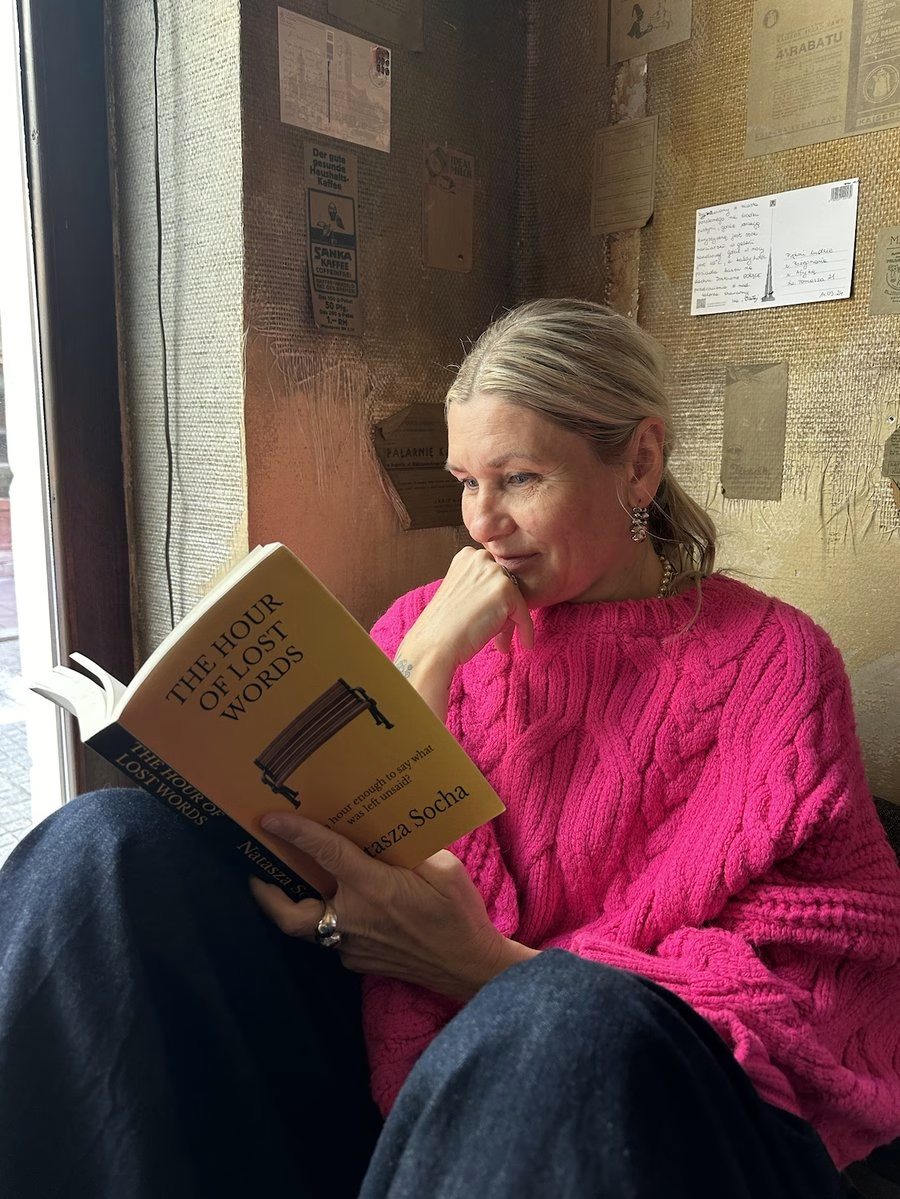
Natasza Socha is one of Poland’s most beloved contemporary writers. With over sixty books to her name, she’s mastered the art of exploring human emotion with honesty and care. A graduate of Adam Mickiewicz University with a degree in journalism and political science, she spent years as a columnist and journalist before dedicating herself fully to fiction.
Living between a quiet German village and her hometown of Poznan, Natasza writes stories that reflect life’s contradictions—strength and vulnerability, hope and loss, laughter and tears. Her fiction, often centered on women, highlights how they rise, fall, and rebuild themselves in a world that constantly tests them. Readers are drawn to her because she never sugarcoats the struggle. She captures it with empathy, wisdom, and humour that feels real.
In The Hour of Lost Words, those qualities shine through beautifully. Every chapter feels like a conversation with a friend who understands. The pacing invites reflection. The emotions hit softly at first, then stay long after the last page.
Writing from the Heart, Living the Story
For more than two decades, Natasza has written daily, transforming her thoughts into novels that resonate across languages and borders. The Hour of Lost Words, now available in English and German, marks an exciting milestone in her career. It introduces international readers to a storyteller whose voice is both deeply personal and universally relatable.
In her own words, she writes about women “fighting for themselves every day,” capturing their spirit through dark humour and psychological insight. That same emotional honesty defines this novel. It’s a reminder that even in the smallest gestures—an apology, a laugh, a whispered goodbye—there lies the essence of being human.
Ultimately, The Hour of Lost Words is about life, and the grace found in speaking the words that matter most while there’s still time. Through her compassionate storytelling, Natasza Socha reminds readers that the heart never forgets and that love, once spoken, can echo forever.
We had the privilege of interviewing Natasza Socha. Here are excerpts from the interview.
Hi Natasza, it’s great to have you with us today! Please share about yourself with our readers.
Hi, I’ve been a Polish writer for over 20 years, currently living in Germany. I have published nearly 70 books — mostly contemporary fiction, but also crime novels and children’s books. I love writing, and I do it every single day. I also love meeting people and listening to their stories, because each of us carries a story worth telling. Sometimes I listen to conversations on the subway or on a tram, and I can even miss my stop just to hear someone’s story to the end. In my mind, it already begins to take the shape of a tale that may one day become a book.
Please tell us about your journey.
I studied political science and journalism in Poznań. For many years, I worked as a journalist, writing for various magazines and newspapers. That was a time when smartphones didn’t exist yet, and people mostly communicated by email. My friends used to say that when they read my emails, they felt as if they were reading short stories. And I think that’s what pushed me to write my first book. And then it all just flowed. It turned out that this is exactly what I want to do in life – listen to people’s stories and write them down. To arrange narratives in my mind, invent characters, give them life and take it away. To throw them into incredible adventures, dramas, and surprises from fate. I also studied psychology for two years, which is probably why I use it so often in my books. I love when stories have psychological grounding — when nothing happens without a reason, but everything grows out of something. I now live in a small village in Germany, with a view of the forest and fields, with two dogs, two children, and my partner. And I write, write and write…
What are the strategies that helped you become successful in your journey?
I think consistency is the most important thing. A writer shouldn’t wait for inspiration, because it might never come. Every day I sit down at my computer and write. Sometimes it’s a few pages, sometimes just a few sentences. And sometimes I have to throw away what I wrote the day before because it’s simply no good. I rarely have a full concept of a book — everything happens in the moment, spontaneously. When I sit down to write, I don’t know what I’ll write about that day. It just happens automatically, as if some doors or windows in my mind suddenly opened and showed me which way to go. And that’s what I love most about writing: its unpredictability.
Any message for our readers?
If you feel that you, too, could write a book – that you have something to tell — you’re right. Each of us carries stories inside that are worth writing down. And if you sense that this is your path, you should try to put your thoughts on paper, let them out of your head, allow them to turn into a book, into a story that other people will want to hear.
Thank you so much, Natasza, for giving us your precious time! We wish you all the best for your journey ahead!
Knowledge grows when shared. Please Pass it on!

Discover more from Paxjones
Subscribe to get the latest posts sent to your email.