

Exploring The Budo of Judo by James Goddard
Judo is often introduced as a sport of throws and grapples, yet its history and depth reach much further. In The Budo of Judo: Unlock the Secrets of Different Martial Arts (Goddard Method), James Goddard presents a guide that blends technical knowledge with a practical teaching style. His book gives readers a way to understand judo while also exploring its connections to other martial arts traditions. It’s written with clarity, but also with the aim of helping learners gain lasting skills they can build on for years. Subscribers to Kindle Unlimited can obtain this book free of charge.
A Journey Through Judo’s Roots and Techniques
The book reminds readers that judo was born from ju jitsu. Over time, its practice absorbed and shared methods recognizable in Brazilian jiu jitsu, karate, and aikido. This connection across martial arts forms the backbone of Goddard’s approach. He doesn’t frame judo as a closed system. Instead, he explains how the techniques reflect universal principles of movement, timing, and control.
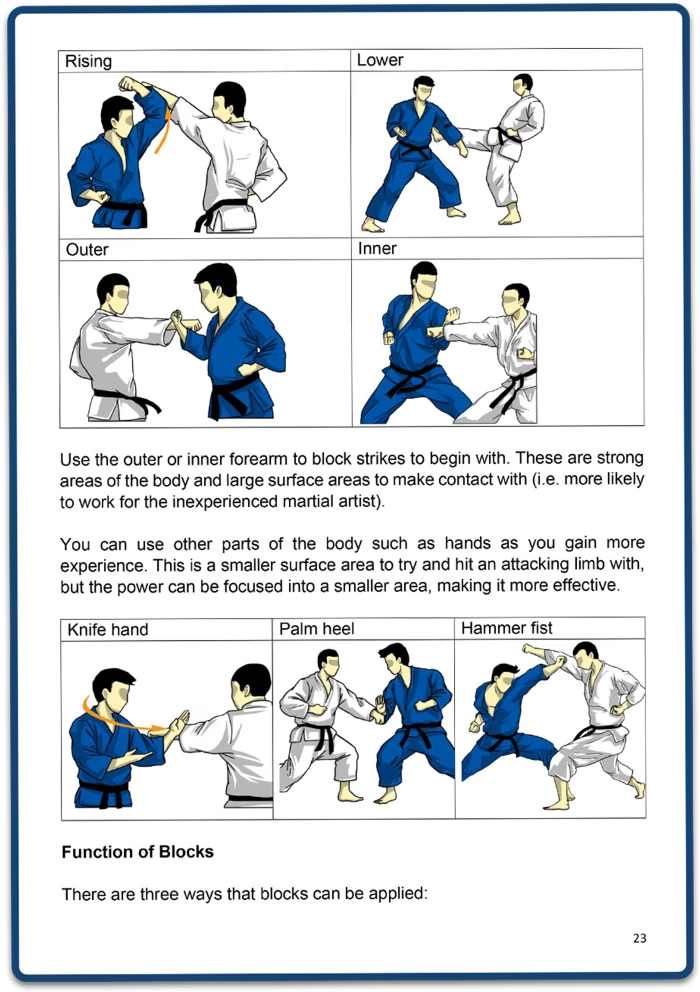
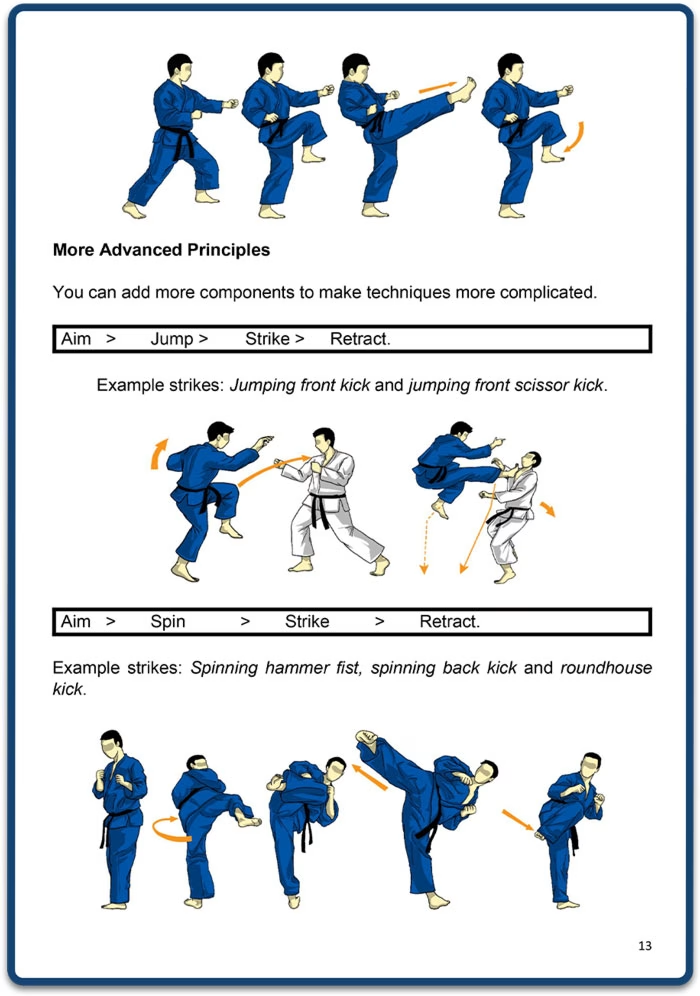
Inside the book, readers are guided through the essential pillars of the art. There are clear explanations for strikes and blocks, throwing methods, kata, holds, limb locks, and choking techniques. Rather than stopping at description, the book gives diagrams and step-by-step directions that let students refine positions and check their progress. Goddard’s decision to include ready reckoners—simple cues that help confirm correct posture or alignment—sets the work apart from many martial arts manuals.
The techniques are grouped into core movements with variations, which helps learners understand how different pieces fit together. A single block or throw isn’t an isolated skill. It’s part of a modular system that can be recombined in countless ways, creating adaptability in practice.
 Learning with the Goddard Method

Goddard emphasizes that understanding comes from asking three questions: what, how, and when. Most resources stop after showing what to do. This book goes further by teaching readers how to perform techniques efficiently and when to apply them. The result is a style of instruction that feels practical rather than abstract.
The book also teaches through comparison. Learners are encouraged to relate unfamiliar skills to movements they already know. This speeds up progress because the body builds on established habits. A throw may resemble a motion from a ball game, or a step in kata may echo rhythm from a dance. By drawing these parallels, Goddard makes martial arts less intimidating and more accessible.
Children and adults can benefit from the guidance. The text is careful to note which sections involve techniques unsuitable for younger students, such as locks and strangles. Families can learn together, and adults can push further into advanced material as they grow. The mix of approachable content and technical depth ensures that readers at any stage can find value in the book.
Beyond the Dojo
One of the strongest themes in The Budo of Judo is that martial arts don’t exist in isolation. Goddard points out that judo builds confidence, discipline, and transferable skills. These abilities extend into everyday life, whether on the sports field, at work, or even on a dance floor. Movement principles repeat across activities. Balance, coordination, and timing all enhance well-being while supporting success in other areas.
The physical benefits are clear. Judo training strengthens the body and develops flexibility. Yet the mental side is equally important. Students learn patience, resilience, and focus. In uncertain situations, judo also offers a practical framework for self-defense. Goddard wants readers to see judo as both a martial art and a pathway to a healthier, more confident life.
His book avoids overwhelming readers with jargon. Instead, he highlights the spirit behind judo: awareness, adaptability, and respect. By framing techniques as part of a larger philosophy, the material feels meaningful beyond the mechanics of fighting.
The Author’s Unique Perspective
James Goddard doesn’t come to martial arts with a single background. Alongside his experience in judo, he has danced for many years in Ballroom and Latin styles, with additional practice in Salsa, Argentine Tango, and Ceroc. This unusual mix of dance and martial arts gave him insights into how movement principles overlap.
He often jokes about using more judo on the dance floor than on the mat, but there’s truth in that statement. Dance and martial arts both rely on rhythm, posture, and control of space. By bringing these insights together, Goddard created a teaching style that is practical and memorable. He wrote The Budo of Judo to help learners connect dots, see patterns, and develop skills that carry over into many areas of life.
Why This Book Matters
The Budo of Judo serves as both a reference and a guide for growth. The illustrations, modular breakdowns, and emphasis on the questions of what, how, and when make it a valuable tool for anyone exploring judo. Beginners will find clarity, while advanced practitioners will discover details that refine their practice.
The book also speaks to a wider audience. Parents can use it to introduce children to martial arts, coaches can use it as a teaching aid, and adult learners can rely on it as a long-term reference. By blending technical instruction with philosophy and real-world connections, Goddard delivers a work that supports learning and personal development at the same time.
The Budo of Judo: Unlock the Secrets of Different Martial Arts (Goddard Method) isn’t just about technique. It’s about unlocking potential, making sense of patterns in movement, and using martial arts as a foundation for confidence and growth. Goddard’s perspective, drawn from both martial arts and dance, makes this book a distinctive and engaging addition to any martial artist’s library.
Knowledge grows when shared. Please Pass it on!

Discover more from Paxjones
Subscribe to get the latest posts sent to your email.