

Celestial Apology: Rethinking the Boundaries of History and Destiny
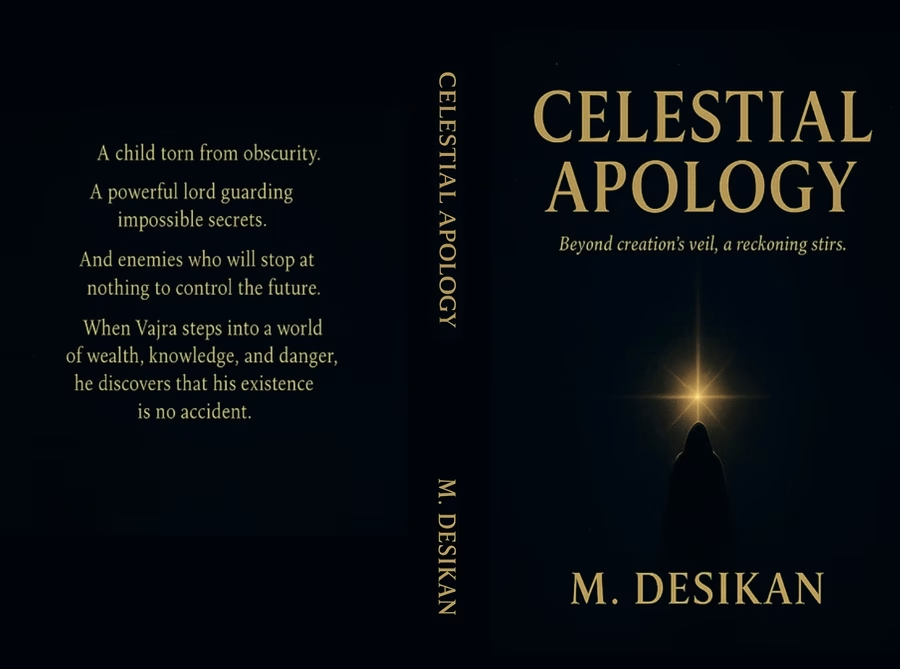
Every once in a while, a novel comes along that refuses to sit neatly in a single category. M. Desikan’s Celestial Apology is one of those books. It straddles history, fantasy, and thriller with ease, weaving them into a story that’s as much about human ambition as it is about the mysteries of the past. At its core lies a simple but unsettling question: what if our understanding of reality—both past and present—is far less complete than we assume?
A Premise That Redefines Possibility
The starting point for Celestial Apology is deceptively familiar. Readers are reminded that technology we now take for granted—AI, self-driving cars, satellites, drones—would have seemed unbelievable only a few decades ago. Push further back in time, and those same advances would’ve been dismissed as pure fantasy. Desikan flips this reasoning on its head. If the unimaginable has become possible in our age, could ancient civilizations have achieved things just as extraordinary?
Readers are encouraged to rethink history, not as a steady climb toward progress, but as a shifting series of peaks and valleys, with knowledge gained, lost, and possibly reborn in new forms.
Vajra’s Journey into Power and Peril
The narrative grounds these big questions in the life of a boy who begins as nobody. Known only as “The Kid,” he survives on the margins, living among outcasts in the forgotten corners of the city. With the gift of a new name—Vajra—his life shifts from survival to significance.
This transformation sets the stage for the book’s central conflicts. Vajra is thrust into a world of secrets, wealth, and influence. On the surface, he’s being elevated, given access to power and knowledge. Yet Desikan doesn’t let readers settle into that comfort. Every alliance that seems generous hides ambition. Every act of trust comes shadowed by suspicion. Vajra must learn that destiny is as much a burden as it is a gift, and that his path forward is tied to ancient truths long buried beneath the surface of history.
The thriller elements shine here. Enemies gather with ruthless determination, while powerful lords guard secrets that could alter humanity’s future. The balance between mystical speculation and political intrigue keeps the story moving quickly. The tension doesn’t come only from external threats. Much of the drama emerges from Vajra’s inner conflict—how he defines himself, and how much of his fate he’s willing to accept.
Desikan’s Layered Storytelling
What makes Celestial Apology stand out is its willingness to blur genres. The book combines elements of fantasy, action, and philosophy without letting one dominate. This fusion makes the narrative feel larger than the sum of its parts. A battle may serve as spectacle, but it also underscores the theme of creation clashing with destruction. A conversation between allies may advance the plot, but it also asks the reader to think about the hidden motives that shape human relationships.
The pacing reflects this layered approach. High-stakes scenes arrive with urgency, yet the story also allows for reflection. Readers are given time to pause, consider the implications of what just happened, and prepare for what’s to come. This rhythm makes the book more than a simple thriller. It’s an invitation to think deeply about the structures of power, the fragility of trust, and the ways history echoes through the present.
The Perspective of the Author
M. Desikan brings decades of professional experience into his storytelling. With over 35 years as a trainer, coach, and management professional, he has guided countless individuals through transformation. That background shapes his fiction in subtle but powerful ways. Celestial Apology isn’t just about dramatic battles or mystical revelations. It’s about growth, ambition, and the choices that define character.
His passion for fantasy and action gives the story its sense of scope and wonder. His experience in coaching and mentoring ensures that the narrative never strays too far from the personal and human. The result is a balance: spectacle and imagination paired with grounded reflection on what it means to lead, to trust, and to shape destiny.
A Novel That Lingers
The strength of Celestial Apology lies in its ambition. Readers are asked to question their assumptions about the past, to consider how ambition drives both creation and destruction, and to wonder what hidden truths might lie beneath the history we think we know.
For those who enjoy novels that combine imagination with depth, Celestial Apology offers plenty to appreciate. Vajra’s journey is gripping, the conflicts are tense, and the themes stay with you long after the book is finished. It’s a story that entertains while also provoking thought, a blend that ensures it stands apart in today’s crowded literary landscape.
Knowledge grows when shared. Please Pass it on!

Discover more from Paxjones
Subscribe to get the latest posts sent to your email.