
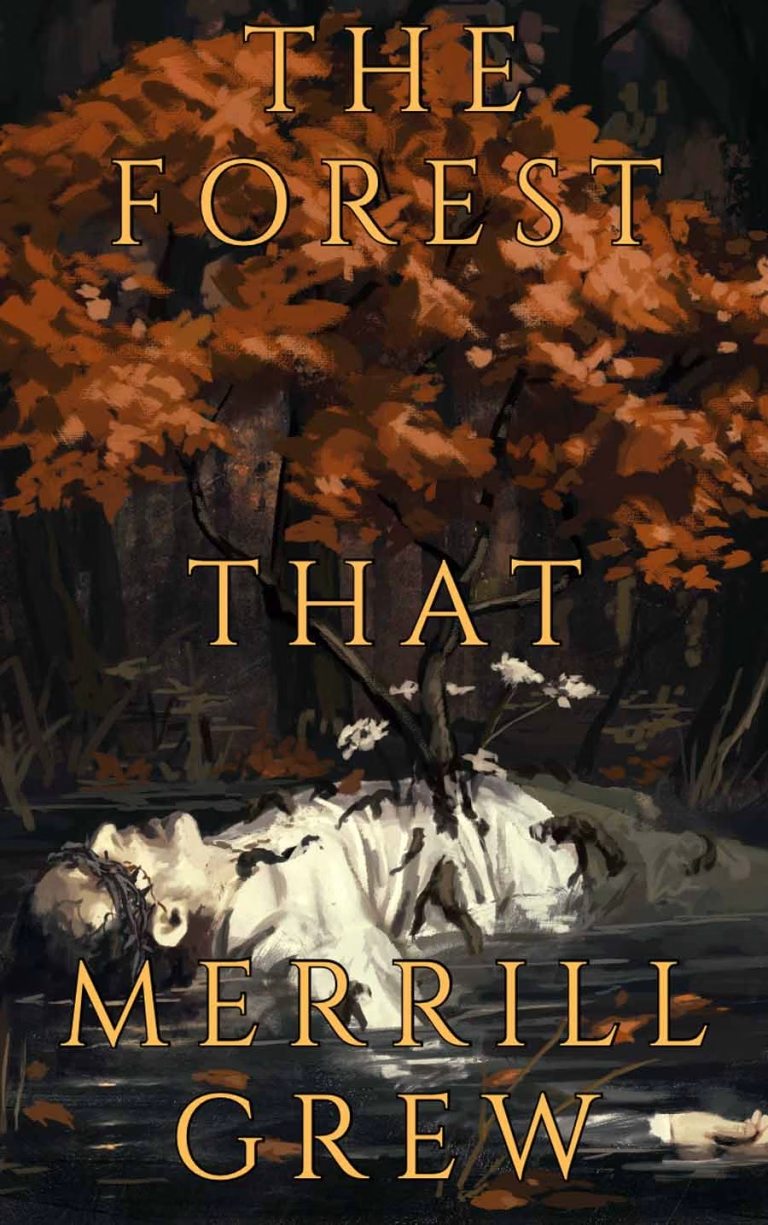
The Man Who Listened to the Dead
There’s something quietly terrifying about a person who spends their days surrounded by silence—the kind of silence that lingers in rooms where breath no longer exists. Merrill Crowley lives in that stillness. At twenty-seven, he’s a mortician who knows more about death than anyone ever should. But in The Forest That Merrill Grew, D.P. Scuderi reveals that Merrill’s real struggle isn’t with the bodies he embalms—it’s with his own unraveling mind.
The story begins with tragedy and spirals into obsession. Merrill’s grief builds a forest in his mind—a dark, endless place where memories twist into hallucinations and his shadow starts talking back. That shadow, Ritz, becomes his confidant and tormentor. Together, they navigate a landscape shaped by guilt, delusion, and something far more sinister than death itself.
Scuderi doesn’t hold your hand through this descent. He lets you fall with Merrill. The writing pulses with emotion—raw, rhythmic, almost musical in its madness. Each page feels like a whispered confession from a man on the edge, where reality flickers and fantasy takes control. What unfolds isn’t just horror. It’s the anatomy of grief dissected under a flickering light bulb.
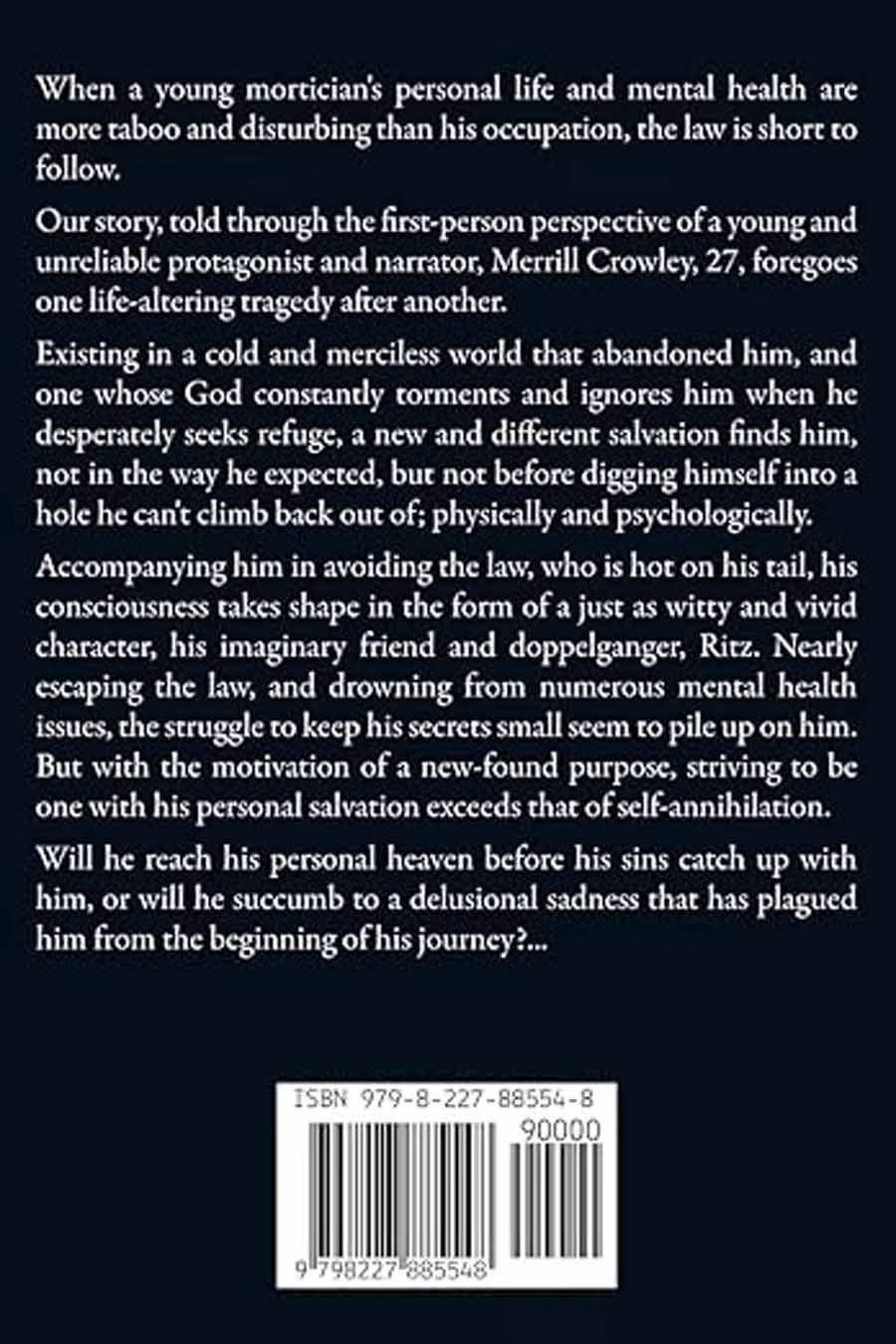
The Book That Almost Never Existed
D.P. Scuderi never planned for The Forest That Merrill Grew to be read by anyone. “What started as my suicide note eventually developed into what I would consider my magnum opus,” he admits. That single statement sets the tone for everything this novel represents—a transformation of pain into purpose.
For Scuderi, writing wasn’t a creative escape. It was survival. Every sentence he wrote pulled him a little further from the edge. The process, however, was excruciating. He describes revisiting certain chapters as “emotionally draining,” because they came straight from a place he once tried to bury. The story isn’t a product of imagination alone—it’s carved from experience, from sleepless nights and the quiet ache of self-reflection.
And yet, through that vulnerability, something beautiful happened. Scuderi found his voice. He found honesty. He found the courage to tell a story that doesn’t shy away from the ugliness of mental illness. His writing isn’t polished to hide the pain—it’s shaped to reveal it. Each line breathes truth, exposing the fragile humanity behind the mask we all wear.
When Fiction Feels Like a Mirror
At its core, The Forest That Merrill Grew isn’t just a psychological horror story—it’s a mirror for those who’ve ever battled the thoughts they couldn’t say out loud. Merrill’s unraveling becomes a symbol for the quiet collapse so many endure in silence.
Scuderi wrote this book for the ones still fighting their way through the fog. “Never give up on hope,” he pleads. “Salvation may be just around the corner.” It’s a message aimed especially at men who’ve been taught to hide their pain. In a world where vulnerability is often mistaken for weakness, Scuderi reminds them that strength sometimes looks like surviving the day.
Merrill’s descent may be dark, but underneath it all, there’s light—a stubborn flicker of hope that refuses to die. The novel asks difficult questions: What happens when grief becomes your identity? How do you forgive yourself when your mind won’t let you forget? Through Merrill’s madness, Scuderi offers quiet answers: You keep going. You reach for light, even when you can’t see it.
There’s a strange comfort in the chaos of Merrill’s world. It tells readers that pain doesn’t have to define them—that even the most haunted parts of a person can grow something new. As Scuderi writes, “Pain is temporary, and only lasts as long as you let it.”
A Voice That Refuses to Fade
D.P. Scuderi’s journey is as haunting as his fiction. Born and raised in Long Island, New York, he spent over four years working in the mortuary field—an experience that shaped both his understanding of death and his empathy for life. Now living in Wake Forest, North Carolina, the twenty-nine-year-old author has found a way to turn the silence of the embalming room into words that pulse with life.
The Forest That Merrill Grew is his fourth book, and perhaps his most personal. It reads like a confession, a letter to those still struggling to hold on. Through it all, Scuderi’s sincerity never wavers. He speaks directly to his readers with a mix of warmth and urgency, urging them to fight for their own survival. “Paradise is worth fighting for,” he writes. “And I am living proof of that.”
His message lingers long after the last page. It’s gentle and defiant all at once—a reminder that darkness doesn’t last forever. “We are all stars in the night sky,” he says. “The one you look up to is looking down at you through the same lens. You crossing paths is not a matter of if—it’s when.”
Those words carry the weight of someone who’s seen both the edge and the way back.
The Forest That Merrill Grew isn’t just a book. It’s an echo—a heartbeat that refuses to quiet down. Available now on Amazon, Goodreads, Apple Books, and Barnes & Noble.
We had the privilege of interviewing D.P. Scuderi. Here are excerpts from the interview:
Hi, thank you so much for joining us today! Please tell us about yourself.
Greetings, I’m the author of The Forest That Merrill Grew. I was born and raised in Long Island, NY, for 26 years, and I now reside in Wake Forest, NC. I’m 29 years old, and for the past four and a half years, have been heavily involved in the Mortuary field for the sole purpose of writing this fictional novel, my 4th book.
Please tell us about your journey.
In desiring to obtain deeper knowledge in the mortuary field, gaining a more intimate understanding of death, this novel was my primary goal, my ultimate passion. The accuracy of everything involving the embalming side of things, these aspects were extremely important to me. I admire the gritty truth when it comes to telling a story.
What are the strategies that helped you become successful in your journey?
Always be curious; research is key. Ask questions. Get your hands dirty and do not be afraid to push boundaries. Best piece of advise I’ve received is to treat your written work as if it were a diary entry, that no one will ever read it. Pour your heart and soul onto the page. Go against the grain, and do not be afraid to write something absolutely wild and crazy. Study movies, music, books, and artworks that truly speak to you; there is a reason they stand out to you, so utilize that. Dissect and strip it down to its finest details and try to get into the head of these artists. Don’t replicate what you find; use it to inspire you to create something completely new and something that no one has ever seen before. Scare not only your audience, but yourself.
Any message for our readers?
What started as my suicide note eventually developed into what I would consider my magnum opus. To you, I implore— never give up on hope, for salvation may be just around the corner. I was the last person who thought that would happen to, and I promise you: not that it can— it will happen to you as well. Never give up on yourself, and always strive to become the best version of yourself that only you can make exist. Never succumb to sadness, for it is only a delusion. Pain is temporary, and only lasts as long as you let it. This was a piece of work written by a person who suffered from the same ugly thoughts— so it’s possible. Just like you breaking free from underneath the invisible boundary line separating you from your personal heaven. Paradise is worth fighting for, and I am living proof of that. We are all stars in the night sky, and the one you look up to is looking down at you through the same lens. You crossing paths is not a matter of if, it’s when.
Thank you so much for giving us your precious time! We wish you all the best for your journey ahead!
Knowledge grows when shared. Please Pass it on!

Discover more from Paxjones
Subscribe to get the latest posts sent to your email.