
Opening Thoughts
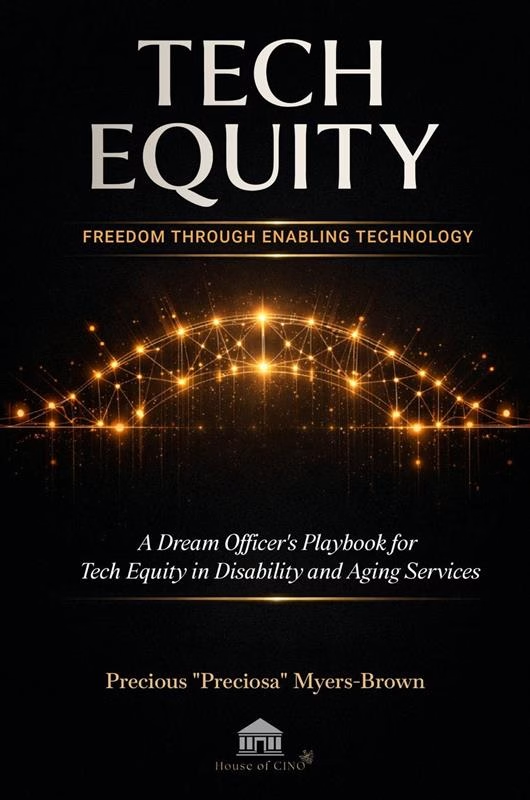
Care systems are at a turning point, and few works capture this shift as clearly as Tech Equity: Freedom Through Enabling Technology: A Dream Officer’s Playbook for Tech Equity in Disability and Aging Services. Written by Precious “Preciosa” Myers-Brown, the book offers a fresh lens on how technology can reshape lives with dignity at the center.
This release stands out as the first of its kind, presenting a comprehensive operational playbook that bridges innovation with real-world care needs. It invites readers to rethink long-held assumptions and explore what true independence can look like in today’s world.
A Groundbreaking Approach to Enabling Technology
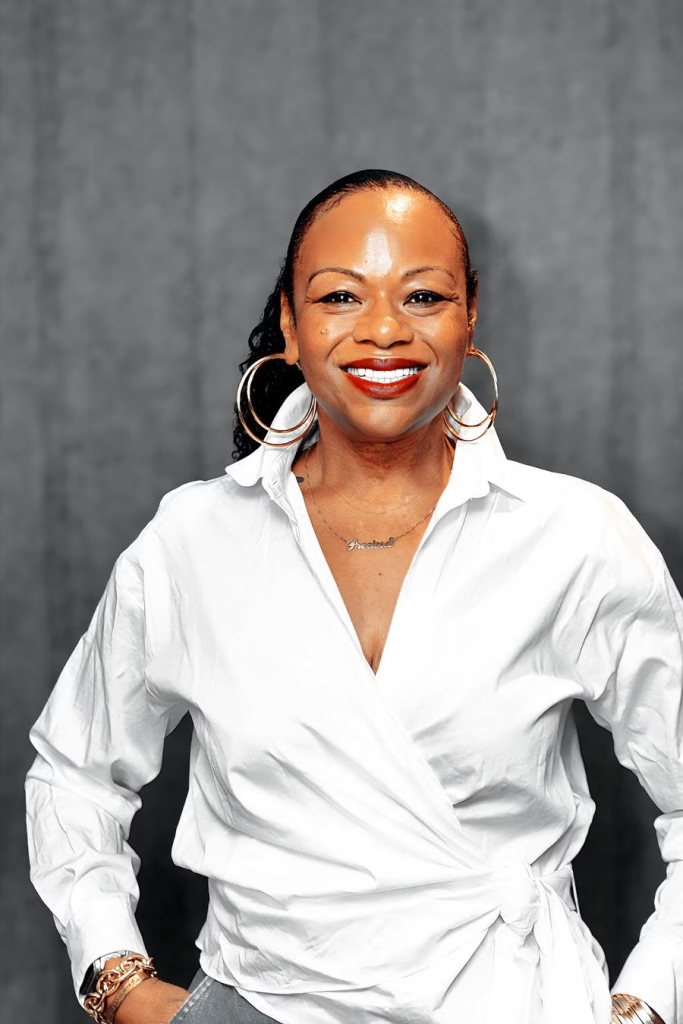
What sets this book apart is its clear departure from traditional thinking. Precious “Preciosa” Myers-Brown frames technology as a living ecosystem that supports autonomy, connection, and identity.
For decades, disability and aging services have operated under outdated frameworks shaped long before modern technology became part of daily life. These systems often measure success through compliance rather than personal freedom. “Preciosa” challenges that mindset with clarity and conviction, showing how enabling technology can shift care from restrictive practices to empowering experiences.
Her perspective reflects years of hands-on work and observation. She highlights how individuals can regain control over their routines, privacy, and cultural belonging when technology is used thoughtfully. This approach feels both practical and deeply human, making the book accessible to professionals and families alike.
Practical Frameworks That Guide Transformation
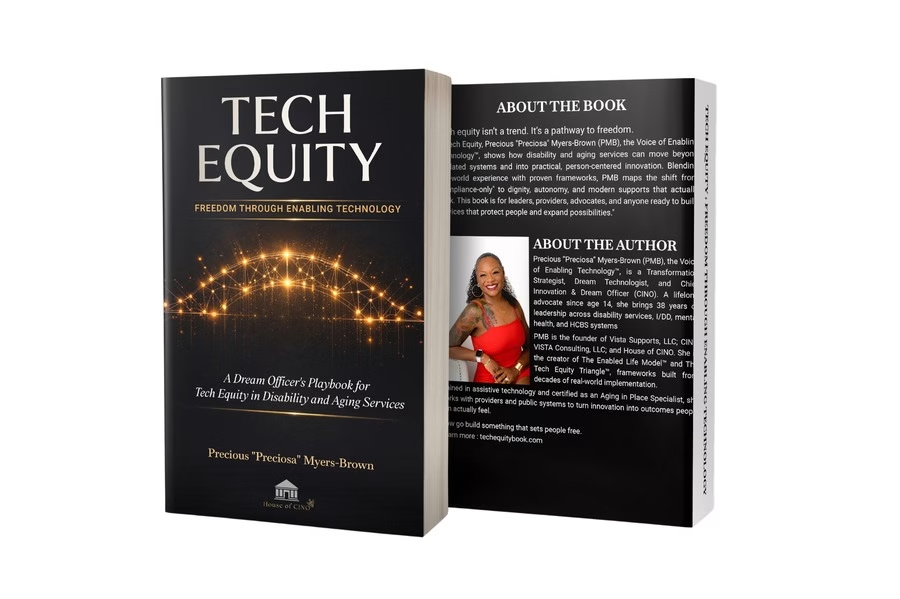
A major strength of the book lies in its structured frameworks. Drawing on decades of leadership, “Preciosa” introduces four original models that give readers clear pathways for change.
The Enabled Life Model™ emphasizes building a life rooted in safety, freedom, and connection. It encourages a broader view of care that goes beyond meeting basic needs. The Tech Equity Triangle™ provides a system-level perspective, helping states and organizations balance access, safety, and liberation in their policies.
The Seven Freedoms of ET™ adds another layer by addressing the difference between safety and control. It pushes readers to think about dignity in a more nuanced way, ensuring that individuals feel supported without feeling monitored. The Ritmo Framework™ further enriches the discussion by focusing on cultural responsiveness and the importance of human-centered design.
These frameworks are designed to be used. Service providers, administrators, policymakers, and families can apply them directly in real care settings. This practical focus makes the book like a working tool for transformation.
The Expertise Behind the Vision
The authority of the book is rooted in the remarkable journey of Precious “Preciosa” Myers-Brown. Known as The Voice of Enabling Technology™, she brings nearly four decades of experience in disability and aging services.
As Chief Innovation and Dream Officer of Vista Supports, LLC, “Preciosa” leads one of the first full-service enabling technology and remote support companies in the United States focused on these populations. Her work extends to House of CINO and the WATI Institute™, where she continues to influence workforce development and innovation.
Her career includes pioneering remote support systems in Washington, DC and contributing to the creation of the city’s first smart home for individuals with intellectual and developmental disabilities. Her use of advanced technologies, including touchless radar systems, has drawn international attention and demonstrated new possibilities for independence and safety.
Beyond her operational work, “Preciosa” plays a key role in shaping policy and research. She serves on influential boards and committees, contributing to the broader evolution of the field. This combination of practical and strategic experience gives her insights a strong foundation.
Why It Matters Now
The timing of this book feels especially significant. The care industry is facing growing pressure due to workforce shortages and increasing demand for personalized support. Traditional models are struggling to keep pace, leaving organizations searching for sustainable solutions.
“Preciosa” addresses this challenge by presenting hybrid workforce models that combine human care with enabling technology. These models support Direct Support Professionals while expanding the reach and effectiveness of services. They offer a way forward that respects both the workforce and the individuals receiving care.
The book also highlights the importance of inclusivity. It speaks to diverse communities, including Deaf individuals and aging populations with unique needs. By addressing cultural and systemic barriers, it ensures that solutions are adaptable and equitable.
At its core, Tech Equity presents technology as a partner in care. It shows how thoughtful integration can create systems that prioritize freedom, dignity, and meaningful living.
Final Thoughts
Tech Equity: Freedom Through Enabling Technology delivers a powerful message about what care can become when innovation meets intention.
Through her work, “Preciosa” offers readers a clear path toward building systems that honor independence and human connection, making this book an essential resource for anyone invested in the future of care.
Beyond the Device: A Conversation with Precious “Preciosa” Myers-Brown, The Voice of Enabling Technology™
We had the privilege of interviewing the author. Here are excerpts from the interview:
Hi, thank you so much for joining us today! Please introduce yourself and tell us what you do.
I am Precious “Preciosa” Myers-Brown, known professionally as The Voice of Enabling Technology™ and the Chief Innovation and Dream Officer of Vista Supports, LLC, House of CINO, and WATI Institute™. I am an author, keynote speaker, Transformation Strategist, and Dream Technologist, and the first woman of color to found a full-service enabling technology and remote support company in the United States dedicated to IDD and aging services. Vista Supports operates as a provider of providers, building provider capacity, addressing caregiver needs, and supporting governments in modernizing care responsibly. I am also the author of Tech Equity: Freedom Through Enabling Technology, the first comprehensive operational playbook of its kind in this space.
Please tell us about your journey.
My journey started at the YMCA, helping people with disabilities learn to get into a pool. For many of them, it was the first time they had experienced that kind of freedom from their wheelchairs. That stayed with me. I later became a Direct Support Professional while I was in college, and that is where I came to understand just how much a DSP is expected to know and do. Some of it is possible. Some of it is actually impossible. And some of it is subjective. When I look at DSPs today, I look at them from that place. I know what it feels like to be hyper-focused on requirements to the point where the interpersonal relationship — the part that matters most to the person being supported — starts to disappear. What I have always believed is that technology done right allows us to right-size support. A DSP should not be inserted into 100% of someone’s life, whether they are needed in that space or not. People with disabilities and seniors deserve support that fits their actual lives. That belief is what has driven everything I have built.
What inspired you to write this playbook?
My grandmother, Francena Brown Hicks, was a spitfire who left the segregated South to give me options. As she aged, she made me promise not to let the system take her freedom. I realized then that people are not afraid of aging — they are afraid of losing power, dignity, and choice. I wrote this book because we are still trying to squeeze modern expectations into care frameworks and regulations written in 1988, before the internet even existed.
You emphasize that technology should not replace human staff. How do they work together?
Technology does not replace human care — it expands it. We have a massive workforce crisis where Direct Support Professionals are exhausted, sometimes working 48-hour shifts. Smart supports like touchless radar monitoring and remote alerts handle continuous monitoring so staff can handle the human connection. It moves us from constant, intrusive supervision to connected independence, which actually protects our workforce from impossible expectations and burnout.
What is the Dean Martin Principle you describe in the book?
It highlights why generic technology fails in human care. I once supported a woman whose trigger word for needing comfort was Dean Martin, because her grandmother used to play his records to calm her down. A generic AI would hear that and pull up his Wikipedia page, missing her meaning entirely. Technology must be programmed to honor personal meaning, cultural identity, and context. That is what true tech equity requires.
What are the strategies that helped you become successful in your journey?
I never lost sight of the dream. That word is intentional — there is a whole story behind why Dream Officer is in my title. I work hard so that when someone finally wakes up, that dream is their reality. That has been my north star through everything.
In practice, that means I never stopped listening. Listening to what the person actually wants, not what the system decided they need. Always looking for ways to remove hand-over-hand support, to give people ways to communicate their needs even when they cannot articulate them, to make sure the solution we build today evolves as they evolve. We were never meant to have a one-and-done approach to supporting someone. The whole premise of home and community-based services is that people can grow, learn new skills, and maintain what they have. Technology is how we honor that premise instead of abandoning it.
I also built this to invest in the future of care — one that we will all benefit from. And I want young people to know that this field needs them. Human services, IDD, aging — this is not an outdated system that does not align with your reality. We say think innovatively now because we have been working inside an outdated model. But sooner than later we will simply operate within innovation. It is not a department. It is a lifestyle.
Any message for our readers?
The care system we are working inside was built in the 80s, way before we had any of the tools available to us today. While it might be cool to find a pager from that era and hold it in your hand, you would spend years looking for the payphone you need to go along with it. We honor and celebrate what we were able to do with what we had. And now we have to push forward.
If you serve people with disabilities or older adults, you have both a responsibility and an opportunity to use enabling technology to honor human dignity the way it was always meant to be honored. And if you are a family member, a caregiver, or someone navigating this system yourself — know that freedom through technology is real, and there are people fighting to make it accessible. This book is your starting point.
Thank you so much, Precious “Preciosa” Myers-Brown, for giving us your valuable time! We wish you all the best for your journey ahead!
Knowledge grows when shared. Please Pass it on!

Discover more from Paxjones
Subscribe to get the latest posts sent to your email.