

For someone who feels curious about Christianity yet uncertain about where to begin, a month can provide an interesting starting point. Douglas Borgas takes that idea seriously in ‘Thirty Days: An Honest Experiment in Christianity,’ offering readers a guided experience centered on curiosity, participation, and personal reflection.
Starting Without Having All the Answers
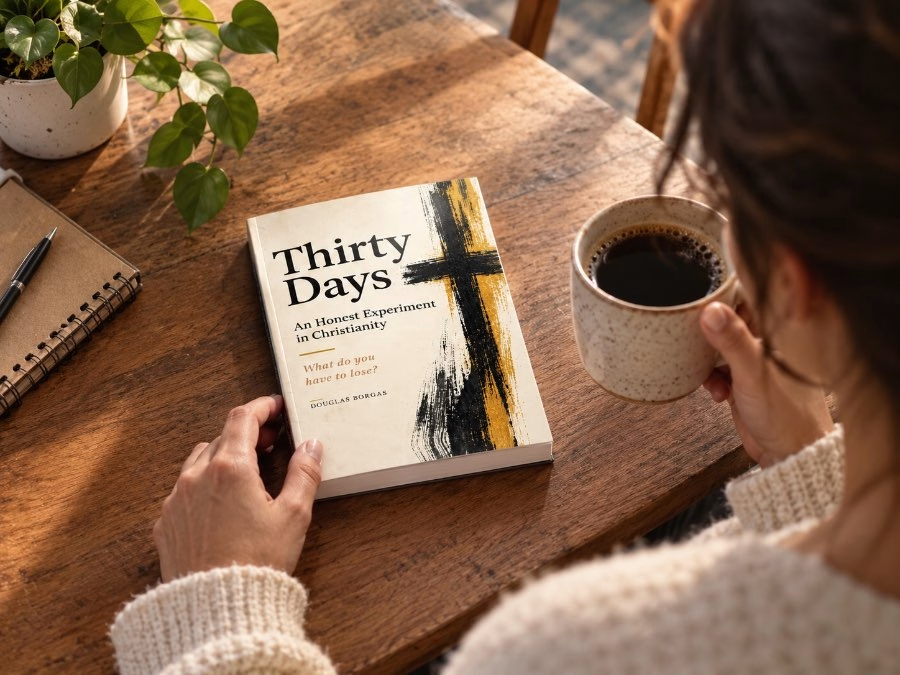
Many books about Christianity are written for readers who already accept the foundations of the faith. ‘Thirty Days: An Honest Experiment in Christianity’ takes a different route by speaking directly to atheists, agnostics, seekers, former believers, and people who remain curious about what Christianity might offer. Published on October 18, 2026, the 139-page Christian nonfiction book invites readers to spend thirty days exploring faith through a series of simple daily practices.
Douglas understands that skepticism can come with genuine questions that deserve time and attention. Readers aren’t expected to reach a particular level of belief before opening the book. They can begin from wherever they currently stand, including a place of uncertainty or disbelief. The commitment is simply to participate for one month, observe the experience carefully, and remain open enough to consider what each day brings.
That premise creates an approachable framework for people who may feel uncomfortable with more traditional ways of exploring religion. There are no membership requirements or commitments attached to the experiment. Readers are given space to think privately and record their own reactions. Once the month is finished, they can consider everything they’ve experienced and decide for themselves whether anything meaningful emerged from the process.
Thirty Days of Reading, Practice, and Reflection
Each day follows a practical structure designed to keep the experience focused. Readers receive a short passage to read, a question to consider, a practice they can try during the day, and room to write down what they noticed. The combination encourages active participation. Instead of simply moving through pages of ideas about Christianity, readers have opportunities to bring those ideas into ordinary moments and examine their responses.
The writing space can become particularly valuable as the month progresses. Thoughts that seem small on day three might carry greater significance when revisited on day twenty-five. Questions may evolve, assumptions may become clearer, and certain practices may create reactions that readers hadn’t anticipated. Keeping a record allows the thirty-day experiment to develop into something personal, giving each participant a way to trace how their perspective changes or remains consistent.
Douglas also keeps the timeframe intentionally manageable. Thirty days is substantial enough to develop a routine while remaining clear and finite from the beginning. Someone exploring Christianity doesn’t have to make a long-term promise or determine where the journey will lead. The month becomes a contained period for investigation, giving readers permission to experience the practices first and evaluate their significance afterward.

About the Author
Douglas Borgas was born in São Paulo, Brazil, in 1981. At ten years old, he moved with his family to the United States, where he faced a new country, language, and culture at the same time. Being the person who didn’t yet understand all the words left a lasting impression on him. That early experience of standing outside something familiar to everyone else continues to influence how he communicates with people.
Douglas is married and has two children, and his priorities have remained consistent for twenty-five years: God first, family second, followed by everything else. He credits that order with providing steadiness when life becomes difficult. His approach to sharing his beliefs is informal and rooted in everyday interactions, whether a conversation happens at work, on the street, while waiting somewhere, or through another ordinary encounter.
Professionally, Douglas is an entrepreneur whose passion for cars is also connected to how he earns his living. He doesn’t approach faith as a pastor, theologian, or professional speaker. His perspective comes from everyday life and a preference for examining important questions personally. His company also contributes to nonprofit organizations that serve people in need, including organizations working within his community and beyond it.

A Personal Experiment Worth Exploring
For readers who have wondered whether Christianity can be explored without first settling every question about belief, ‘Thirty Days: An Honest Experiment in Christianity‘ offers a practical path forward. Its daily format turns a broad spiritual question into a series of small experiences that readers can examine one day at a time.
Available in Kindle eBook and paperback editions, the book ultimately leaves readers with the responsibility Douglas gives them from the beginning: participate sincerely, notice what happens, and decide what the thirty days meant for themselves.
We had the privilege of interviewing the author. Here are excerpts from the interview:
Thank you so much for joining us today! Please introduce yourself and tell us what you do.
I’m Douglas Borgas. I was born in São Paulo, Brazil, and moved to the United States when I was ten. I live in Cumberland, Rhode Island, with my wife and our two kids. I’m an entrepreneur, and I love cars, books, and people, probably in that order for the first two and the reverse for the last. I’m also the author of Thirty Days: An Honest Experiment in Christianity. I’m not a pastor or a theologian. I’m an ordinary person who likes talking to people, and the book came out of those conversations.
Please tell us about your journey.
Moving to a new country at ten means learning what it feels like to be the one who doesn’t know the words yet, standing outside something everyone else seems to understand. I’ve never forgotten that feeling. It’s a big part of why I wrote this book. I run my life by three rules, in order: God first, family, then everything else. I’ve kept that order for about twenty-five years, and it’s been the steadiest thing in my life. For years I’ve had honest conversations about God with people I care about, including people who don’t believe. Those conversations usually turned into arguments, and nobody ever changed their mind. So I stopped arguing and wrote down something I’d want a skeptic to try instead: thirty days, one practice a day, and then you decide for yourself.
What are the strategies that helped you become successful in your journey?
I don’t think of it as strategies so much as priorities. Put first things first. When God and family come first, the harder decisions get easier, because you already know what matters most. Show up daily. Almost everything that’s worked in my life worked through small, ordinary habits repeated for a long time. The book is built on the same idea. You don’t think your way into a new life, you live your way into a new way of thinking. Keep learning. I read constantly and usually have an audiobook going while I work. Treat the person in front of you with respect. Most of what matters happens in ordinary conversations, at work, on the street, in line somewhere. Give. I believe God blesses us so we can be a blessing, so my company gives to vetted nonprofits that help people in need, in our community and beyond.
Any message for our readers?
You are not an accident. You’re not a mistake, a coincidence, or an afterthought. Whatever you believe today, you’re loved and you matter. If you’ve ever wondered what it’s like inside faith, I’d invite you to test it honestly for thirty days. Nobody decides for you, and if your answer is no, the book says that’s an honest answer.
Thank you so much, Douglas Borgas, for giving us your precious time! We wish you all the best for your journey ahead!
Knowledge grows when shared. Please Pass it on!

Discover more from Paxjones
Subscribe to get the latest posts sent to your email.