
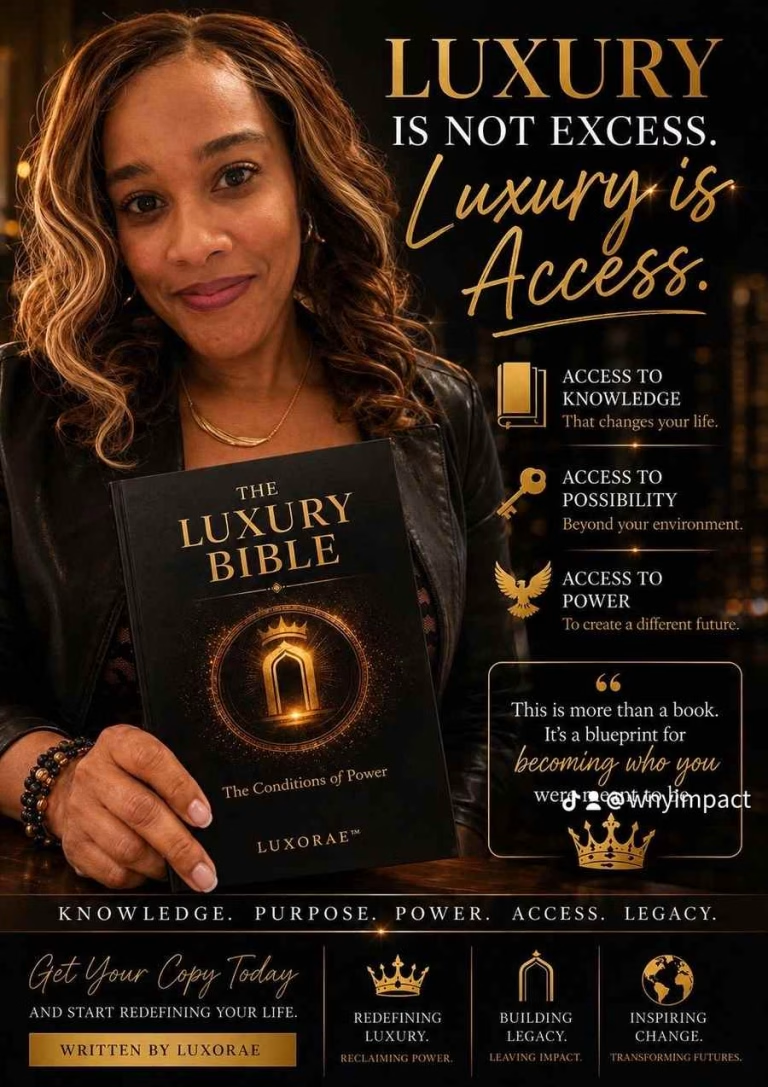
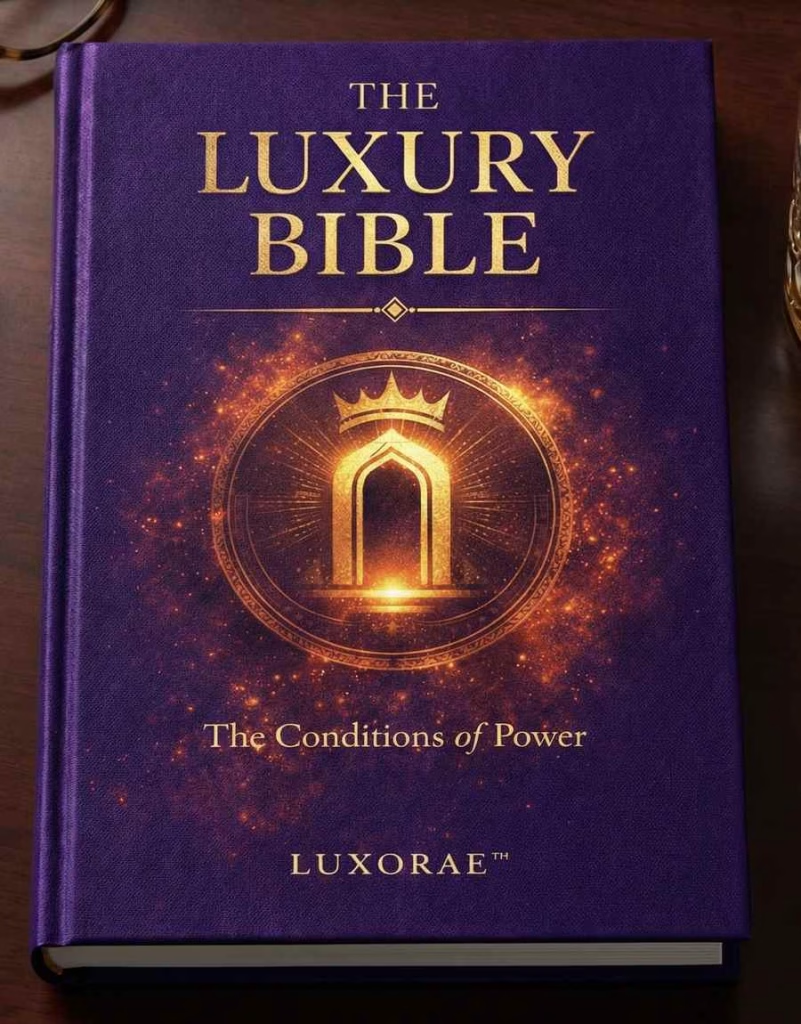
Many books explore personal growth, abundance, and spiritual awareness. Few attempt to connect those ideas with history, neuroscience, philosophy, and social transformation in a way that feels both practical and deeply reflective. The Luxury Bible: The Conditions of Power by Luxorae takes on that challenge and presents readers with a compelling new way to understand power, purpose, and personal freedom.
Available in paperback and hardcover, this thought-provoking work invites readers to reconsider long-held beliefs about success and discover a more meaningful definition of luxury.

Opening Thoughts
At first glance, the title may lead some readers to expect a discussion centered on wealth, status, or material comfort. Instead, the book takes a very different path. It argues that true luxury is an internal condition rather than an external achievement.
The central idea revolves around the belief that many people spend their lives searching for validation, power, and fulfillment outside themselves. According to Luxorae, this search often creates exhaustion and disconnection. The book encourages readers to reconnect with their inherent value and recognize that abundance begins with alignment rather than acquisition.
This perspective serves as the foundation for a larger conversation about identity, sovereignty, and human potential.
Exploring the Mechanics of Alignment
One of the most distinctive aspects of The Luxury Bible: The Conditions of Power is its focus on explaining personal transformation through both scientific and philosophical frameworks. Rather than presenting empowerment as something mystical or unreachable, the book treats it as a process that can be understood and practiced.
Luxorae examines how the nervous system influences daily experiences, decision-making, and emotional well-being. Readers are encouraged to view alignment as a practical condition that affects every area of life. The discussion is grounded in neuroscience while remaining accessible to a broad audience.
The book also addresses the concepts of Divine Feminine and Divine Masculine energy from a balanced perspective. Instead of creating divisions or hierarchies, it explores how these principles can exist in harmony and contribute to personal wholeness.
What makes the work particularly engaging is its ability to blend academic ideas with everyday relevance. Complex topics are presented in a way that encourages reflection without overwhelming the reader.
Challenging Traditional Views of Power and Abundance
Throughout the book, Luxorae questions many of the assumptions that shape modern thinking about achievement and success. The text suggests that constant striving has become a deeply ingrained cultural habit, often leaving individuals feeling disconnected from themselves.
Rather than promoting endless effort, the book introduces the idea that abundance can be understood as an inheritance connected to human dignity and self-awareness. This shift in perspective encourages readers to examine how their beliefs about worth, productivity, and achievement have been formed over time.
The author also explores the role institutions and social structures have played in shaping perceptions of authority and divinity. By bringing these discussions into the conversation, the book expands beyond personal development and considers the broader forces that influence individual experiences.
Readers who appreciate intellectually engaging nonfiction will likely find value in this multidimensional approach. The material speaks to those who have moved beyond surface-level motivation and are searching for deeper insight into how transformation occurs.
About the Author
Luxorae is an author, educator, speaker, and community advocate from Buffalo, New York. Her work focuses on the connections between literacy, language, identity, leadership, opportunity, and social change.
Growing up on Buffalo’s East Side shaped her understanding of how access and opportunity influence life outcomes. These experiences inspired years of involvement in education, youth development, advocacy, and community engagement initiatives.
Luxorae is also the creator of the philosophy, “Luxury is not excess but access.” Through this idea, she challenges traditional definitions of luxury and encourages people to think about access to knowledge, safety, health, freedom, dignity, and opportunity as the true markers of a meaningful life.
As the founder of Luxorae and WNY Community Impact Collective, she continues to develop programs and conversations that empower individuals and communities to recognize their potential and create lasting change.

Why This Book Leaves a Lasting Impression
The Luxury Bible: The Conditions of Power offers readers more than inspiration. It provides a thoughtful framework for understanding how personal growth, social awareness, and self-mastery intersect. By combining insights from multiple disciplines, the book creates a rich exploration of what it means to live with purpose and alignment.
For readers interested in empowerment, spirituality, psychology, and social transformation, this work presents an original perspective that challenges conventional thinking while remaining practical and accessible. Luxorae’s message is clear: luxury is far more than a symbol of status. It is a state of being rooted in freedom, awareness, and the ability to fully embrace one’s own power.
We had the privilege of interviewing the author. Here are excerpts from the interview:
Hi, Thank you so much for joining us today! Please introduce yourself and tell us what you do.
Hi, I’m Luxorae, an author, educator, speaker, community advocate, and founder of Luxorae and WNY Community Impact Collective.
My work sits at the intersection of literacy, language, identity, leadership, and social transformation. With a background in Social Sciences and years of community-based work, I study how systems, institutions, culture, and language shape opportunities and outcomes. Through my writing, educational initiatives, and public speaking, I help individuals and communities develop the knowledge, confidence, and practical skills needed to navigate those systems and create meaningful change.
Please tell us about your journey.
My journey began on Buffalo’s East Side, where I witnessed both the strength of community and the realities of systemic inequality. Growing up, I became increasingly aware that outcomes were not simply the result of individual choices. They were also influenced by larger systems, policies, institutions, historical decisions, and access to resources.
This curiosity led me to study Social Sciences and dedicate much of my life to understanding how people respond to social conditions, how communities are shaped, and how change occurs. Throughout my work with youth, families, and underserved communities, I repeatedly encountered the same barriers: literacy gaps, economic instability, limited access to opportunity, and narratives that conditioned people to expect less from themselves and their futures.
Rather than focusing solely on the problems, I became interested in solutions. My research, writing, and community work evolved into a framework centered on empowerment through knowledge, literacy, language, critical thinking, leadership development, and practical skill building. I believe that while many systems of oppression continue to affect communities today, people can develop the tools necessary to recognize those systems, navigate them effectively, and create new opportunities for themselves and future generations.
That philosophy continues to guide my work as an author, educator, and community leader.
What are the strategies that helped you become successful in your journey?
Three strategies have been central to my journey.
The first is continuous learning. I have always approached challenges with curiosity and a desire to understand the deeper forces shaping outcomes. Reading, research, observation, and lifelong learning have helped me identify patterns and develop solutions.
The second is critical thinking. Rather than accepting conditions as inevitable, I ask questions. Why does this problem exist? Who benefits from it? What systems sustain it? What can be changed? That mindset has allowed me to move beyond symptoms and focus on root causes.
The third is purpose-driven action. Knowledge is powerful, but transformation requires action. Whether through writing, education, community initiatives, or advocacy, I believe ideas become meaningful when they are translated into practical solutions that improve lives.

Any message for our readers?
Never underestimate the power of understanding the world around you.
Many of the challenges we face today did not emerge by accident. They are often connected to historical decisions, social structures, and systems that continue to shape our lives. However, understanding those realities is not a reason for hopelessness. It is a reason for empowerment.
Knowledge creates awareness. Awareness creates options. Options create opportunity.
My message is simple: learn continuously, think critically, question limiting narratives, and invest in your own growth. The goal is not simply to survive the systems around us, but to develop the knowledge, confidence, and capacity to transform our lives, strengthen our communities, and create better outcomes for future generations.
Thank you so much, Luxorae, for giving us your precious time! We wish you all the best for your journey ahead!
Knowledge grows when shared. Please Pass it on!

Discover more from Paxjones
Subscribe to get the latest posts sent to your email.