
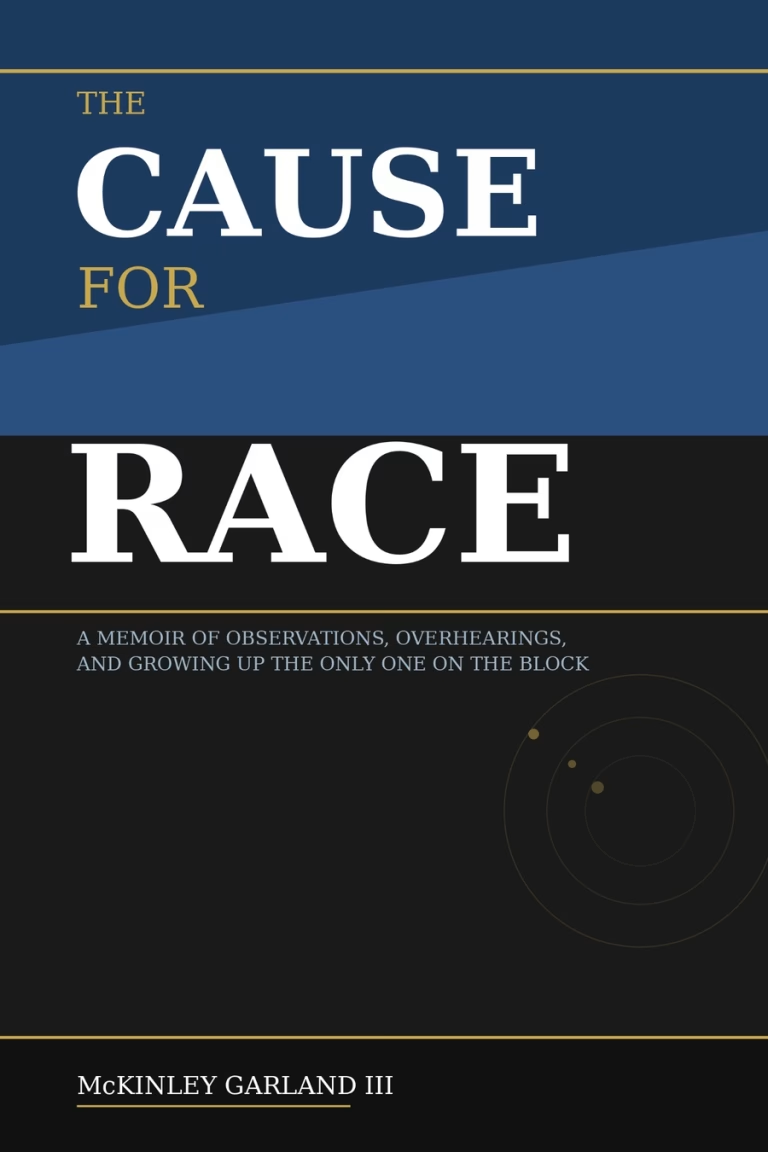
For many people, conversations about race begin with differences. The Cause for Race by McKinley Garland III starts somewhere else entirely. It begins with a simple observation: skin color is visible, but character, values, and humanity run much deeper.
Through personal experiences and thoughtful commentary, the book invites readers to reconsider long-held assumptions and engage with one another as individuals rather than labels.

Opening Thoughts: A Life Lived Between Perspectives
McKinley Garland III grew up in Suffern, New York, a largely white suburb north of New York City. As a Black child in that environment, he gained a perspective that few people experience firsthand. He learned how to navigate different social circles, understand varying viewpoints, and build meaningful relationships across cultural lines.
Those experiences became the foundation for The Cause for Race. Instead of approaching race as an abstract political issue, the book examines it through everyday human interactions. McKinley shares lessons gathered over decades of observing how people treat one another, how stereotypes form, and how genuine connections often challenge those assumptions.
A recurring theme throughout the book is the importance of personal experience. The author’s father welcomed people into his home regardless of their background, creating an environment where character mattered more than categories. Later, McKinley watched his own son develop friendships with people from many cultures and religions without viewing those differences as barriers.
These moments reinforce a central belief that runs through every chapter: people become easier to understand when they are seen as individuals rather than representatives of a group.
Celebrating the Achievements That Shape Society
One of the book’s most compelling elements is its broad recognition of human achievement. McKinley dedicates significant attention to highlighting contributions from cultures and communities that have helped build the modern world.
The discussion of Black achievement is particularly noteworthy. The book emphasizes how innovation, creativity, and perseverance have flourished despite historical obstacles. From medical advancements and technological breakthroughs to influential artistic contributions, McKinley presents a case built on facts and accomplishments rather than emotion alone.
At the same time, he argues that honest conversations about history must acknowledge the accomplishments of Western civilization. Scientific progress, democratic principles, medical discoveries, and technological innovations are discussed alongside historical failures. The goal is neither celebration nor condemnation. It is balance.
The book expands further by recognizing the influence of Latino, Asian, Arab, South Asian, and Indigenous cultures. Readers are reminded that many of the ideas, inventions, and resources people use today originated from diverse societies across centuries. Mathematics, agriculture, medicine, engineering, and communication have all been shaped by contributions from around the globe.
By presenting these achievements together, McKinley encourages a broader understanding of history. Human progress, he suggests, is rarely the result of one group working alone.
Exploring Difficult Issues Without Division
Many books about race focus heavily on conflict. The Cause for Race chooses a different path. It addresses challenging topics while maintaining a tone of respect and sincerity.
McKinley examines cultural influences that affect young people, particularly within Black communities. He raises questions about media messaging, personal responsibility, family stability, and social expectations. These discussions are direct yet measured, encouraging reflection rather than assigning blame.
The book also explores economic inequality and the role it plays in shaping opportunity. McKinley argues that wealth and class often create divisions that cut across racial lines. In his view, people struggling with similar financial challenges frequently share more common experiences than public discourse acknowledges.
Another significant theme is the danger of collective judgment. Throughout the book, McKinley challenges the tendency to assign the actions of a few individuals to entire populations. Whether discussing race, religion, or nationality, he consistently encourages readers to evaluate people based on their own actions and choices.
His examination of ignorance is especially thought-provoking. According to McKinley, misunderstanding often causes more harm than deliberate hatred because it spreads quietly and can remain unchallenged for generations.
Why This Message Resonates Today
The strength of The Cause for Race lies in its ability to speak to readers from different backgrounds without hostility or accusation. Rather than focusing on past grievances alone, the book asks what people can learn from one another moving forward.
McKinley believes younger generations are already demonstrating what greater acceptance can look like. Diverse friendships, shared experiences, and cultural exchange have become increasingly common. Many young people interact naturally across differences that once seemed significant.
For older generations, the book serves as an opportunity to reexamine inherited beliefs and assumptions. McKinley approaches this challenge with empathy, recognizing that many prejudices are passed down rather than consciously chosen.
The result is a work that seeks understanding rather than victory in an argument.
About the Author
McKinley Garland III was raised in Suffern, New York, where growing up in a predominantly white community shaped his perspective on race and relationships. His experiences with diverse friendships, community connections, and family values inspired the ideas explored throughout The Cause for Race.
As a first-time author, McKinley brings a personal voice to a subject that often becomes impersonal. His message is rooted in respect, curiosity, and a belief that meaningful progress begins with seeing the humanity in others.
Looking Ahead
The Cause for Race offers readers an opportunity to step away from stereotypes and engage with a more nuanced view of people and history. Through personal stories, cultural observations, and honest discussion, McKinley presents a compelling case for empathy, understanding, and individual judgment.
At its heart, the book is an invitation to move beyond assumptions and rediscover the simple idea that every person deserves to be known for who they are, not merely for the category they occupy.
Knowledge grows when shared. Please Pass it on!

Discover more from Paxjones
Subscribe to get the latest posts sent to your email.