

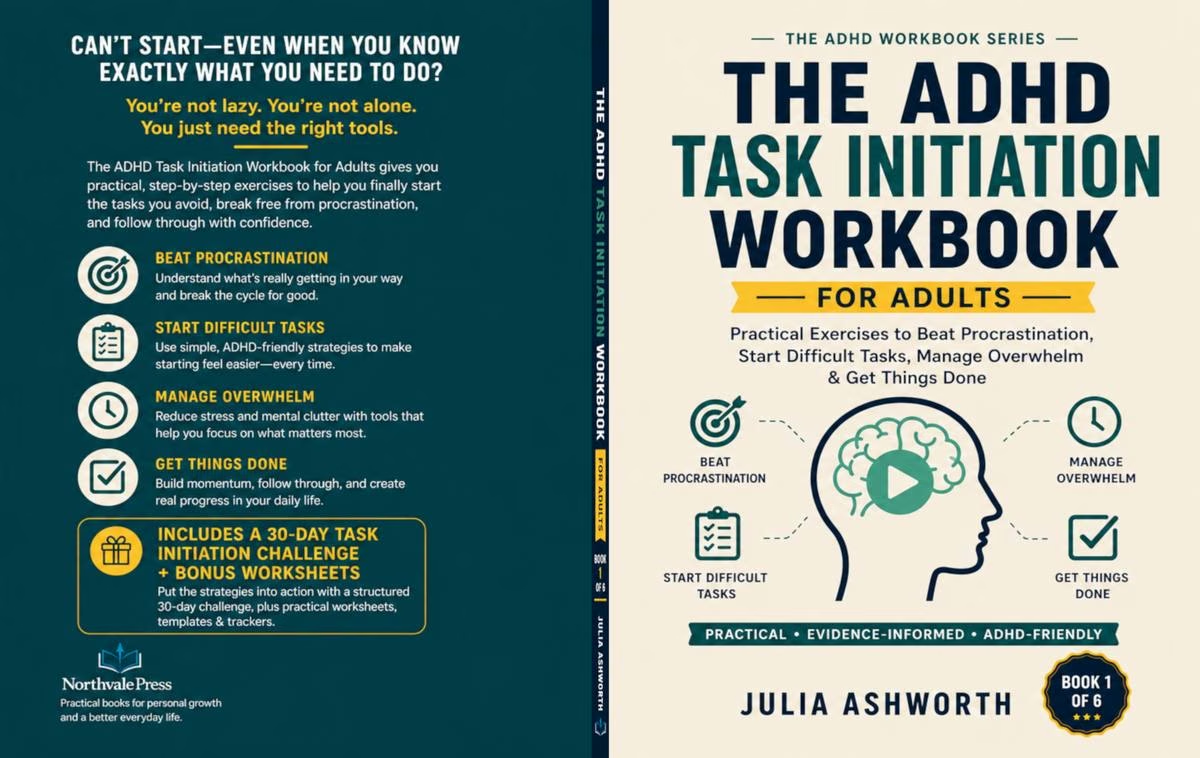
A growing to-do list can feel overwhelming when even the smallest task seems difficult to begin. Julia Ashworth addresses this familiar struggle in The ADHD Task Initiation Workbook for Adults, a practical self-help guide designed to help adults with ADHD understand their difficulties, take manageable first steps, and develop routines that support everyday progress.
When Good Intentions Meet Everyday Obstacles
Many adults with ADHD experience a frustrating gap between knowing what needs attention and actually beginning the work. A simple household chore might remain unfinished for days, while an important email or approaching deadline creates mounting pressure. These situations can affect confidence, emotional wellbeing, and the ability to manage daily responsibilities. Julia approaches these experiences with empathy, helping readers recognize that task initiation difficulties often involve complex challenges related to attention, emotions, and executive functioning.
The workbook explores several common reasons people struggle to get started, including unclear expectations, perfectionism, boredom, distractions, and emotional resistance. Each obstacle can influence how an individual approaches responsibilities, particularly when tasks seem demanding or uncomfortable. Through practical exercises, readers can examine their own patterns and identify situations that frequently leave them feeling stuck. This process encourages greater self-awareness and helps make everyday difficulties easier to understand.
An important aspect of the book is its reassuring perspective on productivity. Readers are encouraged to approach their struggles with curiosity and patience while discovering techniques that accommodate their individual needs. Julia’s accessible writing makes these concepts approachable, especially for adults who have spent years feeling frustrated by their inability to complete seemingly ordinary tasks. Independently published on August 16, 2026, this 250-page title is available in Paperback edition on Amazon.
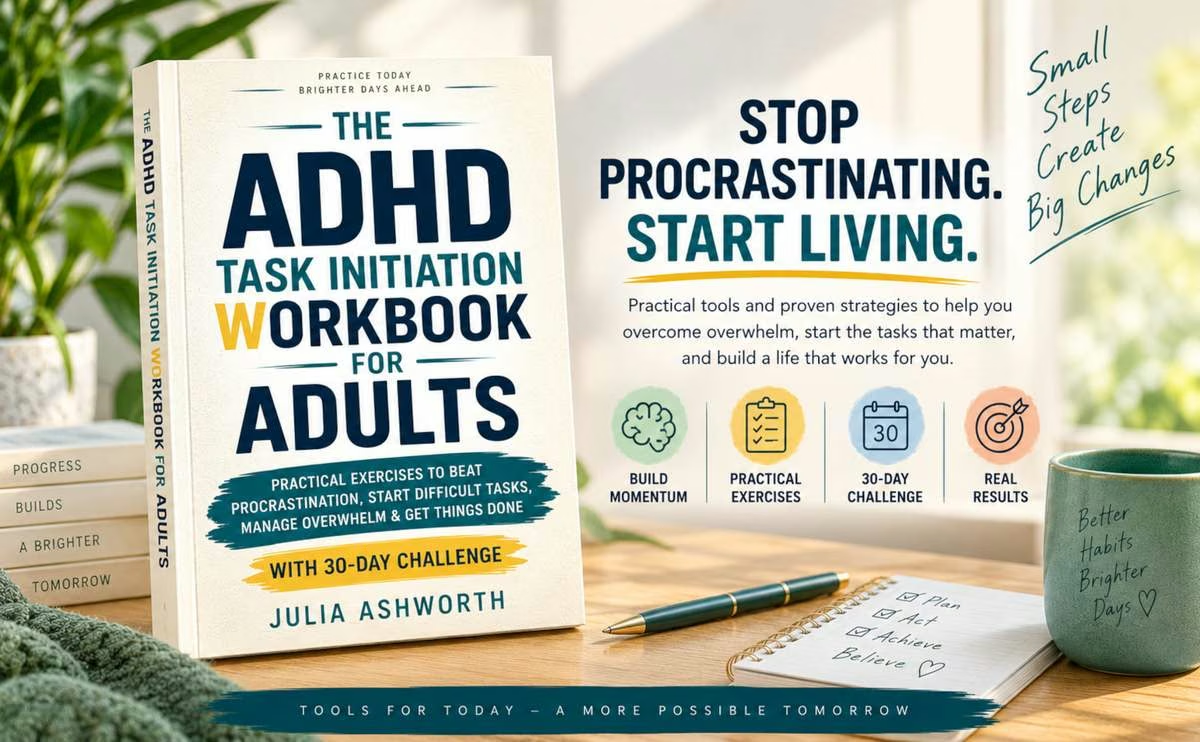
One of the workbook’s central ideas is that beginning a task becomes easier when the first action feels manageable. Large responsibilities often involve several decisions, creating additional mental pressure before any meaningful progress occurs. Julia introduces exercises that help readers divide complicated activities into smaller steps, identify clear starting points, and reduce unnecessary barriers. These methods can be applied to professional assignments, household responsibilities, personal projects, and everyday routines.
The Five-Minute Start is among the practical techniques presented in the book. By committing to a short period of focused activity, readers can experiment with beginning tasks without feeling obligated to complete everything immediately. This approach creates opportunities to build momentum while reducing the emotional pressure associated with demanding responsibilities. Even a brief effort can provide useful insight into what makes starting easier.
Other strategies include body doubling, timers, external cues, and environmental adjustments that support attention and action. Readers are encouraged to experiment with these tools and determine which combinations suit their circumstances. The workbook also addresses situations where competing priorities create confusion or where attention wanders before a task is completed. Its flexible exercises help readers develop practical methods for refocusing, restarting unfinished activities, and maintaining progress.
Turning Helpful Strategies Into Everyday Routines
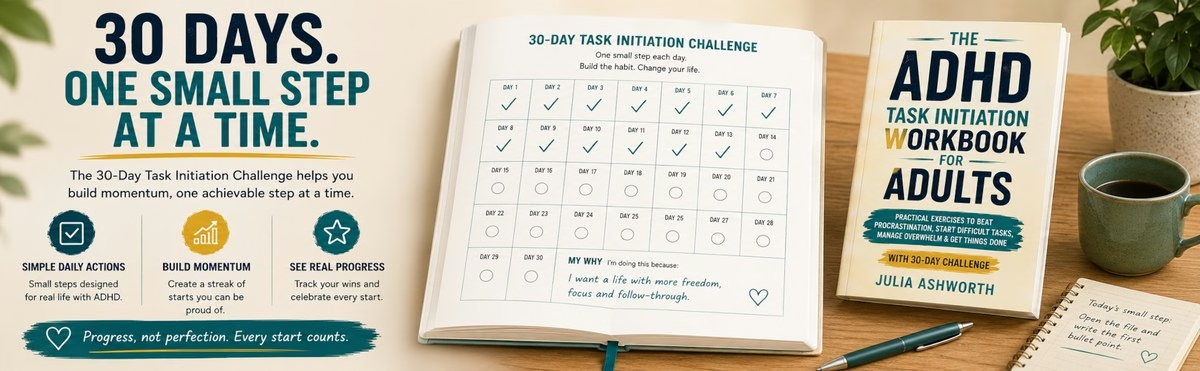
Understanding a productivity technique is valuable, although applying it consistently can require additional guidance. Julia addresses this challenge through a structured 30-Day Task Initiation Challenge, giving readers opportunities to practice different approaches over time. The challenge encourages gradual experimentation, allowing individuals to observe their responses and make adjustments according to their experiences. This thoughtful structure supports the development of realistic habits that can fit changing schedules and responsibilities.
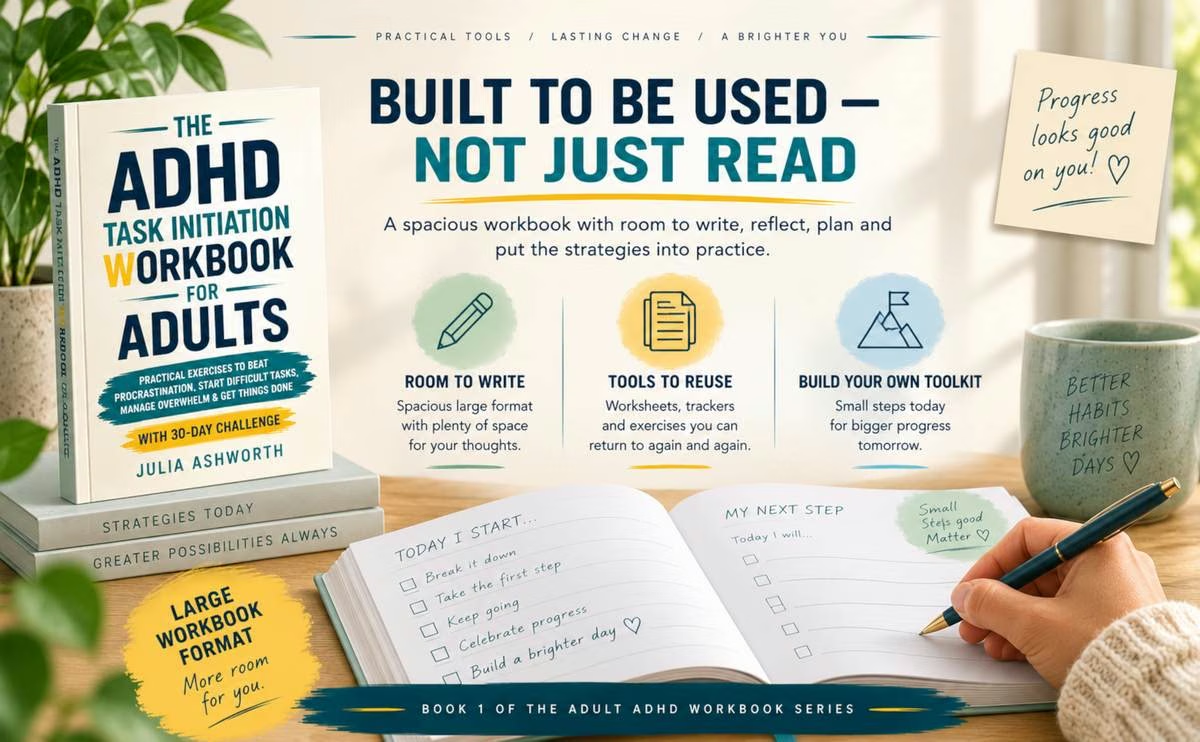
Reusable worksheets, trackers, and planning exercises add another practical dimension to the workbook. Readers can explore methods for creating ADHD-friendly daily plans, organizing priorities, and establishing weekly resets. Drawing on approaches used in ADHD coaching and cognitive-behavioral strategies, the exercises encourage reflection and manageable action. Their reusable format also makes them useful when familiar difficulties return.
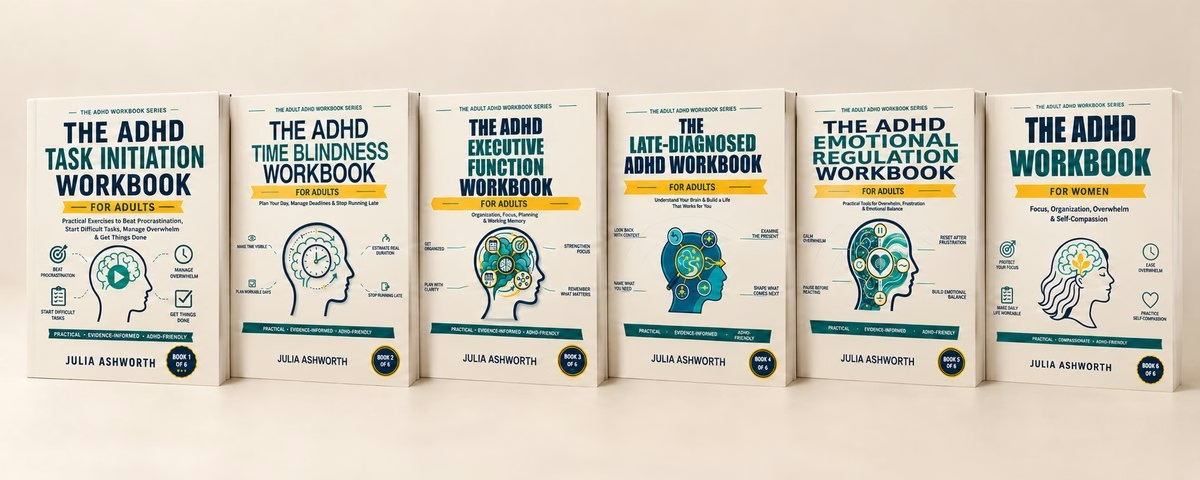
As Book 1 of The Adult ADHD Workbook Series, the publication introduces a broader six-book collection focused on common ADHD-related experiences. The series covers task initiation, time blindness, executive function, late diagnosis, emotional regulation, and ADHD in women. These interconnected subjects provide opportunities for readers to explore different aspects of their daily experiences through practical, accessible guidance.
About the Author
Julia Ashworth specializes in writing practical, research-informed guides about pregnancy, early parenthood, emotional wellbeing, and everyday challenges. Her work emphasizes clarity, compassionate communication, and manageable steps that readers can incorporate into their lives. Julia aims to simplify complicated subjects while providing useful information without unnecessary jargon or judgment. Her supportive approach encourages readers to make informed choices and discover solutions that reflect their personal circumstances.

A More Encouraging Way to Move Forward
The ADHD Task Initiation Workbook for Adults provides a welcoming starting point for adults seeking greater confidence in managing everyday responsibilities. With its practical exercises, adaptable techniques, and compassionate guidance, Julia offers readers an opportunity to understand their challenges, celebrate small achievements, and build routines that make taking the next step feel achievable.
We had the privilege of interviewing Julia Ashworth. Here are excerpts from the interview:
Thank you so much for joining us today! Could you please introduce yourself and tell us what you do?
I’m Julia Ashworth, an author of practical, research-informed guides that turn complex topics into clear, manageable steps. My books explore emotional wellbeing, major life transitions and everyday challenges. The Adult ADHD Workbook Series focuses on helping readers understand their difficulties and experiment with tools that fit their lives. The first book, The ADHD Task Initiation Workbook for Adults, explores the frustrating gap between knowing what to do and actually starting.
Could you tell us the story or journey behind your work?
My writing centers on a question: how can information become something a reader can actually use? Understanding a problem matters, but applying advice can be difficult when someone already feels overwhelmed. That question shaped this workbook. I wanted to go beyond explanations and offer exercises that help readers identify a specific barrier, choose a manageable first step and observe what happens. It also shaped the wider six-book series, which explores task initiation, time blindness, executive function, late diagnosis, emotional regulation and ADHD in women.
What strategies or principles have helped you?
The principles that guide my work are careful research, clear language and practical application. I break broad topics into specific situations and ask what a reader could realistically try next. I also make room for different needs and circumstances. A strategy should be something readers can test and adapt, rather than another standard they feel pressured to meet. My aim is to create useful books that support informed choices without promising a single solution for everyone.
What is your message for readers?
If starting feels difficult, try approaching that difficulty with curiosity rather than self-criticism. Is the task unclear, too large, emotionally uncomfortable or hard to engage with? Naming the barrier can help you choose a more useful next step. You do not have to change everything at once. Begin with one manageable action, use support where it helps and adjust as you learn. A difficult day does not erase your progress.
Thank you so much, Julia, for giving us your precious time! We wish you all the best for your journey ahead!
Knowledge grows when shared. Please Pass it on!

Discover more from Paxjones
Subscribe to get the latest posts sent to your email.