
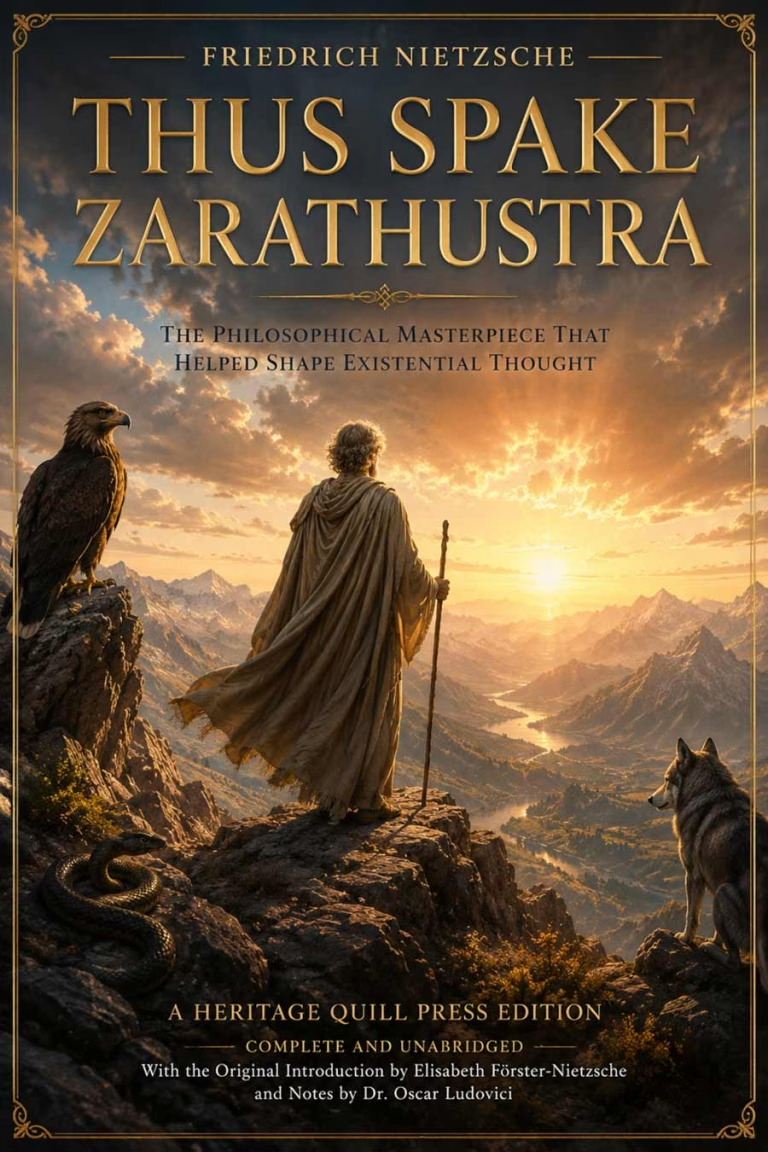
Few philosophers have shaped modern culture as deeply as Friedrich Nietzsche. His ideas still influence philosophy, psychology, literature, politics, religion, art, and film, while his name remains familiar even to people who have never opened his books.
A Brilliant Mind Formed by Loss and Learning
Friedrich Wilhelm Nietzsche was born on 15 October 1844 in Röcken, a small Prussian village. His father, Carl Ludwig Nietzsche, was a Lutheran pastor, so biblical language and theology filled his early life. Those influences remained visible after Nietzsche became a celebrated critic of religion. In Thus Spake Zarathustra, he reshaped biblical rhythms through parables, warnings, and prophetic speeches carrying radically different ideas.
Tragedy arrived early. His father died after a prolonged illness when Nietzsche was four, and his younger brother Joseph died less than a year later. His mother, Franziska, moved the family to Naumburg, where he grew up with his mother, grandmother, two aunts, and younger sister Elisabeth.
Friends described him as quiet, thoughtful, and polite. Though his writing sounds forceful, he was shy and reserved, enjoying close conversation more than public attention. Books offered companionship, and music became another passion. He composed piano pieces as a boy and showed outstanding talent in language and literature.
His gifts earned him admission to Schulpforta, a distinguished classical boarding school. There, he studied Greek and Latin literature, rhetoric, history, and philosophy. Homer, Sophocles, Aeschylus, Plato, and other ancient writers left a lasting mark. Nietzsche admired how the Greeks faced suffering honestly, pursued greatness while accepting failure, and searched for wisdom without claiming certainty.
The Misunderstood Thinker Who Asked Harder Questions
Nietzsche has been called an atheist, nihilist, poet, prophet, psychologist, revolutionary, and early architect of existential thought. Admirers consider him a great philosopher, while other readers find him unsettling or contradictory. That tension suits a thinker who rarely built a tidy system.
Instead, he examined morality, truth, religion, ambition, creativity, suffering, and life’s purpose. His work challenged inherited assumptions and encouraged independent thought. More than a century after his death, conversations about meaning, personal growth, and the courage to reject convention still echo his nineteenth-century questions.

Beyond Good and Evil, published in 1886, expresses that challenge with force. Through an aphoristic style, Nietzsche investigates the origins of values and asks whether inherited beliefs deserve automatic acceptance. Its direct arguments make it a common starting point, although the book rewards slow reading and repeated visits. Its questions about morality, freedom, truth, and human potential helped shape existential thought.
The Masterpiece the World Almost Missed
Nietzsche believed the first part of Thus Spake Zarathustra, published in 1883, was his most important achievement. The world barely responded. Few copies appeared, fewer sold, reviews were scarce, and even supportive friends struggled with its unusual form. It seemed to be philosophy, poetry, literature, and religious satire at once.
The disappointment was painful. Years of illness, solitude, and creative struggle had produced a work he considered unprecedented, yet its audience had not arrived. He continued, completing three more parts over the next two years and often financing publication himself.
His experience reflected his own philosophy: a person should remain faithful to an individual path without depending on recognition. History eventually rewarded that conviction. Generations of philosophers, psychologists, writers, artists, and readers have since followed Zarathustra down the mountain through encounters, symbols, and parables about freedom, purpose, growth, and human possibility. The journey offers no simple destination. It changes with the traveller, and that’s why the book invites lifelong rereading.
Explore Nietzsche with Heritage Quill Press
Heritage Quill Press creates editions that preserve historical integrity while helping modern readers engage deeply with classic works. Its Thus Spake Zarathustra edition pairs Thomas Common’s classic English translation with Elisabeth Förster-Nietzsche’s historical introduction, Anthony M. Ludovici’s explanatory notes, and original essays on Nietzsche’s life, symbolism, context, and central ideas. Introductory essays prepare the philosophical landscape without revealing the discoveries ahead, while the material following the text explains Zarathustra’s role and the work’s enduring influence.
The press’s Beyond Good and Evil edition provides historical essays, a practical reader’s guide, a detailed biography, an exploration of Nietzsche’s influence, and an examination of myths surrounding his philosophy. Both editions welcome first-time readers and returning admirers with richer context while preserving the original works.
Nietzsche’s greatest books invite readers to open the page, climb the mountain, and ask better questions. Their power lives in the thoughtful journey that begins after the final sentence.
Knowledge grows when shared. Please Pass it on!

Discover more from Paxjones
Subscribe to get the latest posts sent to your email.