
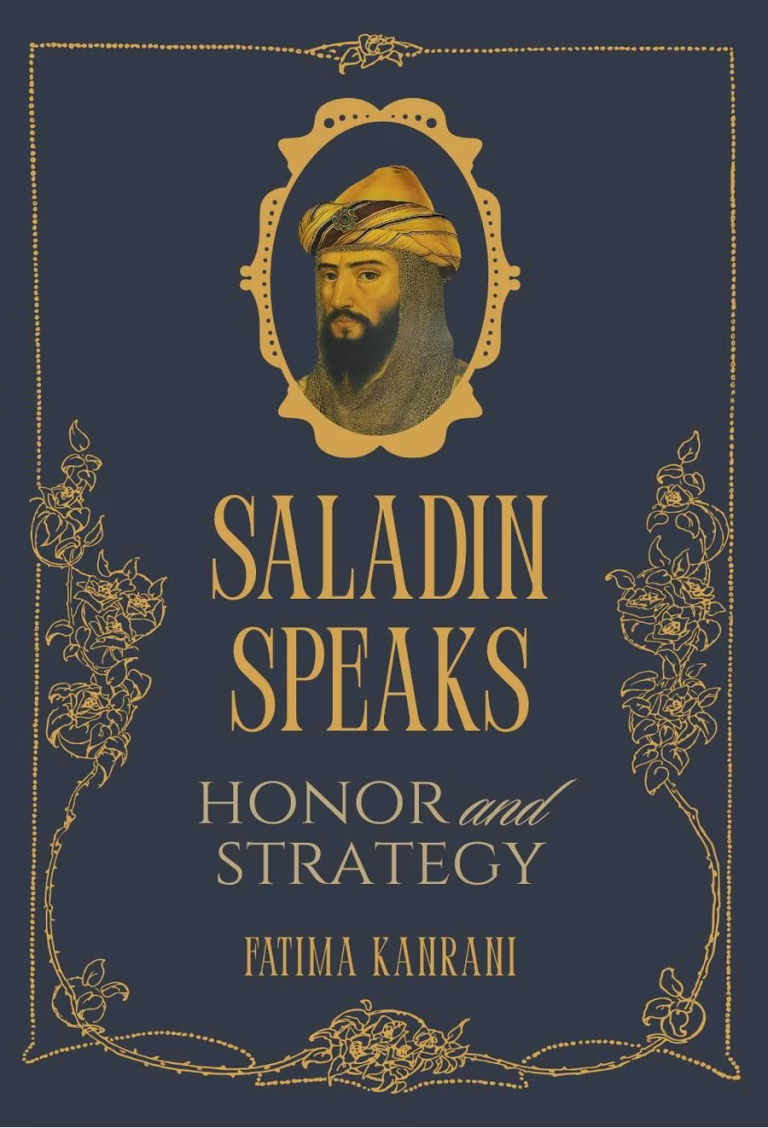
Some books ask readers to look ahead for new ideas, while others invite them to look back and rediscover wisdom that has stood the test of time. Saladin Speaks: Honor and Strategy (Voices of Leadership) by Fatima Kanrani belongs to the second category, offering a compelling exploration of one of history’s most respected leaders and translating his enduring principles into lessons for modern life.
Available in Kindle and paperback editions on Amazon, the book serves as the first entry in the Voices of Leadership series. It presents historical insights in an approachable format, making leadership concepts accessible for readers who appreciate meaningful ideas without the complexity often associated with historical or business literature.
Reintroducing Saladin to a Modern Audience
Saladin’s name has echoed through history for centuries, and for good reason. He united divided Arab territories during the Crusades, demonstrated exceptional military strategy, and reclaimed Jerusalem in the twelfth century. His accomplishments earned him recognition throughout the Islamic world, yet his legacy extends well beyond military victories.
Historical accounts consistently portray Saladin as a leader who combined courage with compassion. He exercised authority without losing sight of justice and showed mercy at moments when retaliation would have been expected. His conduct became so widely respected that even many of his Christian adversaries viewed him as an example of honorable leadership and true chivalry.
Rather than focusing solely on historical events, Fatima Kanrani draws attention to Saladin’s recorded words. The book gathers quotations attributed to him from letters, chronicles, and historical sources, then accompanies each one with a thoughtful explanation that connects its meaning to contemporary leadership and personal development.
This structure creates an engaging reading experience that encourages readers to pause, reflect, and apply each lesson in practical ways.
A Refreshing Perspective on Leadership
Leadership advice is easy to find, yet meaningful guidance often proves much harder to discover. Saladin Speaks: Honor and Strategy distinguishes itself by emphasizing character before tactics.
Throughout the book, readers are encouraged to think about leadership as a combination of wisdom, discipline, humility, and responsibility. These ideas remain relevant whether someone leads a global organization, manages a small business, mentors a team, or simply hopes to become a stronger decision-maker.
Among the themes explored are the importance of remaining principled during difficult circumstances, building trust through consistency, inspiring unity across differences, and approaching challenges with both confidence and restraint.
Fatima presents these concepts in concise sections that respect the reader’s time while providing enough depth to inspire genuine reflection. Each quotation becomes more than a historical reference. It becomes an invitation to evaluate personal choices and consider how timeless values can shape present-day actions.
That approachable style reflects the author’s vision for the series. She recognized that many leadership books feel either overly academic or too simplistic to offer lasting value. Her goal was to create books that remain intellectually engaging while fitting comfortably into busy schedules.
The result is a reading experience that feels both educational and practical, offering insights that readers can revisit long after finishing the final page.
The Beginning of an Inspiring Leadership Collection
Saladin Speaks: Honor and Strategy introduces readers to the broader Voices of Leadership series, a collection dedicated to bringing influential historical voices into modern conversations.
The series continues with The Art of Strategy: Sun Tzu Speaks and Cleopatra’s Voice: Diplomacy and Power, with additional volumes planned to expand the collection. Each book centers on one remarkable historical figure, allowing readers to focus on distinct leadership philosophies instead of navigating broad historical overviews.
This focused approach gives every volume its own identity while encouraging readers to compare different leadership styles across cultures and eras. Ancient wisdom becomes surprisingly relevant when viewed through the lens of modern workplaces, entrepreneurship, community service, and everyday relationships.
The series also reflects the belief that history remains valuable because human challenges continue to evolve without losing their essential nature. Questions about integrity, courage, influence, and responsibility remain just as important today as they were centuries ago.
For readers seeking thoughtful nonfiction that combines historical perspective with practical application, Saladin Speaks: Honor and Strategy offers an engaging place to begin that journey.
About the Author
Fatima Kanrani is a writer, architect, entrepreneur, and creative strategist based in Istanbul. She founded Fiara Publishing with the goal of creating books that inspire positivity, encourage thoughtful reflection, and make meaningful ideas accessible to modern readers.

Driven by a lifelong interest in leadership, history, and human behavior, Fatima developed the Voices of Leadership series to bridge the gap between scholarly historical works and highly simplified motivational books. Her writing transforms timeless lessons into practical guidance that readers can apply in everyday life. When she is away from her creative work, she enjoys reading in cafés, journaling fresh ideas, collaborating with her publishing team, and spending time with cats.
Lasting Takeaways
The greatest leaders are remembered because of the values they lived by as much as the achievements they accomplished. Saladin Speaks: Honor and Strategy reminds readers that integrity, wisdom, compassion, and strategic thinking remain essential qualities for anyone seeking to lead with purpose.
Through carefully selected historical quotations and insightful modern interpretations, Fatima Kanrani has created a book that feels relevant, reflective, and rewarding. It demonstrates that leadership is not simply about directing others. It is about cultivating principles that earn trust, inspire confidence, and leave a meaningful legacy across generations.
Knowledge grows when shared. Please Pass it on!

Discover more from Paxjones
Subscribe to get the latest posts sent to your email.