
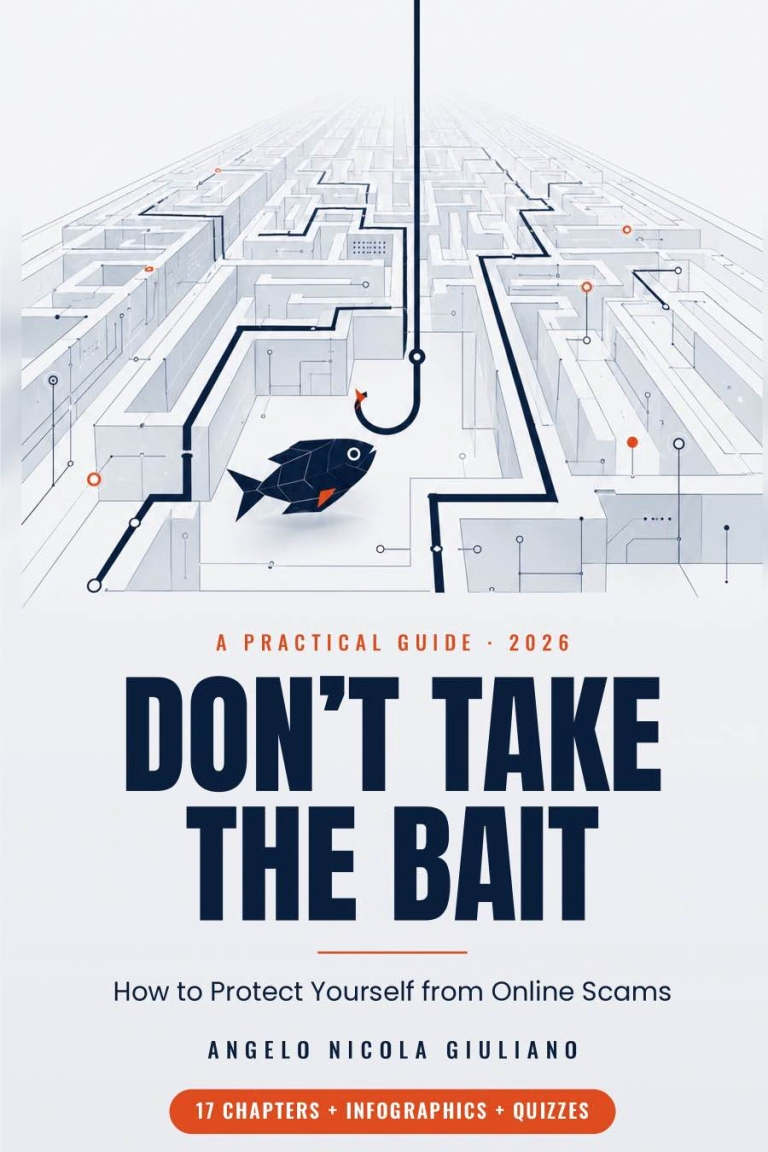
A convincing scam often looks like an ordinary part of daily life. In Don’t Take the Bait: How to Protect Yourself from Online Scams, Angelo Nicola Giuliano explores the messages, calls, and online interactions that can quietly place personal information and money at risk.
The Moment Before Someone Takes the Bait
Most online fraud begins with something familiar. It may be a delivery notification, a banking alert, a marketplace inquiry, or a message from a family member. The sender creates a believable situation and gives the recipient a reason to respond quickly.
That urgency is central to the scam. A warning about a frozen account can cause fear. A limited investment opportunity can generate excitement. A message from a child who claims to need immediate help can trigger concern. Once emotion takes control, a person may follow instructions without taking time to verify the request.
Don’t Take the Bait helps readers recognize these emotional triggers. Angelo explains that scammers study human reactions and build their schemes around predictable behavior. Their methods can affect people of every age, profession, and level of technical experience.
This understanding removes some of the shame commonly associated with online fraud. Victims may blame themselves after realizing what happened. The book presents a more useful perspective by showing how carefully these traps are constructed. Readers learn that awareness, preparation, and a brief pause can make a meaningful difference.
Turning Awareness Into Everyday Protection
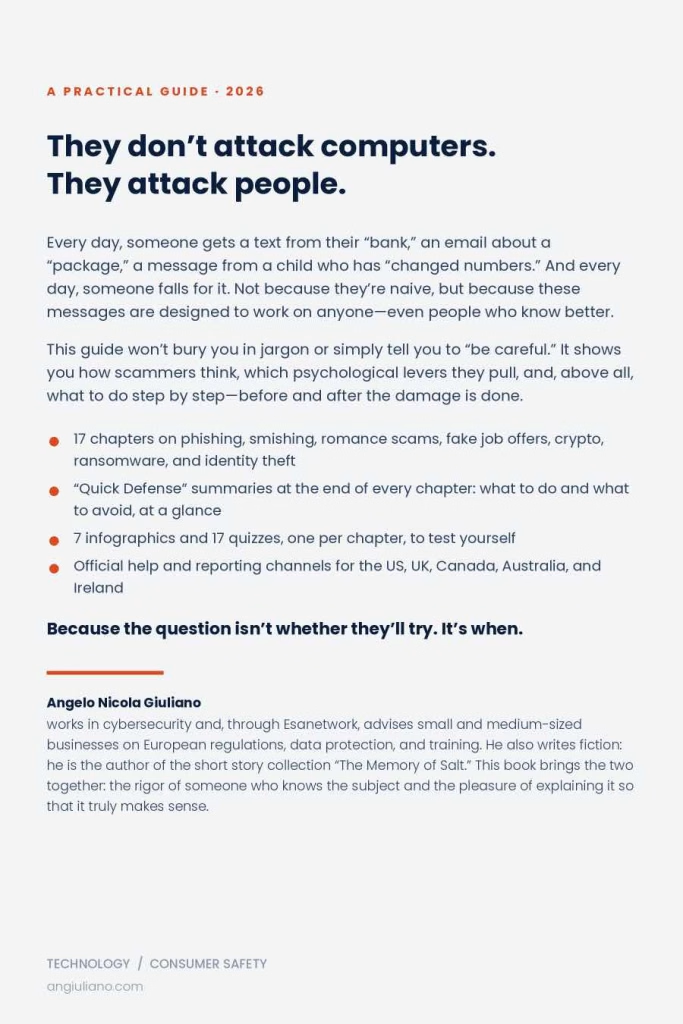
Angelo covers many of the threats people encounter through phones, computers, social platforms, and online marketplaces. The book examines phishing attempts, fake telephone calls, romance scams, investment fraud, identity theft, marketplace deception, and schemes powered by artificial intelligence.
Realistic stories bring each subject into focus. Instead of relying on highly technical descriptions, the book places readers inside recognizable situations. They can see how trust develops, how pressure increases, and how small decisions may expose sensitive information.
The book also gives readers clear actions they can use immediately. It explains how to inspect a questionable message, verify the identity of a sender, secure important accounts, and respond to unexpected requests for money. These practical habits can become part of a person’s everyday digital routine.
Guidance for the first hours after an incident is especially valuable. Someone who suspects fraud may feel overwhelmed and uncertain about what to do next. Angelo outlines useful steps such as changing passwords, contacting financial institutions, protecting connected accounts, saving evidence, and reporting the event through an appropriate official channel.
The “Quick Defense” summaries make important advice easier to review. Readers can return to these sections when they need a fast reminder. Quizzes encourage them to check their understanding, while seven color infographics present essential ideas in a memorable visual form.
The guide also includes official help channels for the United States, the United Kingdom, Canada, Australia, and Ireland. This information gives readers a practical starting point if they need to report an incident or locate reliable assistance. It also broadens the book’s usefulness for international households and families living across different countries.
About the Author
Angelo Nicola Giuliano lives in Teggiano, a historic town in southern Italy. A geologist by training, he has worked between science and technology for more than thirty years. He currently advises small and medium-sized businesses on cybersecurity, data protection, and digital compliance.
Angelo’s background as a teacher and trainer plays an important role in the book. He has delivered more than thirty courses for schools, companies, and training centers. That experience has taught him how to make complex information understandable for people with different levels of technical knowledge.
His creative interests add another dimension to his writing. Angelo is a pianist, photographer, and fiction author. His short story collection, The Memory of Salt, reflects on memory and place in southern Italy. In Don’t Take the Bait, he combines professional precision with a storyteller’s ability to make an important lesson stay with the reader.
Confidence in a More Complicated Digital World
Available in Kindle and paperback editions on Amazon, Don’t Take the Bait is a practical resource for individuals and families. Readers can work through it from beginning to end and return to its summaries whenever a suspicious situation appears.
Online scams will continue to evolve as technology changes. Angelo gives readers a steady foundation for facing them with greater awareness, calmer judgment, and stronger protective habits. His book encourages one simple response that can prevent lasting harm: pause, check, and verify before taking action.
Knowledge grows when shared. Please Pass it on!

Discover more from Paxjones
Subscribe to get the latest posts sent to your email.