
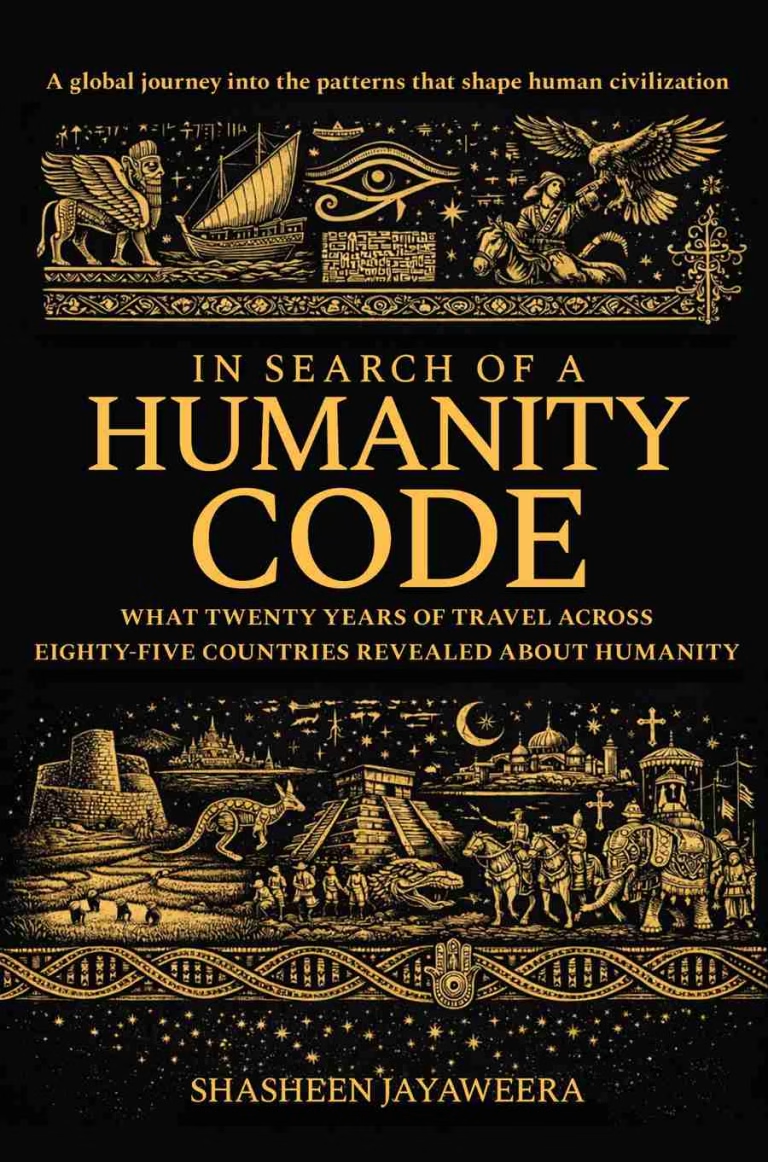
Many travel memoirs celebrate landscapes, food, and adventure. Shasheen Jayaweera‘s debut book In Search of a Humanity Code uses twenty years of journeys across eighty-five countries to explore a larger question: what truly connects human beings despite differences in culture, religion, language, and history?
Blending travel writing with philosophy and historical reflection, Jayaweera creates a deeply human narrative that encourages readers to look beyond borders and recognize the shared experiences shaping societies everywhere.
First Encounters with the Book’s Central Idea
Jayaweera approaches travel as a way to study humanity itself. He is more interested in understanding people’s struggles, hopes, traditions, fears, and personal stories.
This perspective forms the foundation of what he calls the “Humanity Code.” According to the author, every civilization expresses certain universal human traits in different ways. Cultures may vary in language, customs, and belief systems, yet similar emotional and social patterns continue to appear across generations and continents.

The book’s first section, Where We Came From, focuses on the historical forces that shaped civilizations. One of the standout themes is “Amalgam,” which explores how cultures are created through exchange and interaction. Through experiences in Sri Lanka, Cuba, Malaysia, and Kenya, Jayaweera shows how migration, trade, colonization, and intermarriage influence everything from cuisine to religion and identity.
His reflections challenge rigid ideas about cultural purity. Instead, the book presents identity as something constantly evolving. Traditions survive because people adapt, absorb, and reshape influences over time.
Looking at History Through Human Patterns
The chapters centered on resilience and survival bring emotional depth to the narrative. In Egypt, Lebanon, and China, the author examines how societies endure hardship through collective grit and perseverance. Ancient civilizations, agricultural labor, and communities recovering from conflict all become examples of humanity’s determination to survive.
Jayaweera also explores the rise and fall of powerful societies. Through destinations connected to the Mongol Empire, the Maya civilization, and historical Spain, he reflects on how success can eventually create arrogance and decline. These chapters feel like observations about repeating human behavior.
Another important theme throughout the book is connection. Cities such as Venice, Petra, Dubai, Hong Kong, and Muscat are used to demonstrate how trade routes and cultural openness often drive prosperity. Jayaweera repeatedly highlights the importance of exchange between people, suggesting that some of humanity’s greatest achievements emerged through cooperation and movement rather than isolation.
The book also spends time examining impermanence. In places like Siberia, Xinjiang, and Morocco, the author reflects on how borders and identities continue to shift over time. Civilizations that once seemed permanent eventually disappear or transform. These observations give the narrative a thoughtful, almost meditative tone.
Exploring Work, Belonging, and Spirituality
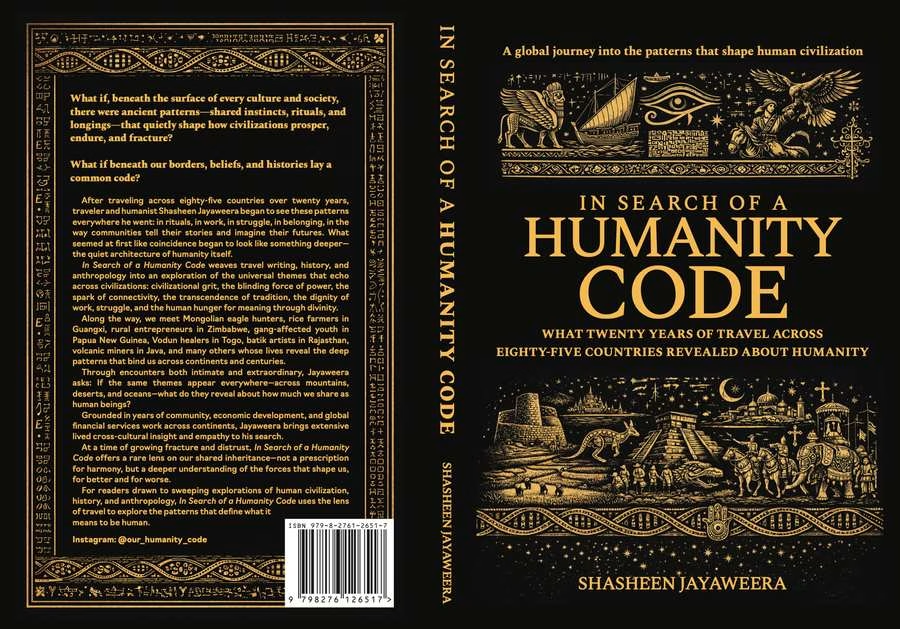
The second half of the book, How We Live, turns toward everyday human experiences. Here, the storytelling becomes more intimate and emotional.
Tradition is explored through Mongolian eagle hunters, Balinese rituals, and Indigenous Australian communities. Jayaweera presents traditions as a way for societies to preserve memory and create a sense of belonging across generations.
The section focused on work stands out for its realism. From sulfur miners in Indonesia to artisans in India and workers in Zimbabwe, the author portrays labor as a universal human experience tied to dignity, survival, and purpose. These stories ground the book’s larger philosophical ideas in ordinary life.
One of the most powerful sections examines humanity’s darker side. Through visits to Ghana, Togo, and Cambodia, Jayaweera confronts histories of slavery, violence, exploitation, and trauma. Rather than romanticizing humanity, the book acknowledges that cruelty and suffering are also part of the shared human experience.
Religion and spirituality form the final major theme. Through locations like Istanbul, Córdoba, Borobudur, and Bagan, the author explores how faith has shaped civilizations for centuries. Religion is presented as both a source of beauty and a cause of division, reflecting humanity’s constant search for meaning and hope.
About the Author
Shasheen Jayaweera is a Sri Lankan-born, Australian-raised writer whose professional background includes development economics, finance, and technology. His experiences traveling across eighty-five countries inspired In Search of a Humanity Code, a work that combines memoir, history, philosophy, and cultural observation. His writing reflects a strong interest in empathy, human connection, and global understanding.
Why This Book Leaves a Lasting Impression
In Search of a Humanity Code presents travel as an opportunity to understand humanity on a deeper level. Through thoughtful observations and personal experiences, Shasheen Jayaweera encourages readers to recognize the emotional threads shared across cultures and generations.
The book ultimately suggests that while people may appear divided by geography or belief, many of the forces shaping human life remain universal. That message gives the work both emotional warmth and lasting relevance.
Knowledge grows when shared. Please Pass it on!

Discover more from Paxjones
Subscribe to get the latest posts sent to your email.