
Every photograph in a field journal preserves a moment when something caught an explorer’s attention. In Johnny Tesone’s Secrets of the Winds: Discovery Chronicles of Earth’s Galactic Odyssey, those moments form an account of his search for connections between Earth’s landscapes and the cosmos.
The forthcoming work combines geological observations with personal storytelling and unconventional scientific hypotheses. Its pages invite readers to follow the experiences, specimens, and questions that have shaped Johnny’s independent investigations.
Inside an Explorer’s Expanding Field Journal
With more than 1,000 field visuals described in the book’s supporting material, Secrets of the Winds gives photography a central role. Johnny uses this extensive archive to present the physical details behind his interpretations and explain why particular discoveries captured his interest.
The collection covers fossils, petroglyphs, petrified burrows, and unusual geological formations. It also includes experimental observations and objects he associates with plasma-related processes. Together, these records provide a view of the material informing his proposed framework.
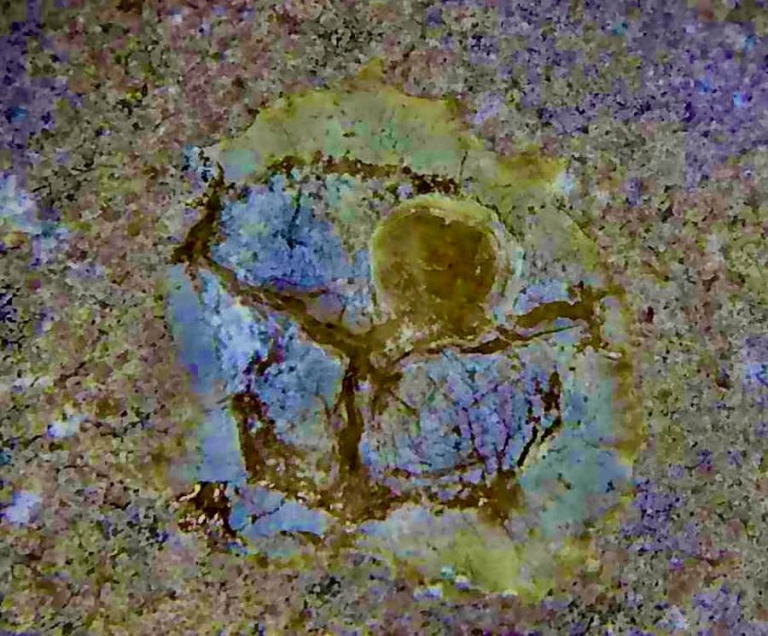
One highlighted specimen comes from Fremont County, Wyoming. The fossil measures 1 cm long, and Johnny interprets it as possible evidence of an unfamiliar life form. GeoVortex describes its age as greater than 500 million years, a claim requiring independent confirmation.
That tiny object carries considerable significance within his investigation. Johnny has proposed the name Exterran Infinitas Nimerigarus, abbreviated EIN, for the material he believes represents a previously undocumented species.
GeoVortex reports alleged geochemical similarities between ancient fossils and specimens collected in Colorado. It also suggests extraterrestrial characteristics and the possibility that living counterparts remain present. These statements reflect Johnny’s research claims. Establishing the specimens’ age, composition, biological identity, and origins would require appropriate testing and independent scientific review.
For readers, the visual approach offers a way to follow his reasoning. Each documented object becomes part of a larger inquiry into what Earth’s physical record might reveal.
From Wyoming’s Mountains to Planetary History
An experience in the Wind River Range in 2020 gave Johnny’s work fresh momentum. Drawing on decades of field research, he began developing a multidisciplinary account that brings geology into conversation with plasma physics and cosmological history.
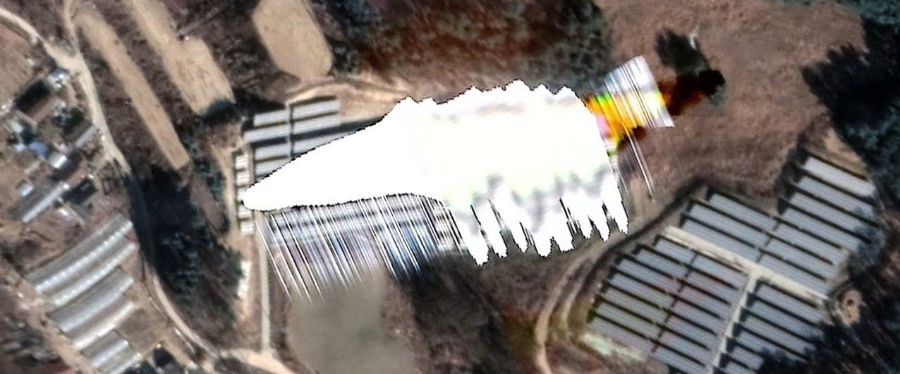
His central interest concerns interactions between energy and condensed matter. He asks whether such processes could produce recognizable features in Earth’s crust and influence the patterns observed in formations and biological material.
The book also addresses unidentified atmospheric phenomena and cosmic flashes through his proposed physical explanations. It’s a broad investigation, moving between individual observations and hypotheses about events across geological time.
A major example is Johnny’s proposed Precambrian Yellowstone upheaval. He argues that a massive explosion originating deep within Earth reshaped continents. His interpretation connects that event with the Great Unconformity, which involves missing intervals in the rock record, and with life’s development on the planet.
Another thread explores perceived connections between petroglyphs and Indigenous accounts of the “Little People,” including traditions associated with Nimerigar. Johnny incorporates these associations into his narrative. Their interpretation calls for care and attention to the specific communities, histories, and cultural meanings involved.
Future possibilities receive attention, too. He presents water as a potential focus for energy research and long-term resource challenges. Alongside these ambitious questions, personal reflections on gratitude, synchronicity, and natural rhythms reveal how exploration has influenced his everyday outlook.
About Author Johnny Tesone
Johnny Tesone is an independent geologist, world explorer, and University of Wyoming alumnus based in Louisville, Colorado. His work draws on field observation, photographic documentation, and an enduring curiosity about Earth’s history.
He founded GeoVortex to share his findings and encourage further investigation. The platform seeks scientific research collaborations and is pursuing partnerships with scientists and production studios for a documentary series based on the discoveries.
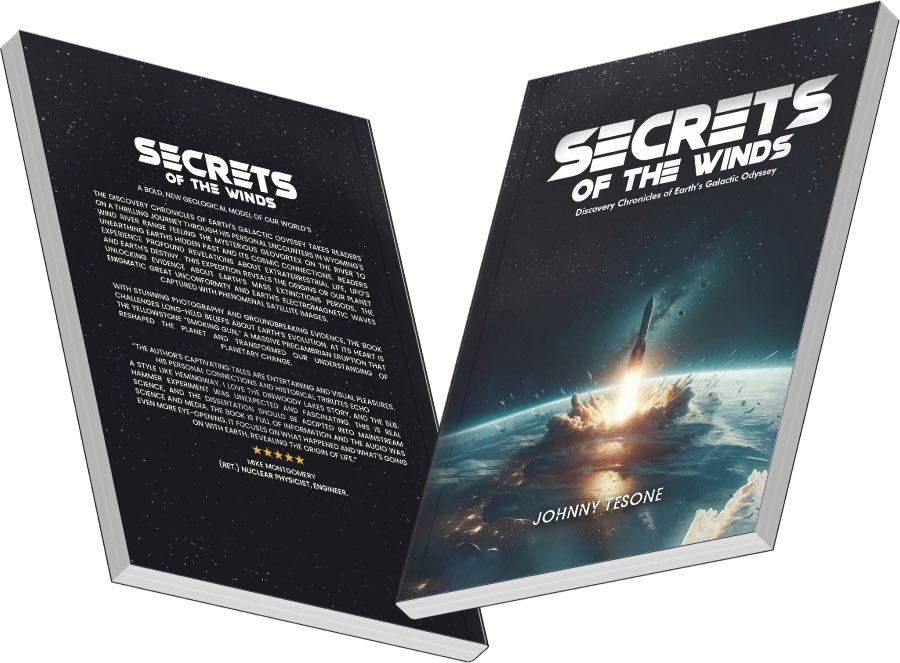
Johnny has created 30 videos for the GeoVortex YouTube channel exploring related topics. Book endorsements highlight the book’s storytelling and visual scope. Retired nuclear physicist and engineer Mike Montgomery praises the personal discovery accounts and field experiments. Reader Jose Parraga responds positively to its adventurous examination of planetary history and the imagery supporting Johnny’s interpretations.
Beyond the Last Photograph
Secrets of the Winds captures the persistence behind Johnny’s effort to understand the patterns he encounters in the field. From a fossil just 1 cm long to hypotheses about ancient planetary events, the book opens questions whose answers will depend on continued investigation and collaboration.
Knowledge grows when shared. Please Pass it on!

Discover more from Paxjones
Subscribe to get the latest posts sent to your email.