
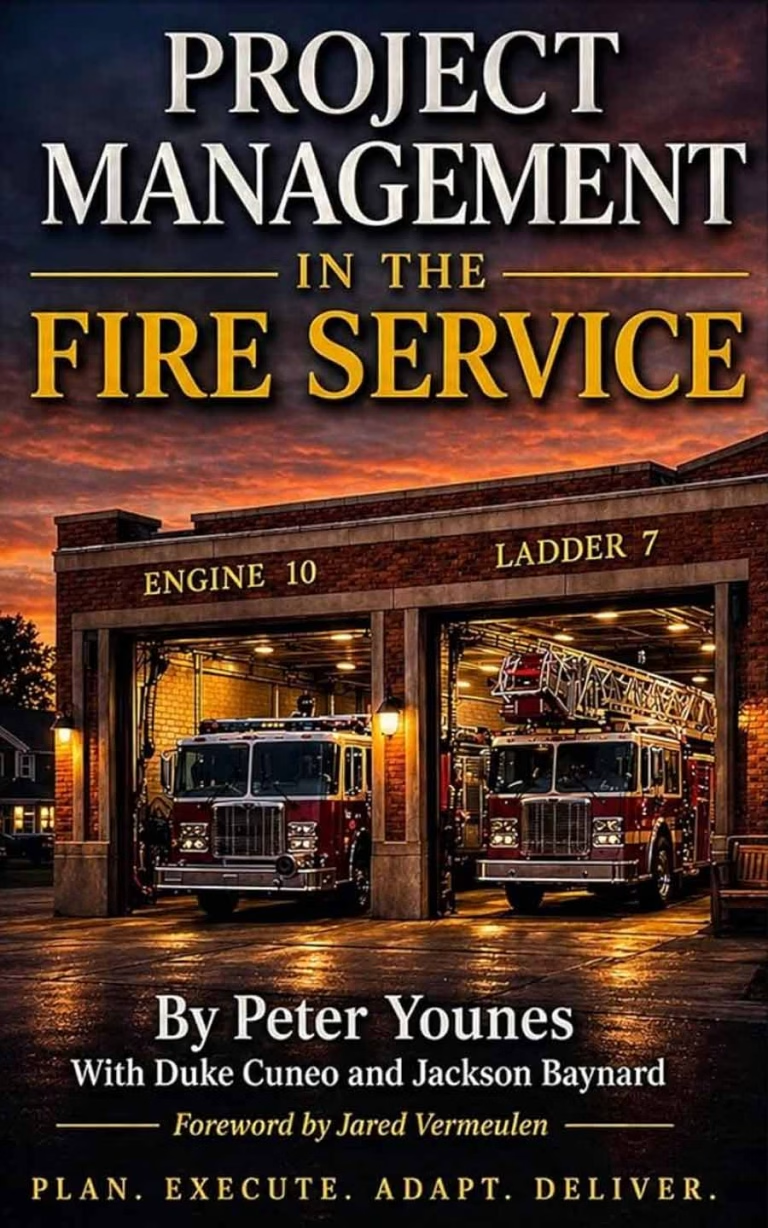
When Leadership Meets Execution in the Fire Service
Modern fire departments handle far more than emergency response. Behind the scenes, departments are managing technology upgrades, station construction projects, training initiatives, equipment rollouts, and operational changes that directly impact firefighter safety and community readiness. These responsibilities require structure, coordination, and long-term planning, yet many officers are never formally taught how to manage projects effectively.
That challenge is exactly what Peter Younes addresses in Project Management in the Fire Service, a book that has quickly gained attention for its practical approach and strong connection to real-world fire service operations.
A Practical Resource Designed for Firefighters
One reason this book stands apart is its clear understanding of how differently fire departments operate compared to private-sector organizations. Traditional project management books often revolve around corporate language, shareholder goals, sales growth, and profit-driven metrics. Those ideas rarely translate well inside a firehouse.
The fire service measures success differently. Departments focus on operational readiness, firefighter safety, risk reduction, reliability, workforce impact, and community outcomes. Peter Younes recognizes that reality throughout the book and reshapes project management principles into a format that feels approachable and relevant for firefighters and officers.
The book explores how departments routinely handle major initiatives such as building stations and training facilities, implementing new software systems, designing apparatus specifications, rolling out radios and SCBA equipment, updating policies, and leading department-wide wellness programs. These projects often involve tight budgets, staffing challenges, procurement requirements, and political considerations.
Younes explains how to navigate those challenges without relying on complicated business jargon or abstract theory. The writing stays grounded in practical application, which makes the material easier to absorb for readers who may not come from a traditional management or corporate background.
That accessibility is a major strength of the book. The lessons feel usable from the very first chapter.
Turning Strong Ideas Into Real Results
A major theme throughout Project Management in the Fire Service is that many people in the profession already have valuable ideas capable of improving their departments. Firefighters and officers frequently identify opportunities to strengthen training systems, improve communication, reduce cancer risks, support mental health initiatives, or enhance operational safety.
The issue usually is not motivation.
The issue is execution.
Without systems for organizing work, prioritizing tasks, managing timelines, communicating effectively, and coordinating people, important initiatives can lose momentum before they ever become reality. Younes presents project management as the framework that bridges the gap between vision and implementation.
The book provides step-by-step guidance for initiating, planning, executing, and closing projects inside public safety organizations. It also addresses obstacles that are unique to the fire service, including rotating 24-hour shifts, cross-shift communication gaps, operational staffing pressures, resistance to organizational change, and limited administrative bandwidth.
Readers are introduced to practical tools and templates tailored specifically for fire department environments. The book covers stakeholder management, communication planning, risk management, scope control, procurement considerations, and performance measurement using metrics that actually make sense inside emergency services organizations.
Rather than presenting project management as something rigid or corporate, Younes frames it as a leadership skill that helps departments complete meaningful work more efficiently and consistently.
That message has clearly connected with readers. The book recently became the #1 New Release in Amazon’s Business category while also earning high rankings in Business Project Management and Organizational Change categories within the Kindle Store.
Experience That Brings Credibility to the Message
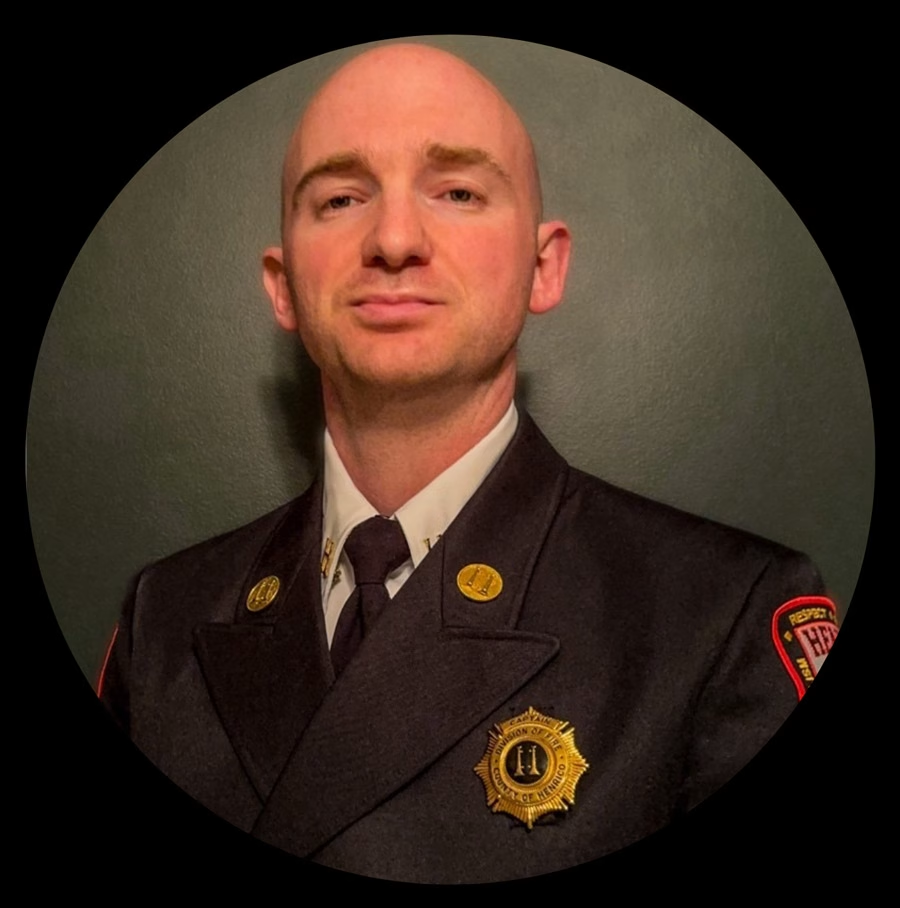
Peter Younes brings significant operational and administrative experience to the topic. He currently serves as a Fire Captain in an executive-level administrative role for a large metro-sized, internationally accredited ISO Class 1 fire department. Over his 17-year career, he has worked in leadership positions including Captain of Strategic Planning, Captain of Communications, and Executive Officer.
In addition to frontline fire service experience, Younes is also a certified PMP (Project Management Professional) with extensive formal training in project management methodologies, organizational leadership, systems thinking, implementation strategy, and organizational change.
His academic background includes a Bachelor of Science degree in Interdisciplinary Studies, a professional certificate in project management, and a specialization in Generative AI Strategy and Leadership. That combination of operational credibility and formal education gives the book a balanced perspective that feels both practical and informed.
Younes has also contributed to large-scale projects involving communications systems, technology deployment, strategic planning, policy development, training initiatives, operational improvement programs, and organizational change efforts. Those experiences shape the examples and recommendations found throughout the book.
Beyond writing, he hosts the Project Command podcast, where he discusses leadership, project execution, artificial intelligence, technology implementation, and organizational systems within public safety organizations. Both the podcast and the book reflect his broader mission of helping fire service leaders become more effective at turning ideas into action.
About the Author
Peter Younes is a Fire Captain with 17 years of experience in the fire service and extensive expertise managing projects within public safety organizations. He currently serves in an executive-level administrative role for a large metro-sized, internationally accredited ISO Class 1 fire department. He is also a certified PMP with advanced education in leadership, organizational change, project management, and Generative AI Strategy and Leadership. Through his writing and his Project Command podcast, Younes focuses on helping fire departments improve execution, strengthen organizational systems, and successfully lead meaningful initiatives.
Why This Book Deserves Attention
Project Management in the Fire Service offers something many leadership books fail to provide: practical guidance that genuinely fits the culture and operational realities of the fire service. It respects the profession while introducing systems that help departments execute complex initiatives more effectively.
For officers and leaders looking to improve how their organizations plan, manage, and complete important work, Peter Younes delivers a resource that is timely, relevant, and immediately applicable. The book is available now on Amazon.
Knowledge grows when shared. Please Pass it on!

Discover more from Paxjones
Subscribe to get the latest posts sent to your email.