
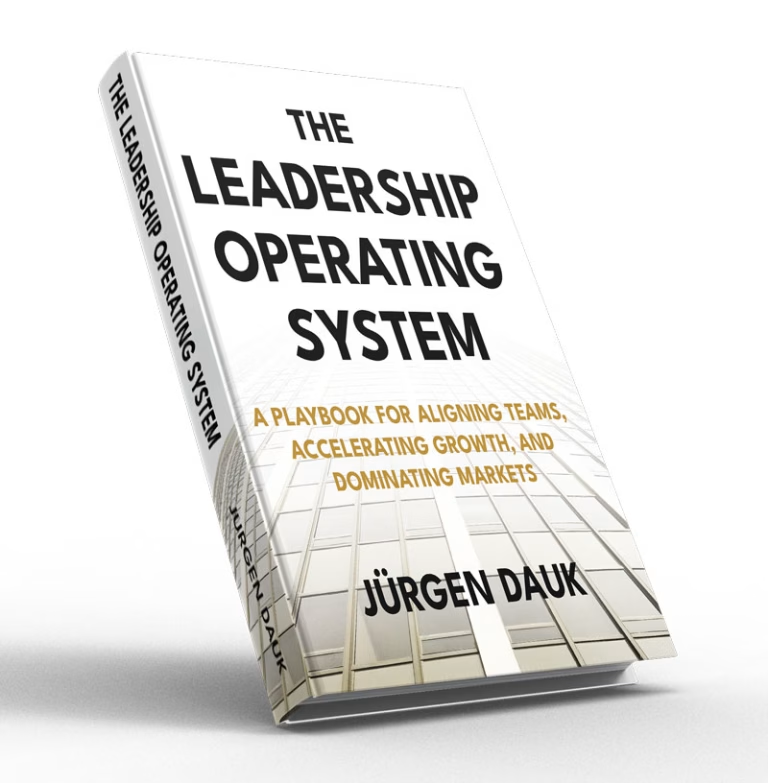
In a business landscape shaped by constant change, leaders are under pressure to deliver clarity, speed, and sustainable growth. The Leadership Operating System: A Playbook for Aligning Teams, Accelerating Growth And Dominating Markets by Jürgen Dauk steps into this space with a refreshing and structured perspective. The book offers more than ideas. It provides a system that leaders can apply to bring order and direction to complex organizations.
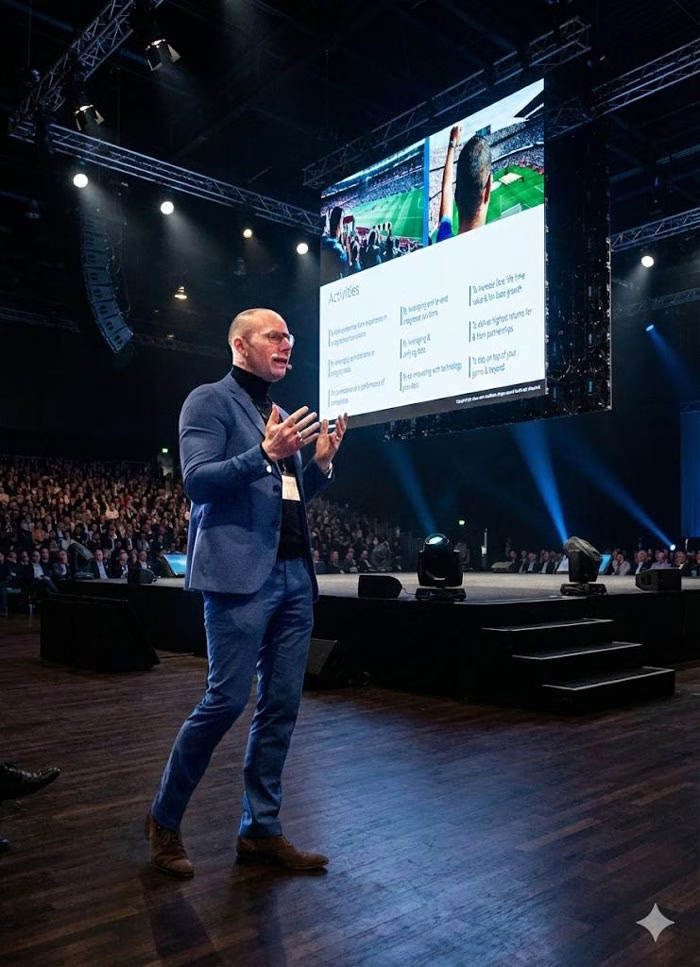
Jürgen Dauk, a seasoned executive with more than 25 years of experience, draws from a career that spans global enterprises and fast-growing tech companies. His work across organizations such as Oracle and OpenText has shaped a deep understanding of how businesses evolve. This experience is reflected in the book’s tone, which feels practical, grounded, and highly relevant.
From the opening chapters, readers sense that Jürgen is focused on execution. He shares lessons that come from real-world challenges, making the book especially useful for leaders who want results rather than theory.
Creating Clarity Through Structured Thinking
A central theme in the book is the importance of alignment. As companies grow, teams often lose focus. Priorities become scattered, and communication starts to weaken. Jürgen addresses this issue by introducing structured frameworks that help organizations stay connected to a shared purpose.
He explains tools like OKRs and the North Star framework in a way that feels accessible. These concepts are not presented as rigid systems. Instead, Jürgen shows how leaders can adapt them to suit their unique environments. The goal is simple. Every team should understand what they are working toward and how their efforts contribute to broader objectives.
Strategic execution is another area where the book stands out. Jürgen goes beyond planning and dives into implementation. He emphasizes that a strategy only matters when it translates into action. By connecting goals with measurable outcomes, leaders gain a clearer path forward.
This structured thinking creates confidence across the organization. Teams operate with direction, and leaders can make decisions with greater certainty.
Leading Teams in a Hybrid Era
The shift toward remote and hybrid work has changed how teams function. Communication patterns have evolved, and maintaining cohesion requires a new approach. Jürgen explores these dynamics with a strong focus on leadership responsibility.
He highlights the role of trust in distributed teams. Without regular in-person interaction, trust becomes a key driver of performance. Leaders need to create environments where people feel valued and understood. This includes setting clear expectations and maintaining consistent communication.
Jürgen also discusses the importance of ownership in The Leadership Operating System. When individuals understand their responsibilities, they are more likely to take initiative. This sense of accountability strengthens team performance and reduces dependency on constant supervision.
Leadership style plays a crucial role here. Jürgen encourages leaders to adopt a mindset that supports openness and clarity. When leaders communicate with intention and consistency, teams respond with engagement and focus. This creates a healthier and more productive work culture.

Driving Innovation with Purpose and Measurement
Innovation is often described as a goal, yet many organizations struggle to make it part of daily work. Jürgen takes a different approach by showing how innovation can be built into the structure of an organization.
He explains that creativity thrives in environments where people feel safe to share ideas. Leaders need to encourage experimentation and accept that learning comes through iteration. Over time, this approach builds a culture that values progress over perfection.
Jürgen also places strong emphasis on measurement. He introduces outcome-based systems that shift attention away from activity and toward results. This change in perspective helps organizations focus on what truly matters.
By using data effectively, leaders can track progress and adjust strategies quickly. This level of responsiveness is essential in competitive markets. It allows organizations to stay agile while maintaining a clear direction.
The balance between innovation and measurement creates a powerful dynamic. Teams are encouraged to explore new ideas while staying accountable to meaningful outcomes.
A Guide for Leaders Ready to Grow
The Leadership Operating System is especially relevant for leaders in tech and SaaS companies who are navigating rapid growth. It also speaks to executives in larger organizations who are working through transformation initiatives. At its core, the book is for anyone who wants to bring structure and clarity into leadership.
Jürgen’s personal journey adds depth to his insights. From his early curiosity about technology to his leadership roles across industries, he has consistently explored how organizations can improve. Today, he continues this work as an advisor and mentor, helping companies scale with intention.
Throughout the book, Jürgen maintains a clear focus on practical application. Readers are given tools they can use immediately. The ideas feel achievable, which makes the book both inspiring and actionable.
For those interested in learning more about his work, additional details can be found on his official website. This book serves as a valuable companion for leaders who want to strengthen their organizations, align their teams, and move forward with confidence.

We had the privilege of interviewing Jürgen Dauk. Here are excerpts from the interview:
Hi, thank you so much for joining us today! Please introduce yourself and tell us what you do.
I am Jürgen Dauk, and I am a Business Advisor, Board member, and Consultant. For over 25 years, I have worked in various leadership roles, including sales, marketing, operations, and general management for companies such as Oracle, OpenText, Avaya, and Planview. Recently, I also served as an Advisor to Startup companies. I led major transformation initiatives throughout my career, sparking my interest in how to design better organizations.
While the companies I worked for were very different, similar issues kept appearing. A lot of time and resources were spent on internal alignment and reporting, people were frustrated and burning out, goals were regularly missed, and focus was on short-term fixes. Work was organized in silos with fragmented responsibilities, and nobody owned anything entirely.
I started documenting my findings on what worked well and what did not work. I read books on organizational design, psychology, and agile transformation. I studied and certified in the areas of Ontology, Psychology, NLP, Agile Transformation, and Design Thinking.
I am passionate about turning companies into thriving agile organizations where people play out their fullest potential, customers are advocates, and financial success comes as a natural result.
Why do companies need to transform?
The speed of change is increasing by the day, and companies that are built for maximum control and not designed for speed and business agility will have a hard time surviving. With the recent development of AI, pressure is growing every week. Transformation is not optional anymore.
What does Agile Transformation really mean?
Agile transformation means becoming business agile in a way that cross-functional teams are empowered and enabled to make autonomous decisions that create outcomes and value. Siloed organizations and top-down management are not built for business agility.
Why is a strong North Star vision important?
A strong North Star Vision is not only inspiring but also shaping how decisions are made across the organization. Unfortunately, most vision and mission statements are more marketing speech than inspiring and guiding visions.
Why are you critical about the CRO function?
In my opinion, revenue is the natural result of great people working hard on a shared vision that is amazing to their clearly defined customers. So, if revenue is an outcome, I do not believe that a Chief Revenue Officer is the right function for a 21st-century company.
How do you see AI increasing efficiencies?
I see agile companies gaining efficiencies very quickly as they are able to gather requirements for specific tasks quickly and are therefore able to implement very specific AI tasks and workflows without any delays. Traditional matrix organizations struggle to benefit quickly from AI with their global corporate approach.
Thank you so much, Jürgen, for giving us your precious time! We wish you all the best for your journey ahead!
Knowledge grows when shared. Please Pass it on!

Discover more from Paxjones
Subscribe to get the latest posts sent to your email.