
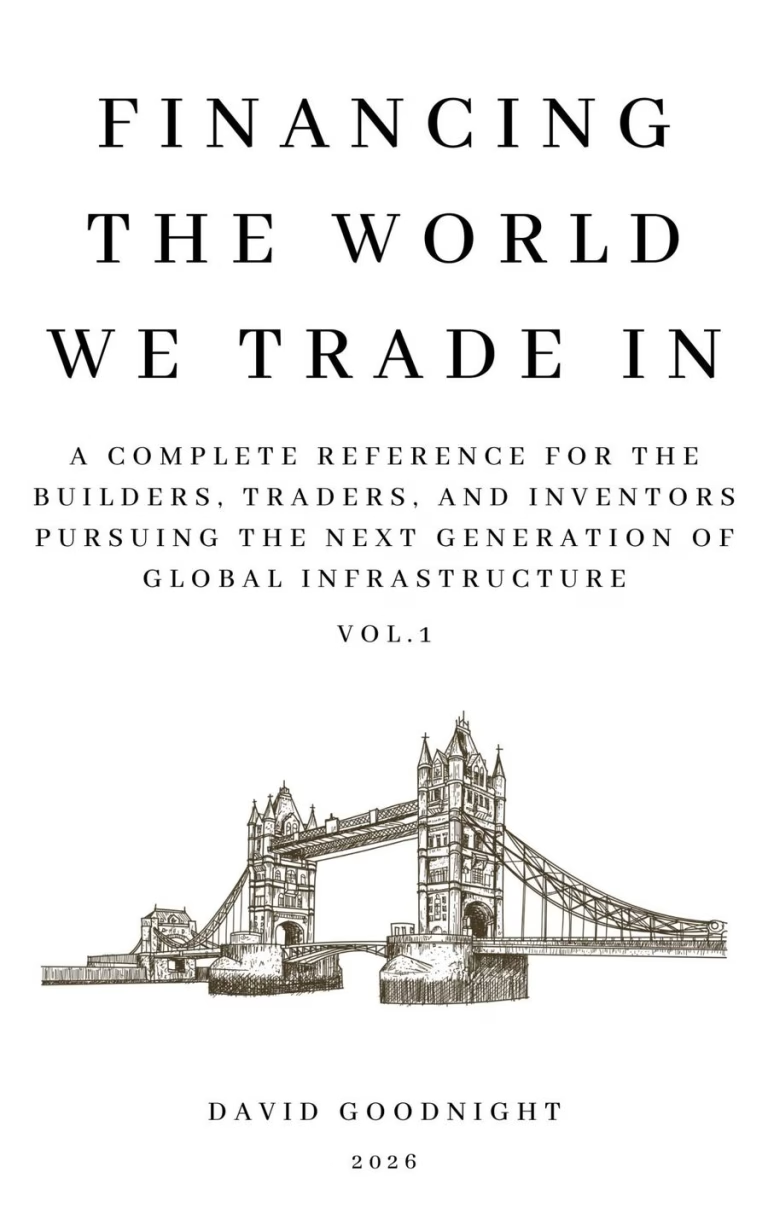
Global systems of trade and infrastructure shape everyday life in ways most people rarely pause to consider. A newly released book by David Goodnight brings those hidden mechanisms into focus, offering readers a grounded and highly practical perspective on how the modern world is financed and built.
Opening Thoughts
Financing The World We Trade In: A Complete Reference for the Builders, Traders, and Inventors pursuing the Next Generation of Global Infrastructure introduces readers to the financial architecture that supports global development. Written by David Goodnight, a seasoned infrastructure financier based in Austin, Texas, the book draws on decades of real-world experience rather than academic theory.
From the outset, David positions the book as a resource for people who are often left out of traditional financial conversations. Inventors, small-scale developers, and traders frequently operate far from institutional finance circles. This work aims to close that distance by explaining systems in a way that feels both accessible and actionable.
Spanning twenty-one chapters, the book covers everything from early-stage funding pathways to the complexities of large-scale project financing. Each section builds a clearer understanding of how ideas move from concept to execution, especially in industries tied to infrastructure and energy.
A Closer Look at the Financial Ecosystem
David’s approach centers on clarity and practicality. He explains how lenders evaluate projects, what risk factors matter most, and why many proposals fail to secure funding. By offering insight into the decision-making process behind credit approvals, he gives readers a stronger foundation for navigating financial systems.
One standout element is the explanation of tools that remain underused despite their potential. Technology performance insurance, for instance, plays a key role in bridging gaps where traditional lenders hesitate. David explains how this form of insurance helps validate new technologies at a commercial scale, allowing projects to move forward with greater confidence.
Export credit agencies also receive detailed attention. These government-backed institutions provide financing support across a wide global network, yet many developers remain unaware of their capabilities. David breaks down how these agencies function and how they can be leveraged to unlock funding opportunities that might otherwise remain out of reach.
The book also explores trade finance, the system responsible for moving goods across borders. Letters of credit, commodity-backed lending, and documentary processes are explained in a way that highlights their real-world impact rather than just their technical structure.
Technology and Transformation in Global Trade
David places strong emphasis on the changes reshaping infrastructure and trade, particularly those driven by technology. The transition toward cleaner energy sources is creating new investment opportunities, yet it also exposes limitations in existing financing models.
David highlights a critical challenge faced by innovators. Many promising technologies struggle to secure funding during the stage between development and large-scale deployment. This gap often prevents meaningful progress, even when the underlying technology shows strong potential.
To address this issue, the book presents a combination of financial strategies. Export credit agency support, insurance-backed risk mitigation, and equity crowdfunding are discussed as interconnected solutions. Together, these approaches can significantly reduce the financial burden on developers while expanding access to capital.
The discussion also extends to digital transformation within trade finance. Electronic bills of lading are gaining acceptance, reducing reliance on paper-based systems. Tokenized ownership models are beginning to change how commodities are tracked and traded. These developments are presented as part of a broader shift toward more efficient and transparent systems.
Artificial intelligence emerges as another major theme. David explores its role in project evaluation, compliance monitoring, and operational oversight. By showing how AI integrates into existing frameworks, he provides a forward-looking perspective without losing sight of practical application.
Why It Matters for Modern Builders
At its core, the book speaks to individuals who want to participate in shaping the future. David recognizes that access to knowledge often determines access to opportunity. By breaking down complex systems, he creates a pathway for readers to engage with infrastructure development in a more informed way.
The emphasis on community-driven projects adds another layer of relevance. The book explores how local groups can take ownership of infrastructure, from renewable energy installations to broadband networks. This approach reflects a shift toward more decentralized and inclusive development models.
David’s writing encourages readers to think beyond conventional limits. He presents financing as a system that can be understood and navigated with the right knowledge. This perspective makes the book particularly valuable for those working on innovative or unconventional projects.
About the Author
David Goodnight is the founder and managing partner of The Goodnight Group and Comnet International, both headquartered in Austin, Texas. Over a career spanning more than twenty-five years, David has arranged over $3 billion in project financings, mergers, and acquisitions across multiple sectors.

His work covers energy, infrastructure, real estate, and international trade, with projects spanning more than twenty countries. From pipelines and ports to renewable energy and advanced technologies, David’s experience reflects a deep understanding of how large-scale systems come together.
His expertise sits at the intersection of finance and innovation, allowing him to offer insights that are both strategic and practical. Through his writing, David continues to share that knowledge with a broader audience.
Final Thoughts
This book offers a clear and informed perspective on how the systems behind global infrastructure truly operate. For anyone looking to understand or participate in building the next generation of global development, it provides a valuable and well-structured guide.
Knowledge grows when shared. Please Pass it on!

Discover more from Paxjones
Subscribe to get the latest posts sent to your email.