

Customer service is entering a decisive period. Artificial intelligence, rising customer expectations, workforce pressures, and rapid technology development are forcing organizations to reconsider how their service operations create value. Philip Bush addresses this challenge in The CS Value Engine™: Eight Leadership Decisions for the AI Era of Customer Service, a practical book for leaders responsible for meaningful transformation.
When Modern Technology Delivers Familiar Results
A cloud migration can change the tools used by a contact center. It may introduce new communication channels, automation features, analytics, and more flexible infrastructure. Yet a successful technical implementation does not automatically improve the experience of customers or employees.
This gap sits at the center of Philip’s book. During his work across major transformation programs, he encountered organizations that had substantial budgets, qualified partners, capable teams, and credible implementation plans. Their new systems launched according to schedule. Months later, the expected improvements were difficult to find.
The underlying problem was rarely a simple technology failure. Leaders had moved forward without fully answering several foundational questions. The organization lacked a shared view of what it was building, how teams would operate, which processes required redesign, and what measurable success would look like.
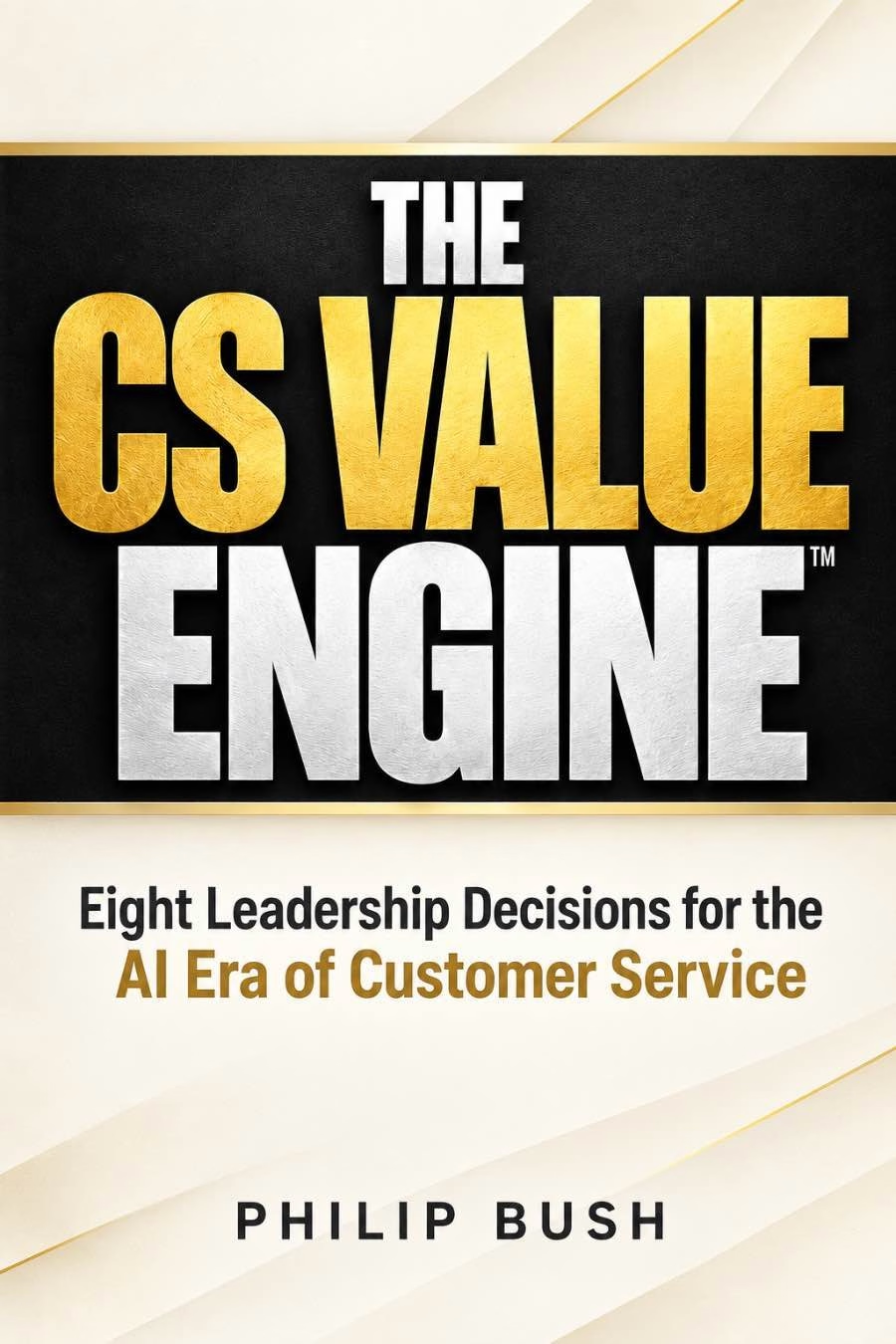
The CS Value Engine™ gives executives a way to address those questions before technology choices begin controlling the direction of the program. It presents customer service as a business capability that can influence loyalty, operational performance, employee effectiveness, revenue, and long-term competitiveness.
A Sequence Built Around Leadership Accountability
The book’s central framework organizes transformation around eight critical leadership decisions. Each decision addresses an area that must receive clear executive attention, including strategic purpose, organizational design, process reinvention, workforce readiness, data, technology, AI, and value measurement.
Philip places these decisions in a specific order because transformation capabilities depend on one another. Leaders first need to determine the future state they want to create. They can then establish how the organization should operate, decide which work must change, prepare employees, and strengthen the information required for better decisions.
Technology arrives later in the sequence. This approach prevents the platform selection process from becoming a substitute for business strategy. It also gives technology leaders clearer requirements, stronger operational context, and a better basis for evaluating investment decisions.
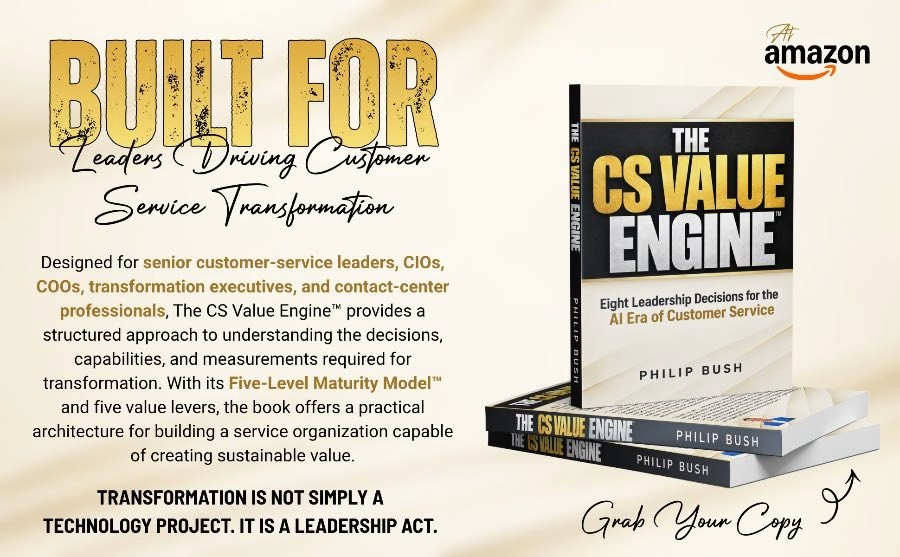
The framework remains vendor-agnostic, making it useful for organizations working with different cloud contact center platforms, specialized applications, or complex technology environments. Its focus stays on outcomes and the leadership choices required to produce them.
Ten integrated transformation domains provide the broader architecture. These domains connect strategy, customer experience, operating models, processes, workforce capabilities, data, technology, AI, and value realization. Instead of managing each area as a separate initiative, leaders can see how decisions in one domain affect progress across the whole service operation.
From Traditional Service to Agentic Operations
Organizations enter transformation from very different starting points. Some continue to rely on traditional systems and manual processes. Others have adopted digital channels, moved into the cloud, introduced intelligent automation, or started exploring agentic service models.
The book’s Five-Level Maturity Model helps leaders identify where their organization currently stands. Its stages move through Traditional, Digital, Cloud, Intelligent, and Agentic service. This structure gives executive teams a shared language for discussing readiness and planning the capabilities required for advancement.
AI receives careful attention throughout the framework. Philip treats it as part of an integrated operating strategy. Its value depends on dependable data, purposeful process design, prepared employees, suitable governance, and practical performance measures.
This guidance is especially relevant for organizations considering virtual agents, employee assistance tools, predictive capabilities, automated workflows, and more autonomous service experiences. The framework encourages leaders to decide how far AI should go based on business objectives, customer needs, operational maturity, and measurable value.
Composite scenarios drawn from real programs make the ideas easier to apply. They reveal recurring failure patterns across financial services, healthcare, telecommunications, utilities, retail, and other industries while protecting the identities of the organizations and individuals involved.
About the Author
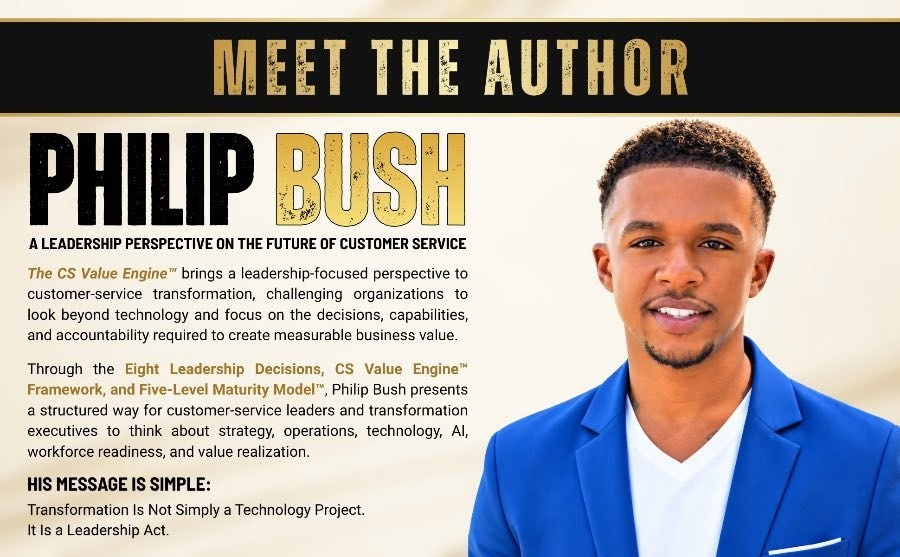
Philip R. Bush is a customer experience and AI executive, serial entrepreneur, and U.S. Air Force veteran. As a customer experience leader at Accenture, he works across go-to-market strategy, systems integration, and AI growth involving hyperscale platforms and specialized technology providers.
Earlier in his career, Philip built commercial and technical contact center transformation practices across the public and private sectors. He holds an MBA and a Bachelor of Science in Computer Science from Michigan State University. His professional credentials include certified CISO, PMP, and multi-vendor Certified Solutions Architect Professional qualifications. The CS Value Engine™ reflects two decades of practical transformation experience.
A Clearer Route to Lasting Value
Available in Kindle and paperback editions, The CS Value Engine™ speaks directly to executives who are planning major service modernization or evaluating why previous investments produced limited returns. Philip provides a structured route from executive intent to operational action.
For leaders facing the AI era, the book offers timely guidance on what to decide, what to build, and how to measure progress. Its framework can help customer service become a stronger source of value for customers, employees, and the business.
Knowledge grows when shared. Please Pass it on!

Discover more from Paxjones
Subscribe to get the latest posts sent to your email.