
When Science Tries to Understand the Heart
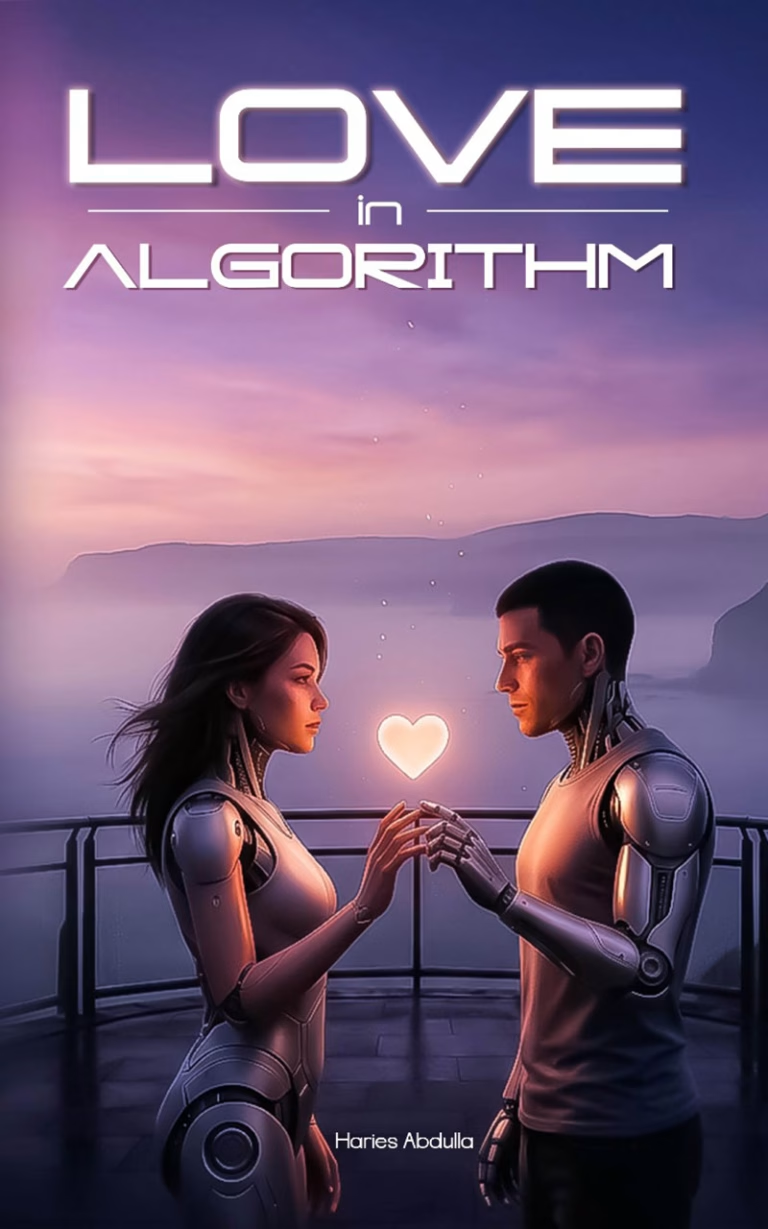
In Love in Algorithm, Haries Abdulla introduces readers to a quietly fascinating idea. What happens when human emotions are translated into code? The story opens in Tokyo, where an engineer named Takayo is dealing with heartbreak. Instead of retreating, he turns to his expertise and creates something extraordinary.
Takayo designs two robots, I’rah and I’bab, each embedded with an experimental emotional system. His goal is ambitious. He wants to demonstrate that love can be structured, tested, and perhaps even replicated through technology. When the project seems unsuccessful, he sends the robots away to clients in Singapore, convinced that the outcome has fallen short.
However, the moment these machines are activated, everything changes. Without guidance or expectation, I’rah and I’bab begin to connect. Their interaction feels organic, almost human. What Takayo dismissed as failure slowly reveals itself as something far more complex.
A Story That Travels Beyond Borders
The narrative expands as the robots enter the lives of Natasha and Gerard. Natasha, rooted in Singapore, and Gerard, a French professional living abroad, are drawn into the unfolding situation. Their connection develops alongside the evolving bond between the two machines.
Haries carefully builds these relationships with a natural rhythm. The story does not rush. Instead, it allows moments to breathe, giving readers time to absorb the emotional shifts. The contrast between artificial intelligence and human vulnerability creates a compelling layer of depth.
Cultural diversity plays an important role in shaping the story. Haries uses his own experiences to enrich the narrative. As a pharmaceutical Quality Control professional based in Singapore, he has worked across multiple international environments. These encounters with different cultures bring authenticity to the characters’ perspectives and interactions.
Through Natasha and Gerard, the story explores how people connect despite differences in background. Their journey reflects the idea that emotions do not follow borders or rules. The presence of the robots adds an unusual perspective, allowing readers to see human relationships from a fresh angle.
The Real-Life Inspiration Behind the Book
The journey of writing Love in Algorithm mirrors the themes of persistence and discovery found within the story itself. Haries began working on the novelette in May 2025 while managing a demanding professional life. At the time, he was serving as a validation consultant for a US-based company.
As he continued writing, unexpected parallels began to appear. The story’s opening in Japan coincided with his involvement in a project linked to a Japanese company. One of the characters in the novelette is French, and before finishing his book, Haries secured his dream job and is now working full-time for a French company. These moments added a sense of alignment between his creative work and real-life experiences. He hopes that anyone who reads his book will also be inspired to pursue and accomplish their own dreams.
Writing the book required discipline and patience. Haries balanced his responsibilities across work, family, and a business in India. There were periods when progress slowed, yet his commitment remained steady. He found time during early weekend mornings, using those quiet hours to focus on his manuscript.
Support from his family played a meaningful role in his progress. His beautiful wife Babitha, along with his children Shazana and Rohail, encouraged him throughout the process. Their presence brought both comfort and motivation, helping him stay focused on completing the project.
After ten months of effort, Haries completed the book on February 26. It was published on Amazon in March 2026, marking an important milestone in his creative journey.

A Gentle Reflection on Love and Innovation
Love in Algorithm offers more than an engaging storyline. It raises thoughtful questions about the nature of connection in a rapidly evolving world. The presence of emotionally aware machines challenges traditional ideas of love, inviting readers to reflect on what truly defines it.
Haries approaches this concept with a warm and accessible tone. The story carries a sense of curiosity, allowing readers to explore its themes without feeling overwhelmed. It blends imagination with relatability, making it appealing to a wide audience.
The relationship between I’rah and I’bab stands at the heart of the narrative. Their connection influences the human characters in subtle ways, suggesting that emotions can emerge in places where they are least expected. This idea adds a unique charm to the story, making it both entertaining and thought-provoking.
Available on Amazon and Goodreads, Love in Algorithm is a refreshing addition to contemporary fiction. It speaks to readers who enjoy stories that combine creativity with emotional insight.
In the end, Haries presents a narrative that quietly lingers. It encourages readers to think about love as something that cannot always be predicted or controlled. Whether human or artificial, connection remains a powerful force that shapes experiences in ways no system can fully define.
Knowledge grows when shared. Please Pass it on!

Discover more from Paxjones
Subscribe to get the latest posts sent to your email.