
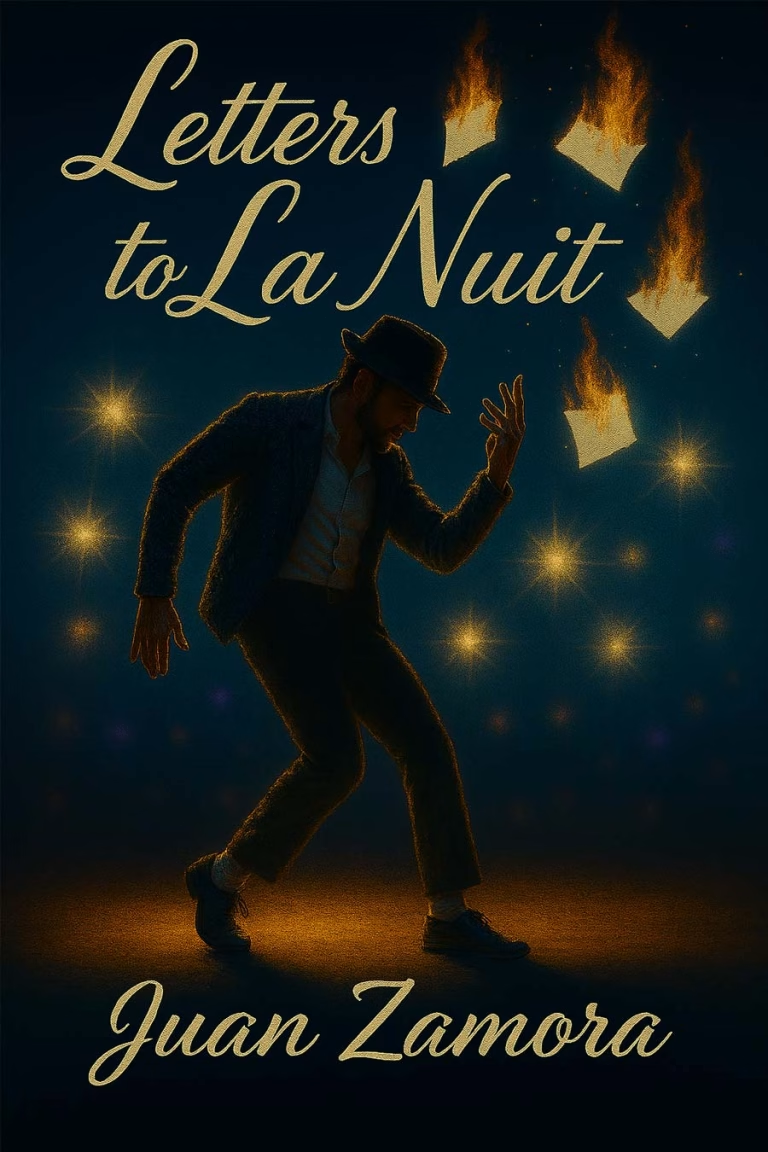
Letters to La Nuit by Juan Zamora Explores Crime, Music, and the Weight of Human Choices
Opening Reflections
Some novels invite readers into a world that feels alive from the very first page. Letters to La Nuit by Juan Zamora achieves exactly that through an emotionally charged blend of literary fiction, crime drama, and psychological tension. Set in Canada and written with both English and French dialogue, the novel creates a moody atmosphere where music, secrets, and damaged lives slowly intertwine.
Available in Kindle and Paperback editions on Amazon, the book delivers a gripping experience filled with suspense while also exploring themes of loneliness, redemption, loyalty, and identity.
A Midnight Broadcast That Changes Everything
The story revolves around Olem Jazz, a prison courier who spends his days transporting inmate correspondence and his nights immersed in street dancing and music culture. Olem moves through life with quiet detachment until five inmate letters mysteriously disappear from his delivery route. At first, he barely notices the missing letters. That changes instantly when one of them is broadcast live on La Nuit, Kingston’s midnight radio station.
At the exact same moment the letter reaches listeners across the city, three prisoners escape from custody.
That single event transforms the novel into a tense and emotionally layered mystery. What initially appears to be a small administrative mistake quickly evolves into something far more dangerous. Police investigations intensify, hidden motives begin surfacing, and several lives become connected through circumstances none of the characters fully understand.
The radio broadcast itself becomes one of the most fascinating elements in the novel. La Nuit feels mysterious, intimate, and emotionally haunting. It acts as more than a simple backdrop for the story. The station quietly links strangers together while exposing deeply personal emotions to the public.
Étienne, a troubled music student, becomes another central figure after choosing to air one of the letters. His decision places him under police scrutiny while forcing him into a dangerous situation involving fugitives, underground networks, and emotional uncertainty. As the tension grows, Olem and Étienne become tied together through fear, music, and survival.

Characters Shaped by Isolation and Emotional Conflict
One reason Letters to La Nuit leaves a strong impression is its focus on emotionally complex characters. Juan Zamora creates individuals who feel vulnerable, flawed, and deeply human. Each character carries emotional baggage that influences their choices throughout the story.
Olem Jazz stands out because he never feels like a typical crime-thriller hero. He struggles with uncertainty and emotional conflict while trying to understand his role in the chaos unfolding around him. His connection to music gives the character depth, while his growing involvement in the conspiracy forces him to question loyalty, trust, and personal responsibility.
Nick Fabio also brings emotional intensity to the narrative. Introduced as a troubled young man carrying painful scars and dangerous connections, his storyline adds another layer of darkness to the novel’s atmosphere. Through characters like Nick, the book explores emotional isolation in a way that feels authentic rather than exaggerated.
Relationships throughout the story remain fragile and unpredictable. Friendships become strained under pressure. Alliances shift constantly as secrets surface. Several characters must confront painful truths about themselves while deciding how far they are willing to go to protect the people they care about.
The emotional realism makes the suspense feel stronger because the stakes extend beyond crime and investigation. Readers become invested in the characters’ emotional survival as much as the mystery itself.
A Distinctive Blend of Literary Style and Suspense
Juan Zamora’s writing style gives Letters to La Nuit a unique identity within modern crime fiction. The bilingual dialogue adds texture and realism while reinforcing themes tied to identity and cultural belonging. The transitions between English and French feel natural and contribute to the novel’s immersive atmosphere.
The settings throughout the book create vivid imagery. Radio studios, crowded apartments, junkyards, courtrooms, nightclubs, and rain-covered city streets all contribute to the story’s cinematic quality. Readers can almost hear the music echoing through the scenes as tension slowly builds chapter after chapter.
Music plays an especially important symbolic role in the novel. It serves as both refuge and danger for many of the characters. Songs, performances, and shared artistic passion become emotional lifelines in a world filled with suspicion and betrayal.
The novel also succeeds because it balances suspense with thoughtful emotional depth. Questions surrounding guilt, innocence, morality, and redemption remain present throughout the story. Readers are constantly left wondering who can truly be trusted and whether certain characters deserve forgiveness for their past decisions.
About the Author
Juan Zamora is an independent author whose work explores multiple genres and unconventional ideas. His novels often examine spiritual conflict, moral dilemmas, human illusion, and emotional vulnerability through deeply layered storytelling.
Inspired by a lifelong imagination that began in childhood, Zamora creates stories filled with unusual characters and emotionally meaningful themes. His writing often encourages reflection while blending tragedy, wisdom, and human connection into memorable narratives.
Closing Perspective
Letters to La Nuit offers far more than a standard crime thriller. It combines mystery, emotional complexity, music culture, and literary storytelling into a powerful reading experience that lingers long after the final page. Juan Zamora crafts a tense yet thoughtful narrative filled with atmosphere, unforgettable characters, and meaningful emotional depth.
For readers searching for a crime drama that feels artistic, emotionally raw, and completely original, this novel delivers an experience worth discovering.
Knowledge grows when shared. Please Pass it on!

Discover more from Paxjones
Subscribe to get the latest posts sent to your email.