
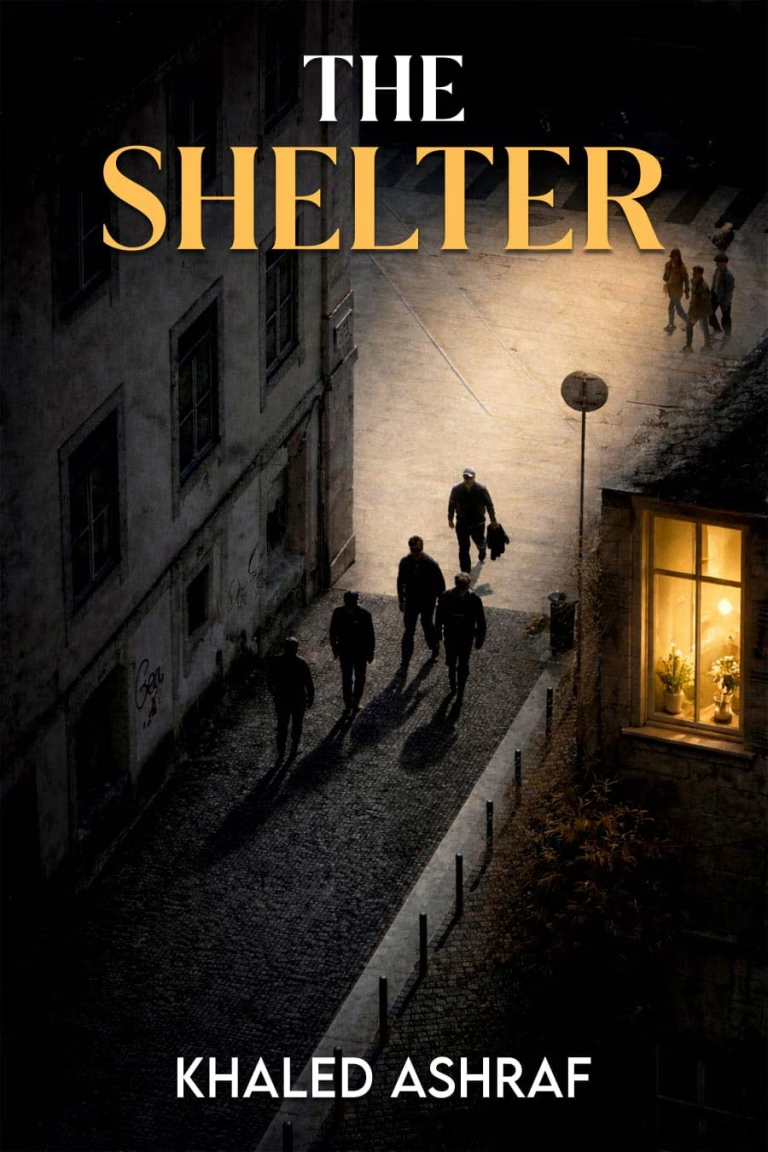
Khaled Ashraf’s The ShelterExamines the Quiet Systems That Redefine Fatherhood
Some novels demand attention through dramatic twists and loud conflict. Others leave their mark through emotional honesty and careful observation of ordinary struggles. The Shelter by Khaled Ashraf belongs firmly in the second category. This literary novel offers a deeply reflective look at fatherhood, illness, institutional life, and the silent emotional burdens many people carry every day.
Set against the backdrop of urban America, The Shelter follows Elliot Harris, a father attempting to remain connected to his young son while navigating systems that slowly reshape his role in ways he never fully expected. Through restrained storytelling and layered emotional insight, Ashraf creates a novel that feels intimate, socially aware, and painfully relevant.
Elliot Harris and the Fragile Meaning of Stability
Elliot Harris lives with an autoimmune condition that remains invisible to most people around him. His illness does not announce itself outwardly, yet it shapes every aspect of his daily routine. He carefully measures his physical energy, counts steps, and plans his movements with precision. To outsiders, Elliot appears dependable and composed. He works hard, shows up for his son, and tries to maintain order in a life constantly demanding more from him.
Still, the novel quickly reveals that reliability alone does not guarantee security.
The central conflict begins when Elliot chooses to walk across the city to pick up his eight-year-old son Marcus rather than attend a mandatory compliance workshop connected to a transitional housing program known as The Shelter. The decision feels human and understandable. Yet its consequences unfold through subtle administrative changes that gradually affect every part of his life.
His housing status becomes uncertain. School communication shifts away from him. Officials begin asking for proof instead of extending trust. The language surrounding him remains calm and professional, though the impact becomes increasingly personal. No one openly accuses Elliot of failure. Instead, systems quietly reposition him until he begins losing his place within his own family structure.
This gradual erosion gives the novel much of its emotional force. Ashraf demonstrates how institutions can alter lives without visible confrontation. The damage arrives through procedures, policies, and bureaucratic language that appear supportive on the surface while narrowing a person’s sense of belonging underneath.
A Literary Voice Grounded in Lived Experience
Khaled Ashraf brings remarkable authenticity to the themes explored throughout The Shelter. His professional background includes service as a Philadelphia police officer, educator, veteran, school principal, and public scholar. He has worked extensively with incarcerated and underserved communities, experiences that clearly shape the emotional and institutional realism present in the novel.
Rather than relying on exaggerated conflict, Ashraf writes with patience and emotional clarity. His storytelling focuses on silence, routine, observation, and internal pressure. That approach allows readers to fully experience Elliot’s emotional isolation and quiet exhaustion.
The novel also examines masculinity in a thoughtful and honest way. Elliot is a man attempting to fulfill expectations placed upon fathers while carrying physical pain and emotional strain privately. Ashraf explores the hidden realities many men experience yet rarely discuss openly. Fear, vulnerability, shame, exhaustion, and emotional displacement all exist beneath Elliot’s controlled exterior.
This emotional complexity elevates The Shelter beyond a traditional family drama. It becomes a broader reflection on how people are shaped by systems designed to measure worth through compliance and consistency. Elliot’s struggle is personal, though the themes surrounding him feel universal.
The Emotional Cost of Being Unseen
One of the novel’s most compelling strengths lies in its exploration of invisibility. Elliot’s illness cannot be easily recognized, and that reality affects how institutions interpret his behavior. His exhaustion remains misunderstood because it cannot be documented in simple ways. His dedication as a father becomes questioned because he struggles to satisfy bureaucratic expectations.
Ashraf uses these experiences to ask larger questions about modern institutional life. What happens when paperwork carries more authority than lived reality? How do systems quietly redefine relationships between parents and children? When does support begin turning into surveillance?
These questions remain central throughout the novel. Readers witness Elliot slowly realizing that presence alone is no longer enough. He must continually prove his reliability to institutions that already seem prepared to doubt him.
At the emotional center of the story is Elliot’s relationship with Marcus. Every decision he makes reflects his desire to remain part of his son’s life. That emotional anchor gives the novel warmth even during its most painful moments. Readers understand that Elliot is fighting for more than stability. He is fighting to remain visible.
A Powerful Debut from Plain Sight Press
The Shelter marks the first novel by Khaled Ashraf and serves as a strong introduction to his literary voice. Through Plain Sight Press, the independent publishing imprint he founded, Ashraf focuses on stories examining fatherhood, education, institutional systems, and belonging. Those themes are woven thoughtfully throughout this novel.
Readers interested in literary fiction centered on emotional realism, social commentary, redemption, and family dynamics will likely find The Shelter deeply affecting. Ashraf approaches difficult subjects with compassion and restraint, allowing the emotional weight of the story to emerge naturally.
The Shelter by Khaled Ashraf is available on Amazon. Additional information about the author and Plain Sight Press can be found at plainsightpress.org.
We had the privilege of interviewing Khaled Ashraf. Here are excerpts from the interview:
Hi, thank you so much for joining us today! Please introduce yourself and tell us what you do.
I am an educator, school principal, author, veteran, and public scholar based in Pennsylvania. My professional background includes law enforcement, corrections education, military service, and educational leadership. I currently work in education leadership while also writing about fatherhood, incarceration, identity, masculinity, and the hidden emotional realities many people carry through life. I founded Plain Sight Press as an independent publishing platform to tell stories that are honest, human, and socially meaningful.
Please share your journey with our readers.
My journey has been anything but traditional. I became a father at a young age and entered the workforce early through law enforcement. I spent years as a Philadelphia police officer before transitioning into education and eventually becoming a school principal within the correctional education system. Along the way, I began reflecting deeply on the systems surrounding family, incarceration, masculinity, and education. Writing became a way to process experience, ask difficult questions, and explore the emotional realities people often hide. The Shelter grew from those reflections. Much of my work centers on fathers, silence, responsibility, and the unseen struggles that shape lives behind closed doors.
What are the strategies that helped you become successful in your journey?
Consistency, reflection, discipline, and resilience have been the biggest factors in my journey. I learned early that growth often comes through difficult experiences. I stayed committed to education, continued learning, and tried to build meaningful work out of lived experience rather than running from it. I also believe in authenticity. Whether in leadership or writing, people connect with honesty. I try to approach both my professional work and creative work with humility, discipline, and purpose.
Any message for our readers?
Do not underestimate the power of your story or your experiences. Some of the most meaningful work comes from the places we once wanted to hide. We live in a world that often rewards appearances over honesty, but people are still deeply hungry for truth, humanity, and connection. I hope The Shelter encourages readers to reflect more deeply on fatherhood, identity, healing, and the emotional lives of the people around them.
Thank you so much, Khaled Ashraf, for giving us your precious time! We wish you all the best for your journey ahead!
Knowledge grows when shared. Please Pass it on!

Discover more from Paxjones
Subscribe to get the latest posts sent to your email.