
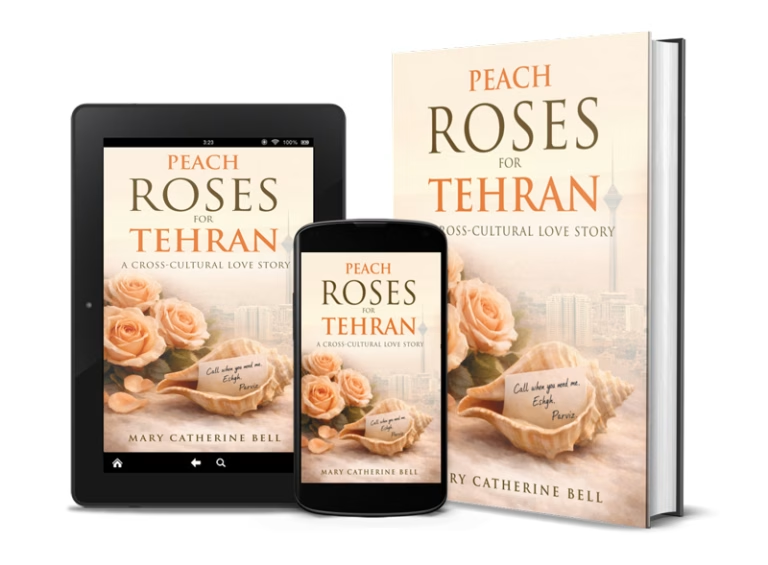
When the Past Calls Back: A Moving Look at Peach Roses for Tehran
Some love stories arrive with grand declarations and dramatic turns. Others unfold quietly, carrying an emotional depth that stays with readers long after the final page. Mary Catherine Bell’s Peach Roses for Tehran: A Cross-Cultural Love Story belongs firmly in the second category. Thoughtful, intimate, and emotionally layered, the novella explores the lingering power of first love and the courage required to reconnect after decades apart.
The novel opens with a chilling news alert announcing bombing in Tehran. For Claudia, a highly respected government official living in Washington, D.C., the headline instantly breaks through the carefully controlled rhythm of her life. Beneath years of professional success and personal discipline rests the memory of Parviz, the Iranian-born engineer she loved deeply in her youth.
That single moment sets the emotional tone for the entire story. Claudia reaches out to Parviz only to confirm that he is safe, yet the exchange quickly awakens feelings both believed had long faded into the past. Instead of relying on dramatic twists, Mary Catherine Bell allows the emotional tension to grow naturally through memory, longing, and honest conversation.
The result is a romance that feels remarkably genuine.
About the Author
Mary Catherine Bell is a nonprofit strategist and global development advisor whose work has taken her across cultures and continents. Her writing blends emotional depth with cross‑cultural insight, exploring the quiet, powerful moments that shape human connection.
Two Lives Shaped by Distance and Time
Parviz’s journey adds rich emotional texture to the novel. As a young man studying mechanical engineering in the United States, he originally planned to return home to Tehran after graduation. His family remained there, and his future seemed clearly mapped out. Everything changed when his work on renewable energy attracted significant attention from an American corporation. What began as academic promise soon evolved into an international career based in Texas.
That unexpected turn altered the course of his life completely.
Claudia and Parviz were separated not only by geography but also by circumstance, ambition, and time. Nearly twenty seven years pass before they reconnect, yet Bell writes their reunion with such emotional realism that readers immediately understand why neither truly forgot the other.
One of the novella’s most compelling qualities is its portrayal of mature love. These are not impulsive young characters swept away by fantasy. Claudia and Parviz carry emotional scars, responsibilities, and carefully built lives. Their second chance requires patience, vulnerability, and trust. Every conversation feels meaningful because both understand what can be lost when fear or hesitation takes control.
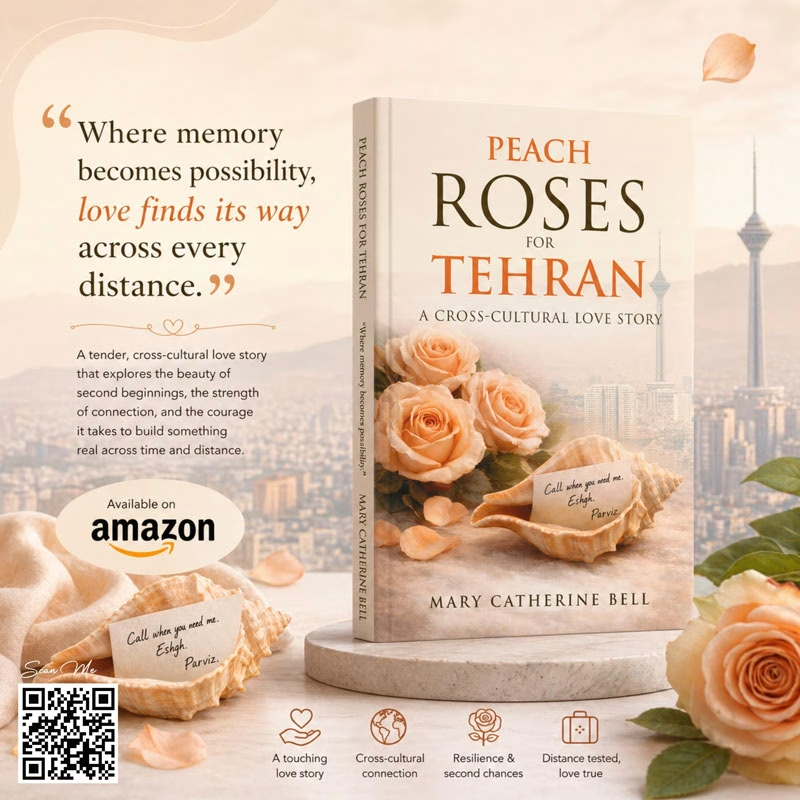
The author captures this beautifully through subtle details rather than overwhelming sentimentality. A remembered phrase, a thoughtful gift, or the mention of peach roses becomes emotionally significant. Bell understands that intimacy often exists in quiet moments, and she builds the relationship through those moments with remarkable restraint and elegance.
A Romance Rooted in Cultural Depth
Beyond the central love story, Peach Roses for Tehran offers a thoughtful exploration of cultural identity and emotional belonging. Mary Catherine Bell writes with sensitivity about the experience of living between worlds, particularly through Parviz’s connection to Iran and his life in America. His story reflects the emotional complexity of immigration, ambition, and family loyalty without ever feeling forced or overly political.
The cross-cultural elements enrich the romance rather than overshadow it. Claudia and Parviz are shaped by different backgrounds and experiences, yet their emotional connection transcends those differences in a believable way. Bell presents love as something capable of bridging distance while still respecting individuality and personal history.
The use of symbolic imagery also gives the novella a memorable atmosphere. Peach roses represent tenderness and emotional renewal. A conch shell carries echoes of memory and longing. The Farsi word “eshgh,” meaning love, becomes a soft but powerful reminder of the bond that survived years of silence.
Mary Catherine’s prose reflects the same emotional refinement found in the story itself. Her writing style feels cinematic and immersive while remaining emotionally grounded. Readers are invited into the inner emotional lives of the characters without excessive dramatics or unnecessary complexity.
That balance gives the novella its unique charm.
Why This Story Leaves a Lasting Impression
What makes Peach Roses for Tehran stand out is its emotional honesty. The novella understands that love at midlife carries different stakes than youthful romance. Claudia and Parviz are forced to confront fear, uncertainty, demanding careers, and the emotional risks of opening their hearts again. Their relationship feels powerful because it grows from emotional maturity rather than idealized fantasy.
Mary Catherine Bell’s professional background in nonprofit leadership, global development, and the arts clearly influences her storytelling. She writes with compassion, intelligence, and careful emotional observation. Her characters feel layered and authentic, and the emotional pacing of the story allows readers to fully invest in their journey.
International readers have already connected strongly with the novella’s themes. A reviewer from Sweden praised the book as “A tender, atmospheric story that lingers.” and “deeply reflective and beautifully written,” highlighting its thoughtful exploration of memory, cultural expectations, and emotional connection. That response captures exactly why the story resonates so strongly.
As Mary Catherine’s debut published work, Peach Roses for Tehran introduces a writer with a distinctive literary voice and a deep understanding of human emotion. Readers searching for a heartfelt cross-cultural romance with emotional depth and mature storytelling will likely find this novella unforgettable.
The book is available now on Amazon for those ready to experience this tender and emotionally resonant journey.
We had the privilege of interviewing Mary Catherine Bell. Here are excerpts from the interview:
Hi, thank you so much for joining us today! Do you believe true love ever really disappears?
I think true love changes shape, but it doesn’t vanish. It settles into the quiet places of our lives — memory, scent, music, a single word in another language — and waits for the right moment to rise again. Claudia and Parviz discover that some connections don’t fade; they simply wait to be acknowledged.
Your story suggests that true love never dies. Is that intentional?
Yes. I wanted to show that real love doesn’t evaporate with time or distance. It may go silent, it may sleep, but it doesn’t die. When Claudia and Parviz reconnect after twenty-seven years, they’re not starting over — they’re returning to something that always lived quietly inside them.
What inspired you to write Peach Roses for Tehran?
I wanted to explore the emotional landscape of a woman whose life is shaped by public service, responsibility, and the quiet sacrifices that come with a demanding career. Setting her in Virginia, working in Washington, D.C., allowed me to contrast the structured world of federal service with the intimate, unpredictable nature of cross-cultural love.
Why did you choose a heroine who works in government?
I wanted a character who carries both strength and restraint — someone who understands duty, yet still has a private world shaped by longing and memory. Heroine’s role as an Undersecretary adds depth to her emotional journey.
What do you hope readers feel while reading this book?
A sense of tenderness, cultural richness, and the quiet ache of a love that never fully disappeared. I hope readers feel the tension between responsibility and desire, and the courage it takes to open one’s heart again.
How does the setting influence the story?
Virginia and Washington, D.C., give the novel a grounded, contemporary American backdrop — structured, professional, and high-pressure. Tehran brings warmth, history, and sensory richness. The contrast between these worlds mirrors the heroine’s internal conflict.
What makes this story unique?
It blends literary prose with a deeply personal cross-cultural love story, told through the eyes of a woman balancing public duty with private longing. The emotional truth of the story is what makes it resonate.
Thank you so much, Mary, for giving us your precious time! We wish you all the best for your journey ahead!
Knowledge grows when shared. Please Pass it on!

Discover more from Paxjones
Subscribe to get the latest posts sent to your email.