
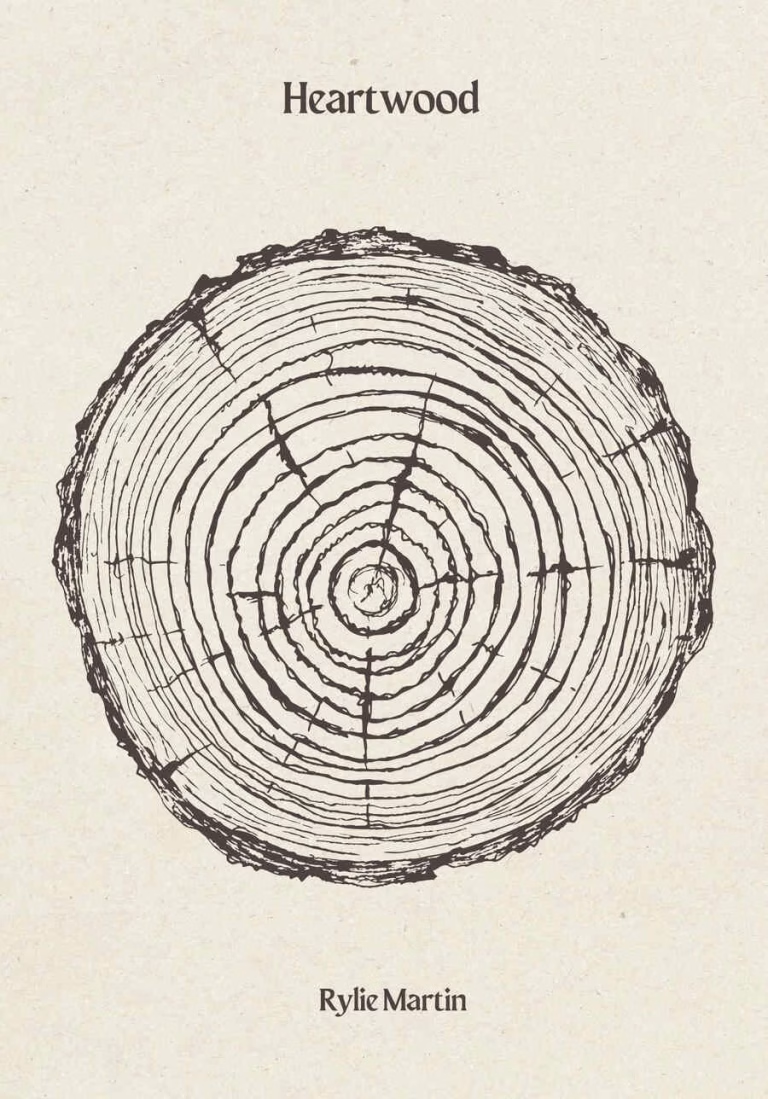
The end of a relationship can change the meaning of places, possessions, and memories that once felt comforting. What remains is often a mixture of affection, disappointment, anger, and the difficult knowledge that life must continue. In Heartwood, Rylie Martin gathers those emotions into six connected poems about losing love and slowly returning to oneself.
Where Memory and Heartbreak Meet
Heartwood begins within the emotional space left behind by a relationship that once seemed permanent. Its poems examine the thoughts that continue after separation, including questions about what was real, what could have lasted, and why love sometimes leaves a person feeling uncertain about their own worth.
Rylie approaches this experience with openness. She allows longing and resentment to exist within the same collection, reflecting the way grief can change from one day to the next. A tender memory may create warmth before reopening an old wound. Anger can provide temporary protection, while silence encourages deeper reflection.
The six-poem structure gives the collection a sense of intimacy. Every piece contributes to a shared emotional movement, leading readers through attachment, resistance, sorrow, self-examination, and eventual acceptance. Because the poems are interconnected, they can be experienced as individual moments and as parts of one unfolding story.
A recurring concern is the need to feel chosen. The collection considers what happens when that need begins influencing someone’s identity and emotional security. Love becomes difficult when a person starts measuring personal value through another individual’s attention. The poems gently explore the process of recognizing that pattern and finding a way beyond it.
There’s no effortless recovery in these pages. Healing develops slowly through honest observation, emotional release, and a willingness to understand the past without becoming trapped there.
The Meaning Carried by Trees, Rivers, and Stones
The natural world provides Heartwood with its strongest visual language. Trees, mountains, rivers, forests, geodes, weather, and wildlife help transform internal feelings into images readers can immediately recognize. Nature becomes a companion to grief, offering both a reflection of pain and a reminder that change is always taking place.
The title refers to the dense inner wood at the center of a tree. This core supports the tree as it grows, even though it’s made from older layers. The metaphor fits the collection’s understanding of heartbreak. Past pain doesn’t simply vanish. It settles into a person’s story and may eventually become a source of insight, resilience, and emotional strength.
Tree rings deepen that idea by recording seasons of growth. Difficult years remain visible alongside abundant ones, and every ring contributes to the final form. Through this imagery, the poems suggest that people can honor what they’ve survived without allowing it to limit who they may become.
Rivers introduce a sense of movement. Mountains bring distance, challenge, and a wider perspective. Geodes point toward the private beauty hidden beneath an unremarkable surface. Weather reflects emotional change, while borrowed light raises thoughtful questions about finding comfort and confidence through another person.
These natural symbols appear beside everyday belongings left after the relationship. Such objects can become unexpectedly powerful because they preserve routines, conversations, and plans. Their presence shows how heartbreak often enters daily life through small encounters rather than dramatic moments.
A Gentle Recognition of Temporary Love
One of the collection’s most affecting ideas is that temporary love can still be meaningful. An ending doesn’t automatically invalidate the affection that came before it. Something may have been sincere, transformative, and valuable even when it couldn’t continue forever.
This perspective gives Heartwood emotional maturity. The speaker can grieve what ended while recognizing what the experience revealed about intimacy, boundaries, and identity. Acceptance develops through a clearer understanding of the relationship and the self that existed within it.
The collection also gives anger a legitimate place in recovery. Anger may arise from uncertainty, unmet needs, or the realization that personal boundaries were gradually lost. By listening to that feeling, the speaker begins to understand what she deserves and what she wishes to protect in the future.
Readers who’ve carried lingering affection after a breakup will likely recognize themselves in these poems. The collection offers companionship through emotional truth, allowing grief to feel seen without offering a simple timeline for overcoming it.
About the Author
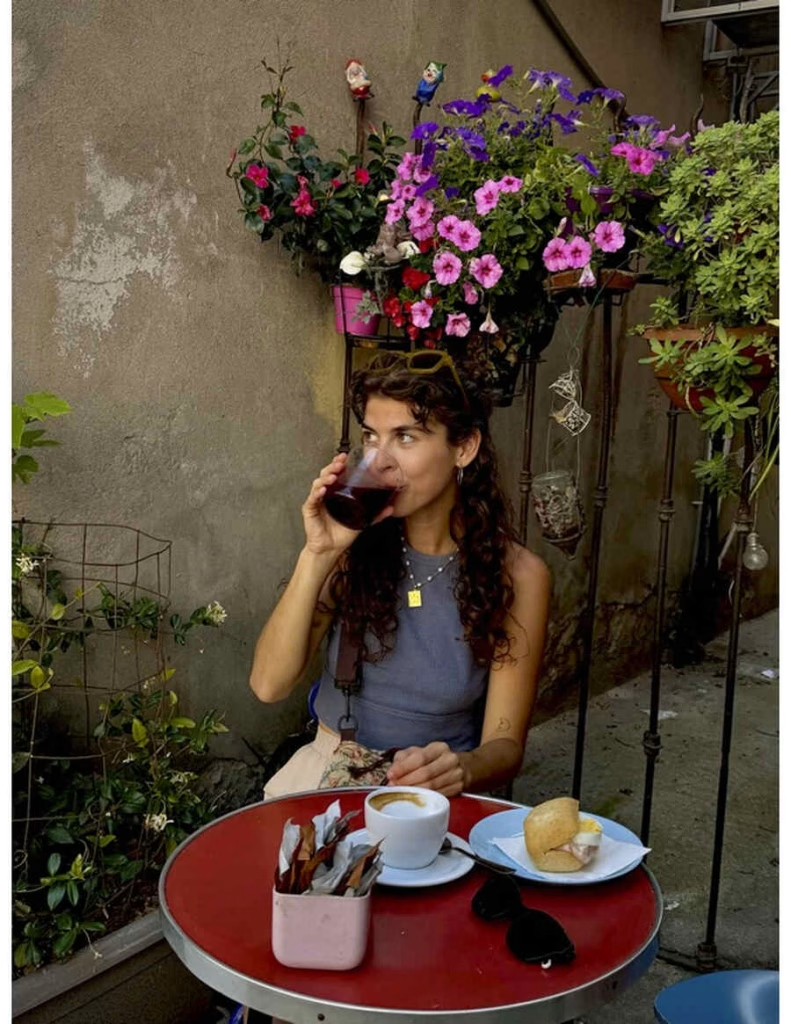
Rylie is a Columbus, Ohio-based poet, memoirist, educator, traveler, and storyteller. Her writing explores grief, belonging, identity, relationships, recovery, becoming, and the search for a place that feels like home.
She’s also the author of Malu, a memoir inspired by her 410-mile walk along Spain’s Camino de Santiago, and its prequel, Temporary Belongings. Her creative work draws from teaching, travel, long-distance trails, unfamiliar roads, nature, personal experience, and the lasting presence of people and places.
Rylie shares poetry through her website, social media, live readings, and open mics across the country. Outside her writing life, she enjoys hiking, exploring new destinations, and traveling with her rabbits.
The Strength Found Beneath the Surface
Heartwood captures the private work of rebuilding after love has changed shape. Through six carefully connected poems, it follows grief toward a place where the past can be acknowledged with honesty and carried with greater peace.
The collection leaves readers with a reassuring idea. Pain can settle deep inside a person without becoming the end of their story. Like the heartwood of a living tree, it may eventually support new growth, stronger boundaries, and a renewed sense of self.
We had the privilege of interviewing the author. Here are excerpts from the interview:
Thank you so much for joining us today! Please introduce yourself and tell us what you do.
My name is Rylie Martin, and I am a writer, poet, educator, and traveler based in Columbus, Ohio. I work in literacy education while also writing and independently publishing books inspired by travel, relationships, grief, identity, and belonging.
I am the author of the travel memoirs Malu and Temporary Belongings, as well as the poetry collection Heartwood. In addition to publishing, I share my work through live poetry readings, social media, and my website. My goal is to create writing that feels honest, emotionally resonant, and deeply connected to place.
Please tell us about your story and journey.
Writing has always been one of the main ways I understand my experiences. My journey as an author grew from travel, teaching, and the desire to preserve moments that might otherwise disappear.
My first book, Malu, was inspired by walking more than 400 miles across Portugal and Spain on the Camino de Santiago. That journey challenged me physically and emotionally, but it also gave me a greater understanding of independence, connection, and the meaning of home. Temporary Belongings explores the experiences that led me toward that journey and the people and places that shaped me along the way.
My newest collection, Heartwood, was written during a period of heartbreak and major personal change. The poems move through longing, protest, grief, reflection, and acceptance. Nature became the language through which I could express emotions that were sometimes difficult to explain directly.
My writing journey has not followed a traditional path. I have balanced creating books with teaching, traveling, performing at open mics, and learning how to promote my work independently. Each project has helped me become more confident in my voice and more willing to share vulnerable work with others.
What strategies helped you become successful in your journey?
One of the most important strategies has been allowing myself to begin before I feel completely ready. Writing a book, publishing it, or reading a poem aloud can feel intimidating, but confidence often comes after taking the first step rather than before it.
Consistency has also been essential. I try to keep writing, revising, sharing, and connecting with readers even when progress feels slow. Small actions—attending a reading, posting a video, giving someone a business card, or revising one page—can gradually create meaningful opportunities.
Thank you so much, Rylie Martin, for giving us your precious time! We wish you all the best for your journey ahead!
Knowledge grows when shared. Please Pass it on!

Discover more from Paxjones
Subscribe to get the latest posts sent to your email.