
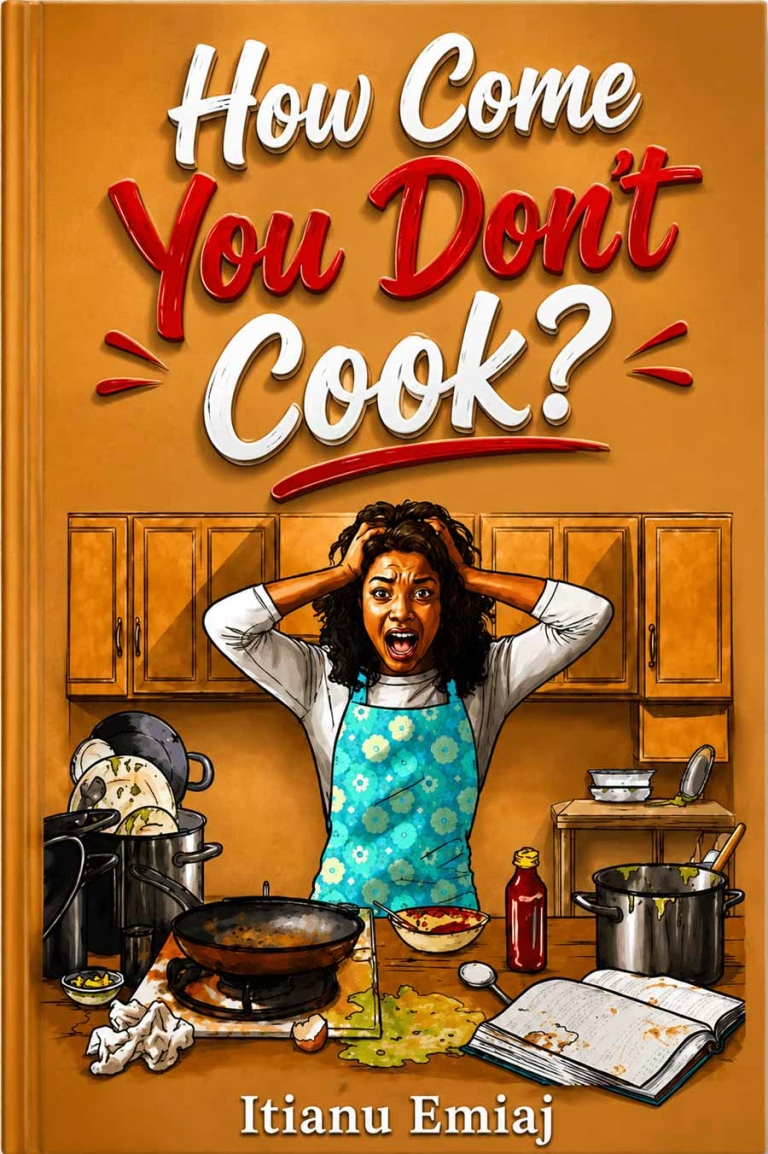
Beyond the Kitchen: The Bigger Story Behind How Come You Don’t Cook? by Itianu Emiaj
Daily routines often reveal the values people carry from one generation to the next. Preparing meals, sharing household responsibilities, and gathering around the table may seem ordinary, yet these moments frequently shape family bonds in powerful ways. They also open the door to conversations about fairness, tradition, and the changing expectations placed on women and men.
In How Come You Don’t Cook?, Itianu Emiaj presents an engaging contemporary story that looks beyond recipes and kitchens. Through relatable characters, humor, and meaningful family experiences, the novel encourages readers to think differently about the roles people play at home and how those roles continue to evolve.
Looking Beyond Traditional Expectations
The question posed by the book’s title immediately captures attention because it reflects a conversation that continues to take place in many households. While society has experienced significant changes over the years, expectations surrounding domestic life often remain deeply rooted in tradition. Emiaj explores this reality with warmth and honesty, allowing readers to recognize familiar situations through the experiences of her characters.
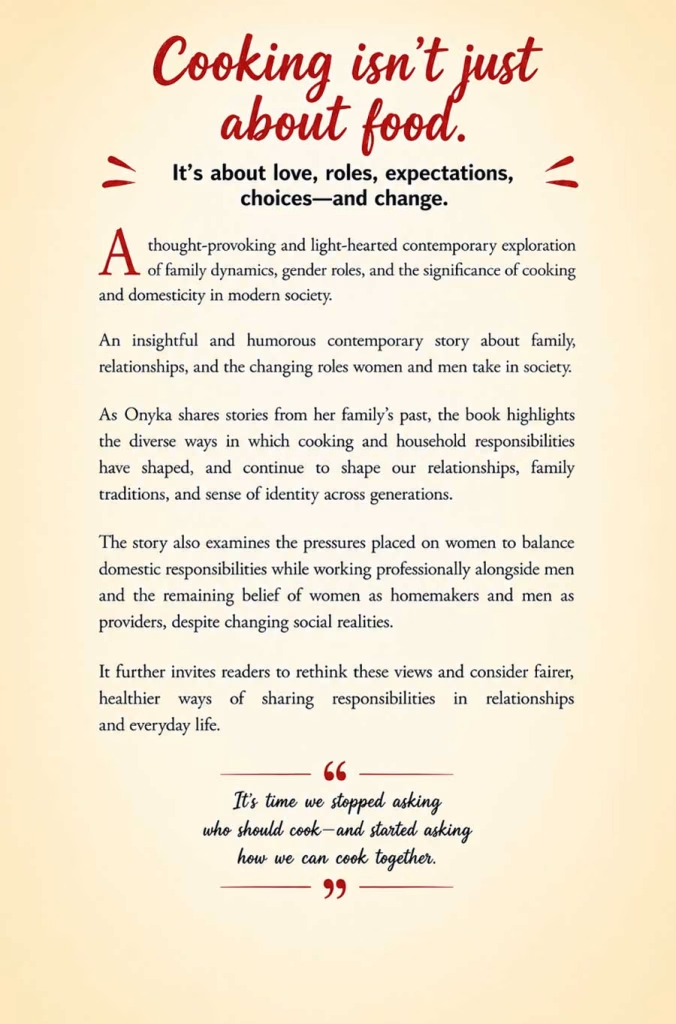
The story follows Onyka as she shares memories from her family’s history. Each story offers another glimpse into the way cooking and household responsibilities have influenced relationships across generations. Rather than focusing solely on preparing meals, these moments reveal how family traditions, personal choices, and cultural expectations become woven into everyday life.
Readers witness how simple conversations around food often uncover larger questions about responsibility, identity, and partnership. These reflections encourage thoughtful discussion while keeping the narrative approachable and entertaining.
A Fresh Perspective on Family and Partnership
One of the book’s greatest strengths is its balanced examination of modern relationships. Families today often juggle demanding careers, personal ambitions, and household responsibilities. Even with these changes, many people continue to encounter traditional beliefs about who should manage domestic tasks.
Emiaj thoughtfully examines the pressures many women experience as they balance professional careers alongside expectations within the home. The novel also acknowledges the long-standing image of men as providers while encouraging readers to question whether these assumptions continue to reflect contemporary family life.
Instead of assigning blame or presenting one viewpoint as absolute, How Come You Don’t Cook? welcomes multiple perspectives. Every character brings experiences shaped by upbringing, personal values, and family traditions. This thoughtful approach allows readers to appreciate the complexity behind everyday decisions while considering how cooperation can strengthen relationships.
The message grows even more meaningful through one simple idea shared within the book:
“It’s time we stopped asking who should cook and started asking how we can cook together.”
That statement reflects the heart of the novel. Shared responsibilities create stronger partnerships. Mutual respect grows through teamwork, open communication, and understanding.
Humor, Heart, and Conversations That Stay With Readers
Although the novel explores meaningful social themes, it maintains an inviting and enjoyable tone throughout. Emiaj blends humor with emotional insight, creating scenes that feel genuine and familiar. Readers may smile at recognizable family interactions while quietly reflecting on similar experiences from their own lives.
The storytelling feels natural because it draws inspiration from situations many people have witnessed or experienced themselves. Discussions about marriage, parenting, family traditions, and household duties unfold through believable conversations rather than dramatic conflict. This makes the book accessible to a wide audience while encouraging readers to think more deeply about everyday life.
Another appealing aspect is the way the novel promotes empathy. It reminds readers that people often develop their beliefs through personal experiences and cultural influences. Understanding those perspectives creates opportunities for healthier conversations instead of unnecessary division.
Book clubs, families, and anyone interested in contemporary fiction with meaningful themes may find this story especially rewarding. It encourages reflection while remaining entertaining from beginning to end.
Readers interested in exploring How Come You Don’t Cook? can purchase the book directly through the author’s website.
About the Author
Itianu Emiaj is a Mozambican author whose creative inspiration comes from everyday conversations and the lived experiences of family members, friends, acquaintances, and individuals she has encountered throughout her life. Her stories encourage readers to engage thoughtfully with topics such as marriage, motherhood, relationships, and social expectations, fostering compassion, respect, and greater understanding between people with different perspectives.
Her published works include This Body Is Not Mine, How Come You Don’t Cook?, You Don’t Have a Husband Are You Okay?, I’m Afraid of My Protector, Who Is Going to Take Care of You When You Are Old?, and Who Will Save My Brother. Although she writes fiction, many of her stories are inspired by real-life experiences and conversations, making her narratives especially authentic and relatable. Beyond her literary work, Emiaj is a dedicated human rights activist who has spent much of her career supporting transformational initiatives that address discrimination, reduce inequality, and empower marginalized communities.
Lasting Reflections
How Come You Don’t Cook? offers far more than an engaging family story. It invites readers to reconsider familiar assumptions, appreciate the value of shared responsibilities, and recognize how everyday conversations can inspire meaningful change. Through humor, honesty, and thoughtful storytelling, Itianu Emiaj delivers a novel that celebrates empathy, cooperation, and the enduring importance of understanding one another within the home and beyond.
We had the privilege of interviewing the author. Here are excerpts from the interview:
Hi, thank you so much for joining us today! Please introduce yourself and tell us what you do.
My name is Itianu Emiaj and I’m a female fiction writer although I’m always conflicted with saying fiction given that the stories that I write about are based on real life scenarios either my own or other people lived experiences, of people that I know or conversations that I had or heard from strangers and with the view to influence change in people’s lives, hopefully for the better. And before I unintentionally start an unnecessary debate or controversy, I’m not questioning the concepts (fiction vs nonfiction), starting a campaign to change the categories or anything in those or any other lines. I’m just saying what I feel when I have to decide a category where my writing fits.
Besides being a writer, I’m a human rights activist, and most of my life’s work has been facilitating transformational processes to fight discrimination and inequality and support marginalized groups’ empowerment.
Please tell us about your journey.
I consider myself a citizen of the world because I don’t believe in borders, given that they are people-made, and I love to travel, meet new people, explore different cultures, and enrich myself with the beautiful mosaic that human diversity is made of. Plus, there is an illusion that we are more different than we are. When in fact, the reality shows that the core of human nature and fundamental needs are pretty much the same. Nonetheless, I’m Mozambican, as I was lucky enough to be born in Mozambique.
My journey as a writer started way before I grabbed the pen and made the decision to write. And what do I mean by that?
Since I was little, I felt like I didn’t belong here. Yes, it might sound odd, weird, or let’s say it, crazy. But that’s how I genuinely felt most times. There was something odd about how human beings related to one another in their consistent inconsistencies, if that makes sense, which made me sad. There were too many contradictions that were embedded in many rules that we need to follow, and it was confusing to me, as if we were complicating simple things. As I grew up, rather than disappearing, the feelings of sadness and confusion just kept growing bigger and bigger, and for many years, more than I can count, numerous thoughts about the contradictions started to consistently have long and exhaustive meetings in my head. Exhaustive because in my head it was rather simple, and yet the reality showed otherwise.
At a given point, I thought that I would write them as essays for publication or papers for presentation at conferences regarding related topics. However, years passed and due to my crazy work schedule, yeah, being a human rights activist is not for the faint of heart (smile), the papers and essays never came to life. Yet the meetings in my head never stopped. In the end, sadness and confusion invited frustration to the meetings, and this one doesn’t have patience.
So, last year, during my yearly holidays, I had a “call” from the creator with a deadline telling me that procrastination time was long overdue, and it was time to start writing. Unfortunately for me (so I thought), as a “punishment for my laziness” (smile), it would no longer come in the shape of papers or essays as I initially planned but rather books. Six, to be more specific, for now. When I received the call, I nearly passed out given that I never considered myself a writer and, different from some friends of mine who enjoy writing, I was never inclined to do so, except when it comes to reports, those I enjoyed writing. But then again, it’s a different kind of writing. Nevertheless, there it was, the call, without an invitation but with a challenge that I could no longer run away from. It had caught up with me. If I’m being honest, I was also tired of providing the office in my head free of charge for those meetings to happen. Therefore, it was time to gather my fears, insecurities, and impostor syndrome (I’m not a writer, remember?) and put an end to such meetings in my head and set them free in the world. So, after my well-deserved holidays, my sabbatical year to write the books began, and I decided to write in a way that I wished the conversations about the topics looked like… heart to heart. So, here they are fresh from the oven and ready to be consumed and hopefully enjoyed by those who choose them as companions. May the readers feel the heart in the conversations.
What are the strategies that helped you become successful in your journey?
I measure my success based on the kind of impact I have or try to have in people’s lives, regardless of the type of relationship that I have with them (family, friends, colleagues, etc). Having said that, what has made my journey successful is my ability to, even when I’m having what I consider to be uncomfortable or difficult conversations, genuinely listen to people even when I don’t agree. I try to understand what people say and where they are coming from, or even how they feel when I don’t understand. Oh yeah… at times we simply don’t understand others. However, if it’s not a crime or something harmful to anybody, I peacefully disagree while respecting their views. We live in a diverse world rich with a myriad of views and experiences; therefore, we are bound to disagreement, which doesn’t mean we are at war with one another.
I’d add my openness and ability to acknowledge my ignorance. I don’t need to have an opinion on everything because I don’t know everything. This allows me to consistently learn from diverse ways of seeing and understanding life and the world. Finally, yet the most important in my view, I try to be empathic.
I believe that once we realise that not everything is about us or is a competition, know when to let go of things that don’t affect us or that are none of our business, learn and consider ways of seeing the world fundamentally different from ours, life and the world becomes more enriching than divisive.
Any message for our readers?
I hope with my writing to inspire deep and honest, self and collective, reflections about the embedded contradictions within the rules that we grow up blindly following regarding topics such as marriage, children, old age, among others that I write about which, in current times, are violently cracking while making us miserable. I’m also inviting readers to start or continue (for those who already started) their journey of unlearning patterns and behaviors informed by such rules that may no longer serve them. Insisting on blindly following them is making us miserable. In addition, I also extend the invitation to those who, like me, have been suffering, silently or loudly, refusing to accommodate themselves to such rules, to gather all the courage and power within to embrace and live the life that they wanted for themselves all along, unapologetically.
We live in a beautiful mosaic, with us being the main pieces, where the norm is diversity, and although the invention of a one-size-fits-all recipe might have worked before, it is currently the poison that leads to unnecessary and dangerous polarization with harmful impacts on people’s lives. We are way more alike in what we want, at our core, and way more diverse in the way we want, and it’s ok. The mosaic has space to accommodate all the diversity, and that is what makes it insanely beautiful! No one needs to shrink for others to exist.
Thank you so much, Itianu Emiaj, for giving us your precious time! We wish you all the best for your journey ahead!
Knowledge grows when shared. Please Pass it on!

Discover more from Paxjones
Subscribe to get the latest posts sent to your email.