
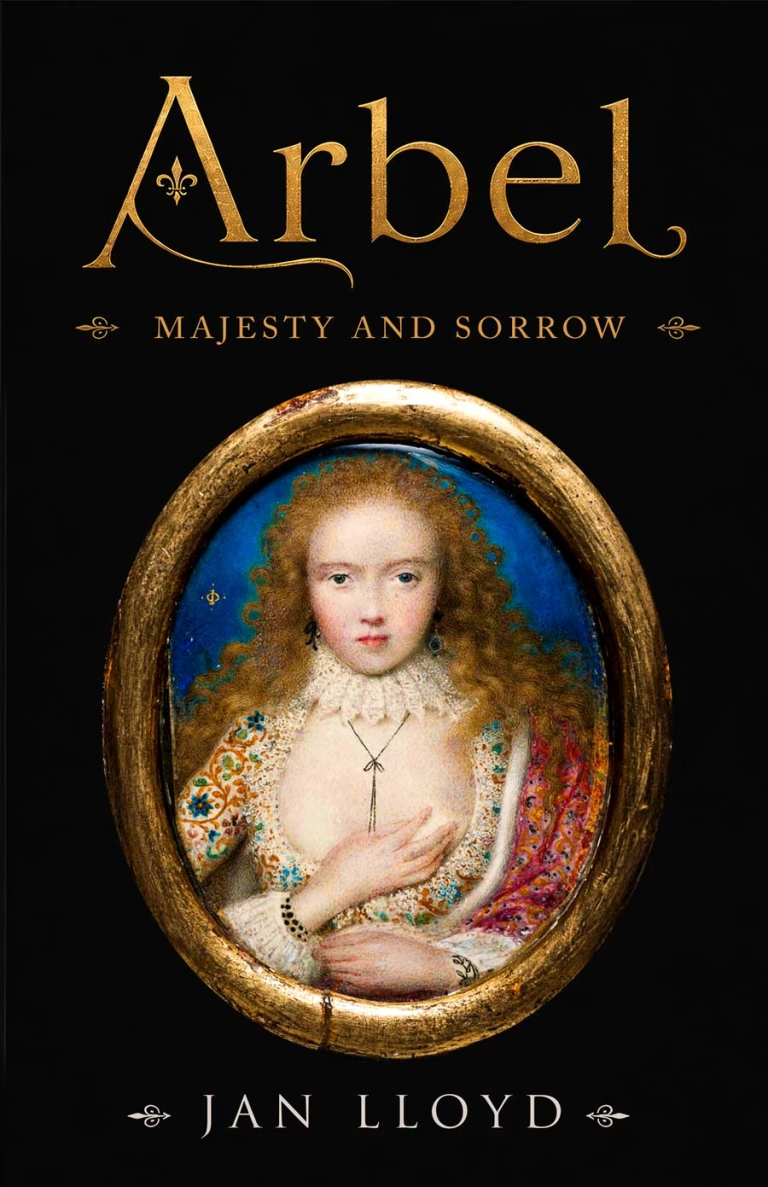
A royal bloodline can sound like a gift from history. For Lady Arbella Stuart, it became a source of scrutiny, expectation, and profound sorrow. Jan Lloyd explores that complicated inheritance in Arbel: Majesty and Sorrow, a historical novel scheduled for publication on September 2, 2026.
Behind the Grandeur of the Tudor Court
The story begins in 1575, during a period of growing uncertainty for England. Queen Elizabeth I has no direct heir, religious conflict continues to unsettle the country, and the future of the monarchy remains unresolved. Every person with a credible connection to the royal family attracts attention.
Lady Arbella Stuart possesses a particularly significant claim. As a direct descendant of Henry VII and a cousin of Elizabeth I, she belongs near the centre of succession discussions. From infancy, her ancestry makes her valuable to ambitious relatives, political advisers, and royal authorities.
Her importance comes at an enormous personal cost. Arbella grows up surrounded by people who consider what her name could achieve. Her education, friendships, marriage prospects, and movements are treated as matters of national concern. The possibility of a private life grows increasingly remote.
Jan draws readers into this environment through Margaret “Meggie” Brise, a Suffolk girl whose path leads into one of England’s most influential households. Meggie becomes a companion to Elizabeth “Lizzie” Stuart, Countess of Lennox, and later remains closely connected to Arbella. Her loyalty offers readers an emotional route through a world governed by rank, suspicion, and carefully protected ambitions.
This perspective helps the royal court feel immediate. Politics unfolds through letters, conversations, portraits, domestic routines, and guarded relationships. Grand events remain present, though their impact is felt most strongly in the rooms where women wait for decisions made about their futures.
Mothers, Daughters, and the Weight of Legacy
The novel’s two-part structure allows the story to develop across generations. Part One, “Lizzie,” centres on Elizabeth Cavendish, Arbella’s mother. Lizzie is raised within the household of Bess of Hardwick, one of the wealthiest and most formidable women of the Elizabethan age.
Bess understands how property, marriage, royal favour, and family connections can transform social standing. Her determination draws her household closer to the monarchy. Through Meggie’s observations, readers visit Chatsworth and Hardwick while witnessing the planning required to preserve wealth and influence.
Lizzie’s experiences reveal how early Arbella’s destiny begins to take shape. Long before the child can understand her ancestry, powerful people recognise its potential. Family advancement and royal succession become closely linked, creating expectations that will follow Arbella throughout her life.
Part Two, “Arbella,” shifts attention to the daughter at the heart of the historical tragedy. She’s intelligent, educated, and fully aware of the significance attached to her birth. She also understands that others hold the authority to determine where she lives, whom she meets, and whether she may marry.
The political world surrounding her includes Elizabeth I, Mary Queen of Scots, the Cecils, Francis Walsingham, the Lennox family, and James of Scotland. Their competing interests create a tense atmosphere in which even personal affection can carry political meaning.
Jan’s approach suits readers who enjoy court history told through human relationships. The drama grows from restrained conversations, private hopes, family strategies, and the steady pressure of royal surveillance. Arbella’s emotional life remains central, giving the historical record a sense of intimacy and urgency.
About the Author
Jan Lloyd built her career in education, teaching mathematics and science before supporting students who were learning English as an additional language. Her professional life required accuracy, patience, and close observation, qualities that now enrich her fiction.
Her publishing journey began with extraordinary persistence. Jan wrote the manuscript that would eventually become the first volume of the War Torn trilogy many years before its publication. After being told that readers had little interest in Second World War fiction, she placed it in a wardrobe, where it remained for four decades.
Her daughter later discovered the manuscript’s strength and encouraged her to bring it to readers. Jan was seventy-three when War Torn Book 1 was published in 2023. She completed the trilogy with two further books in 2025. Her paranormal time-travel novel, Fragments of Time, also appeared that year.
With Arbel: Majesty and Sorrow, Jan enters another richly layered period of English history. Her research-led storytelling gives overlooked lives the space and attention they deserve.
A Forgotten Heir Steps Forward
Arbel: Majesty and Sorrow promises a moving portrait of a woman remembered too rarely in popular Tudor history. Arbella stood close to immense power, yet the possibility of inheriting it shaped her life through control, loneliness, and uncertainty.
By tracing the stories of Lizzie, Meggie, Bess, and Arbella, Jan captures the personal consequences of dynastic ambition. The novel gives readers a vivid reason to reconsider the women who lived beside the famous monarchs and whose own stories still carry the power to fascinate.
Knowledge grows when shared. Please Pass it on!

Discover more from Paxjones
Subscribe to get the latest posts sent to your email.