
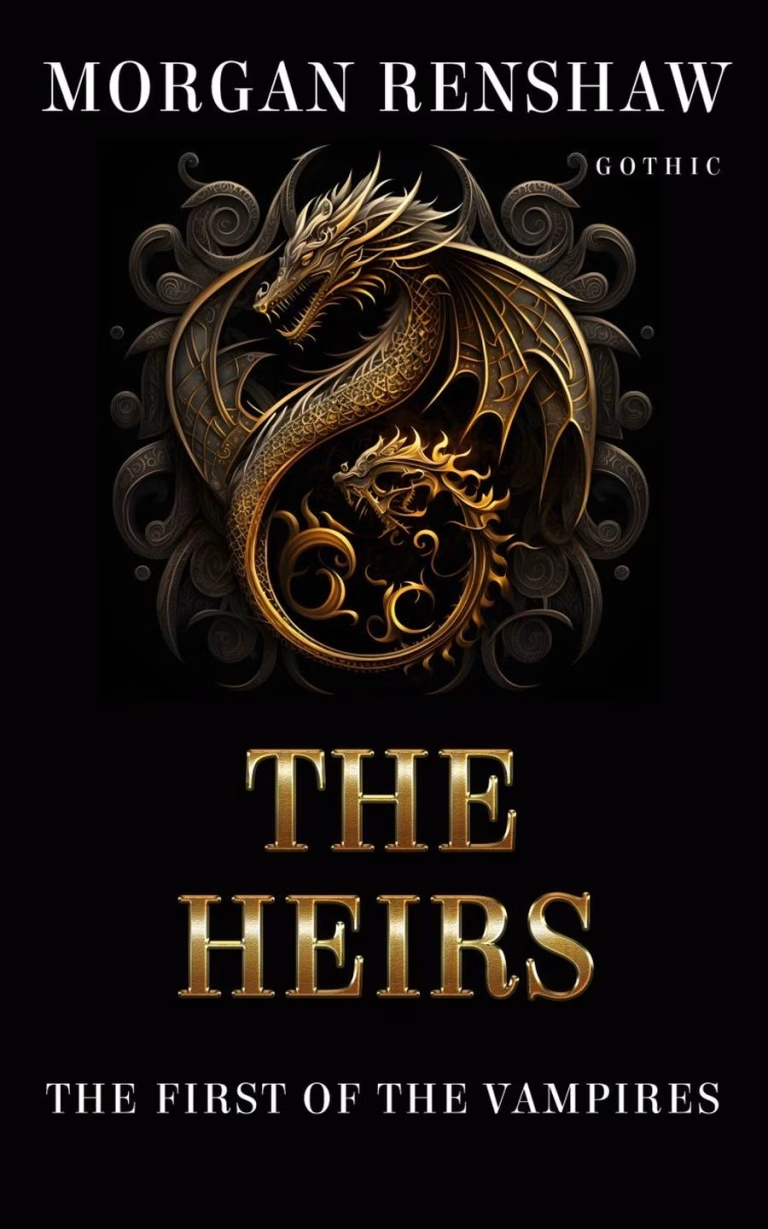
Some stories whisper in the dark. Others rule from it. The Heirs: The First of the Vampires by Morgan Renshaw belongs firmly in the latter category, drawing readers into a world where immortality is political currency and love carries the sharpest edge.
Opening Reflections on a World Ruled by Blood
In The Heirs: The First of the Vampires, Morgan Renshaw wastes no time establishing the stakes. Power is inherited. Immortality is taken. Love is dangerous. Those guiding ideas shape a narrative that feels both intimate and epic in scale.
Ancient bloodlines begin to stir beneath a fractured political landscape. Long-buried secrets rise with intention, carrying consequences that ripple across generations. At the center stands an heir, suddenly forced to confront a legacy carved in shadow. The awakening of the first vampire signals a shift that cannot be undone.
This is a world where vampires do not shimmer in the light or hide in isolation. They rule, influence governments, manipulate alliances, and think in centuries rather than seasons. Authority flows through blood, and history itself bends under immortal hands. As alliances fracture and enemies circle closer, the heir faces a choice that could either secure a throne of blood or push the world toward irreversible chaos.
The political intrigue feels layered and deliberate. Every alliance has cracks. Every promise hides a strategy. Morgan builds tension gradually, allowing the weight of history to press against the present. The result is a setting that feels vast, dangerous, and deeply alive.

Power, Legacy, and Moral Complexity
Morgan Renshaw, writing from Cambridge in the United Kingdom, brings a thoughtful perspective to vampire fiction. Morgan has long been fascinated by the moments in history when civilizations teeter on collapse. That fascination shapes the foundation of this novel.
Inheritance plays a central role. It extends beyond wealth or titles and reaches into guilt, ambition, and unspoken responsibility. Characters inherit sins alongside power. They inherit expectations that stretch back through centuries. Immortality forces them to confront who they truly are when stripped of fleeting excuses.
Morgan’s vampires are strategists. They calculate outcomes decades in advance. They influence empires from the shadows and rarely act without purpose. This scale of influence adds depth to the narrative. Readers witness political architects shape the fate of nations.
What stands out most is the refusal to divide characters into neat categories of good and evil. Morgan embraces moral grey areas. Decisions are shaped by fear, loyalty, love, ambition, and survival. A character who appears ruthless in one chapter may reveal vulnerability in the next. That layered characterization keeps the story unpredictable and emotionally engaging.
The heir’s struggle embodies this complexity. Claiming the throne promises control and perhaps stability. Refusing it risks disorder and destruction. There is no easy answer, only consequences.
Love as Leverage
While power drives the external conflict, love fuels the emotional core of the novel. The romance in The Heirs unfolds slowly, simmering beneath political maneuvering and ancient rivalries. It feels intense and deeply rooted, yet constantly under threat.
In this world, love is never safe. It becomes leverage in negotiations. It becomes a weakness others can exploit. It becomes a potential death sentence when power-hungry forces close in. That tension elevates every interaction between the two souls bound by immortal affection.
Morgan handles this dangerous romance with restraint. The connection grows through shared history, quiet moments, and unspoken understanding. Yet every tender scene carries an undercurrent of risk. Readers sense that affection may cost more than either character expects.
Fans of gothic horror and emotionally charged fantasy will appreciate this balance. The story delivers dark atmosphere without sacrificing emotional depth. Passion collides with ambition. Loyalty clashes with duty. The personal and political remain inseparable.
Why This Story Lingers
One of the most compelling aspects of The Heirs: The First of the Vampires is its sense of scope. Morgan makes it clear that this is only the beginning. The world extends far beyond a single throne or a single awakening. Bloodlines stretch across continents. Rivalries simmer in distant courts. Secrets remain partially uncovered.
That expansive vision gives the novel weight. Readers feel that they are stepping into a larger saga, one where each revelation opens the door to deeper conflicts. The awakening of the first vampire feels like the first tremor before a greater upheaval.
Morgan’s passion for dark historical fiction shines throughout. The supernatural elements never overshadow the exploration of ambition, morality, and legacy. Instead, vampirism becomes a powerful metaphor. Immortality magnifies human flaws. It prolongs regret. It amplifies desire.
For readers who crave seductive vampire lore, high-stakes political drama, and slow-burn romance wrapped in gothic atmosphere, this novel offers a gripping experience. It challenges the idea that love saves all. It questions whether power can ever be held without cost.
The Heirs: The First of the Vampires leaves readers with a haunting question: when inheritance carries both a crown and a curse, what would you choose? In Morgan’s world, that choice shapes the fate of an entire civilization.
We had the privilege of interviewing the author. Here are excerpts from the interview:
Thank you so much for joining us today! Please introduce yourself and tell us what you do.
I am Morgan Renshaw from Cambridge, United Kingdom. I create dark historical worlds where power, love, and immortality collide. I explore what happens when ambition meets the supernatural, and write character-driven historical fantasy that uses vampires as a lens to examine power, legacy, and moral choice, telling gothic stories about inheritance, bloodlines, and the cost of immortality.
Please tell us about your story.
The story of the heirs didn’t come easily. Balancing historical detail, intrigue, and supernatural elements took time and patience. There were moments of doubt, but I kept returning to the core idea until I realized the story wasn’t just about vampires — it was about identity and choice. Once I focused on that, everything sharpened. I treated writing as a long-term commitment. Consistency mattered more than inspiration. This is only the beginning. I’m building a world that will expand far beyond one book.
What are the strategies that helped you become successful in your journey?
I didn’t approach this as writing one book. I approached it as building a world and immersed myself in the politics and atmosphere of pre–World War I. The realism strengthens the fantasy. I treated writing like work, not mood, writing even when I didn’t feel inspired. The first draft was only the beginning. Real growth happened in rewriting and refining. I didn’t try to copy popular vampire trends instead, I focused on power and moral complexity.
Any message for our readers
Power, identity, love, and choice — these are not just themes in the book. They are questions we all face. I hope this story invites you to reflect on the kind of legacy you want to leave. To every reader who steps into this world — thank you. Stories only live when someone chooses to enter them. I hope Albert’s journey stays with you long after the final page.
Thank you so much, Morgan, for giving us your precious time! We wish you all the best for your journey ahead!
Knowledge grows when shared. Please Pass it on!

Discover more from Paxjones
Subscribe to get the latest posts sent to your email.