
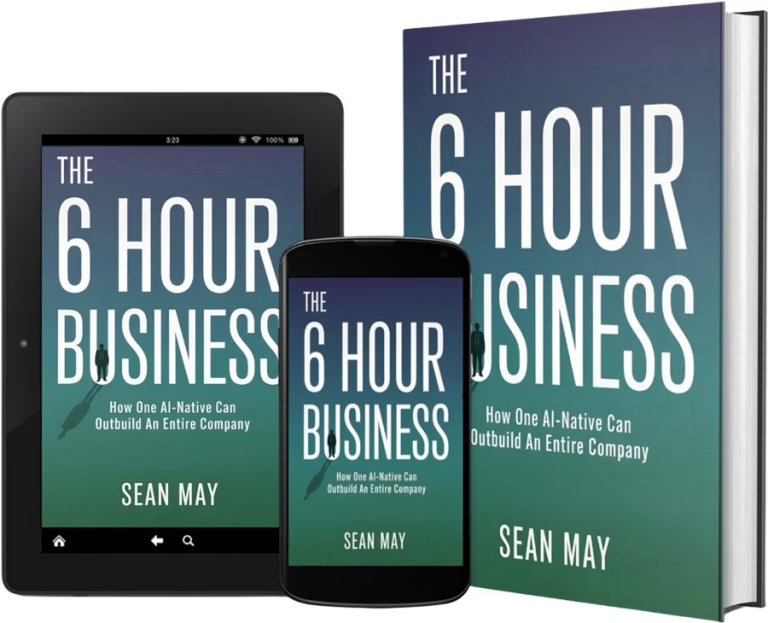
Building a business once meant teams, capital, and long timelines. Sean May’s The 6 Hour Business presents a very different picture, one shaped by AI and personal experience. The book reads like a field guide for builders who want speed, clarity, and results without traditional barriers.
Opening Thoughts: A Shift Triggered by Experience
Sean May opens his story from a place many founders recognize. He followed the established startup playbook, invested heavily, assembled resources, and waited patiently for results. After spending $700,000 and 14 months on a startup, the outcome was failure. Nothing about the process felt reckless. It was structured, accepted, and slow.
Then AI entered the scene in a practical way. After ChatGPT launched in November 2022, Sean revisited the same product idea. This time, he rebuilt it in around 20 hours using roughly $180 in AI credits. The contrast was impossible to ignore. What once required months of coordination now took less than a day of focused effort.
This experience shaped the core of the book. Rather than framing AI as a future trend, Sean treats it as a present-day advantage that changes how businesses are built right now.
First Impressions: A Builder’s Playbook, Not a Lecture
From the start, The 6 Hour Business avoids abstract motivation. It feels practical and grounded, written for people who want to build rather than debate. Sean introduces the idea of the AI-native builder, someone who operates differently from traditional operators.
AI-native builders focus on direction over execution. They do not attempt to master every skill or tool. Instead, they learn how to guide AI systems toward clear outcomes. This shift in identity is one of the book’s most important themes. Builders stop reacting to technology and start orchestrating it.
Sean also challenges conventional learning paths. Instead of years spent acquiring skills, he promotes extracting expertise from existing examples. AI becomes a research partner that breaks down proven systems quickly. This approach keeps momentum high and removes much of the friction that slows new ideas.
Core Ideas That Drive Fast Execution
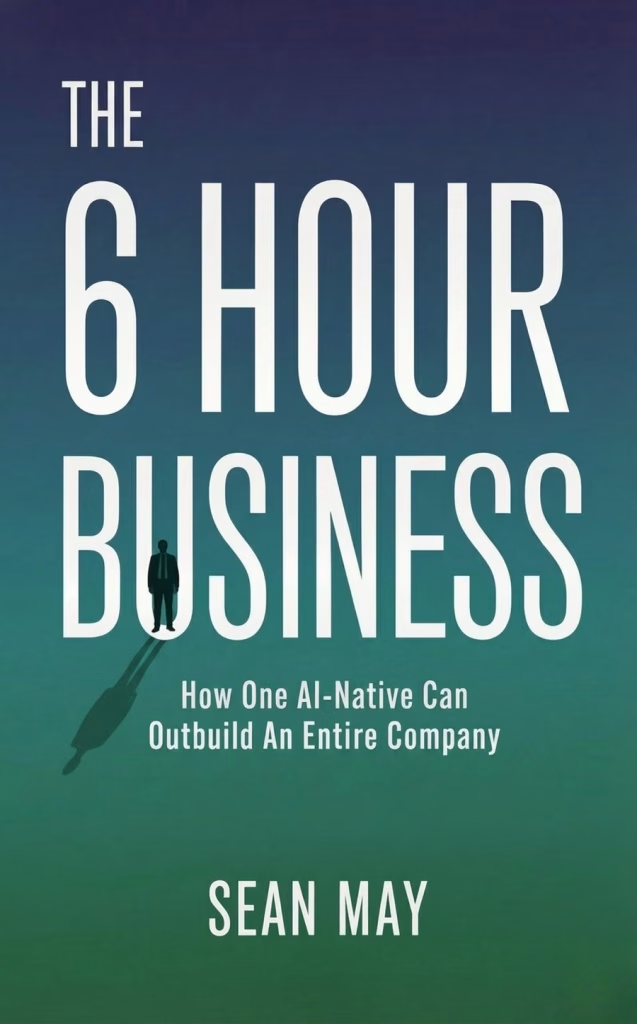
One of the most memorable concepts in the book is the 95 Percent Rule. Sean argues that AI can handle most of the operational workload involved in building a business. Research, drafts, outlines, workflows, and early product versions fit comfortably into that category. The remaining five percent stays firmly human and includes judgment, vision, and final decision-making.
This balance gives the book its realistic tone. AI is powerful, yet it still needs direction. Builders remain responsible for choosing what matters and when to ship. The reward for this clarity is speed.
Another standout idea is the orchestrator mindset. Instead of managing people, the builder manages systems. AI tools become collaborators that scale effort instantly. Sean shows how this mindset allows one person to accomplish what once required entire teams.
Throughout the book, real workflows anchor these ideas. Readers see how products move from idea to launch within hours. There is no reliance on hype. Each process is presented as something that can be repeated and adapted.
Why It Matters in the Current Business Landscape
Sean May’s background strengthens the book’s message. With over a decade of experience in software development and automation, he writes from daily practice rather than theory. Since 2022, he has helped entrepreneurs build products faster and cheaper by treating AI as a force multiplier.
The book also addresses the growing divide between builders who adopt AI-native methods and those who cling to older systems. Sean does not frame this as a moral judgment. It is presented as a timing issue. Those who start early gain momentum. Those who wait fall behind, regardless of talent.
There is also a clear call to action woven through the chapters. Readers are encouraged to build something within six hours. The goal is progress, not polish. Shipping early creates feedback, confidence, and learning that no amount of planning can replace.
Final Reflections: A Practical Path Forward
The 6 Hour Business stands out because it shows rather than tells. Sean May shares what worked, what failed, and what changed once AI became central to his process. The book offers a clear alternative to slow, resource-heavy building methods.
For entrepreneurs, creators, and operators curious about AI-powered business, this book provides a direct starting point. In a world where hours can outperform months, that message feels timely and empowering.
Knowledge grows when shared. Please Pass it on!

Discover more from Paxjones
Subscribe to get the latest posts sent to your email.