
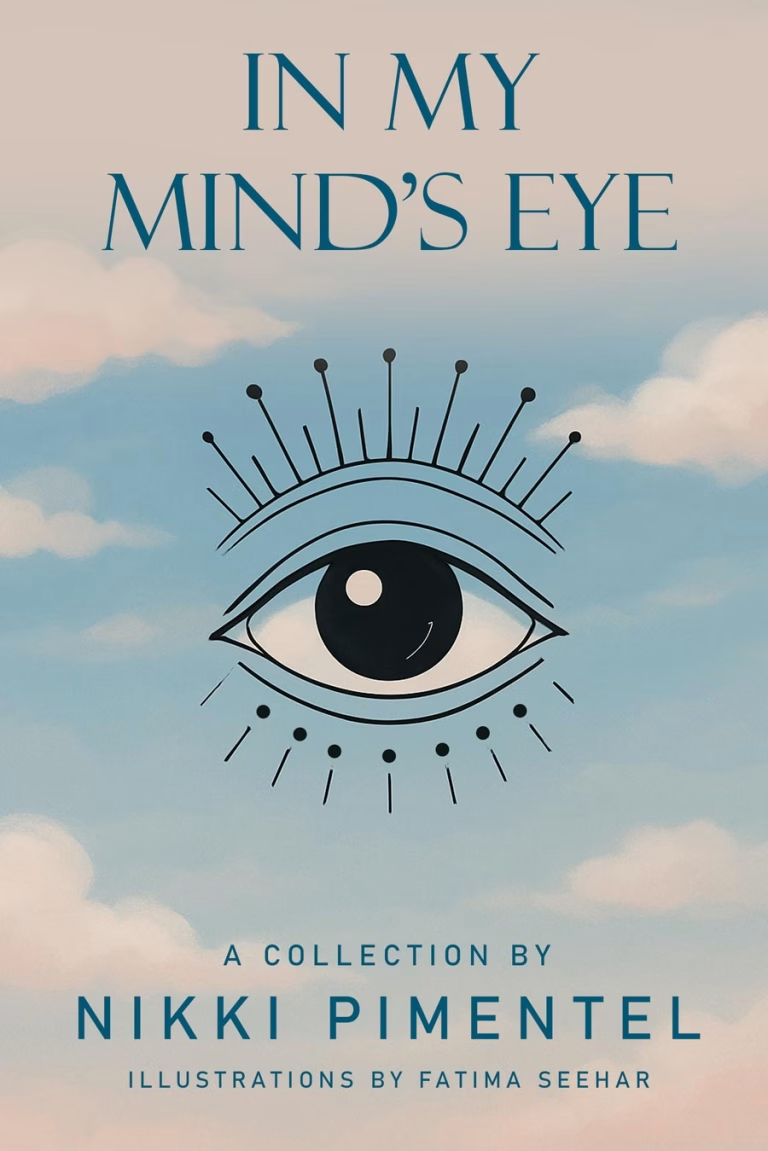
Some poetry asks to be read quietly. Some asks to be felt. In My Mind’s Eye by Nikki Pimentel does both, offering readers a deeply personal journey that resonates far beyond the page.
Opening Reflections
What does it mean to be truly seen after years of feeling invisible? That question anchors In My Mind’s Eye, the debut poetry collection by Nikki Pimentel. From the first poem, there’s a sense that something honest is unfolding. The tone is intimate. The voice is steady. The emotions are real.
This collection explores the long path from trauma to healing. It does so with courage and clarity. The poems move through memories of childhood wounds, family expectations, and the quiet survival tactics learned early in life. There’s vulnerability in these lines, yet there’s also strength. Nikki does not soften the difficult parts of their story. They face them directly.
Readers who have experienced family conflict, identity struggles, or the weight of unspoken pain will likely feel understood here. The poems do not present healing as a quick fix. Instead, they show it as layered, gradual, and deeply personal. Some verses feel tender and reflective. Others carry sharp edges. That range gives the collection its emotional depth.
A Voice Shaped by Many Worlds
Nikki Pimentel identifies as queer, trans, nonbinary, neurodivergent, and Latine. Born in New York and raised in the Dominican Republic, Nikki grew up between cultures, languages, and generational expectations. That lived experience shapes the foundation of In My Mind’s Eye.
Throughout the collection, Nikki explores identity in all its complexity. There are poems that reflect on cultural belonging. Others examine gender, family roles, and the internal pressure to conform. The feeling of existing between worlds appears often. It’s expressed through imagery, memory, and introspection.
Yet this book is not only about struggle. It is also about self-reclamation. Nikki writes about reclaiming voice, space, and narrative. The act of naming becomes powerful. Silence is challenged. Stories that once felt too heavy to share are laid out in plain language.
There is something grounding about Nikki’s style. The poems feel intentional without being distant. They are accessible, yet layered. Readers can connect immediately, then discover deeper meaning upon reflection. That balance makes the collection inviting to a wide audience.
Nikki’s background as an advocate also informs their work. They currently live in Rhode Island, working in early intervention and serving on the board of the Sam & Devorah Foundation for Transgender Youth. Their commitment to gender equity, neurodivergent advocacy, and cultural inclusion echoes throughout the poems. The writing is personal, yet it always gestures toward community.
The Power of Naming and Witnessing
One of the strongest elements of In In My Mind’s Eye is its focus on witnessing. Nikki does not only tell their story. They honor the stories of others. The collection pays tribute to trans ancestors, to queer children navigating difficult homes, and to anyone learning how to exist authentically.
Many poems read like moments of quiet recognition. They capture the ache of not belonging. They describe the tension between survival and self-expression. They reveal the slow, deliberate steps toward healing. Each piece feels like part of a larger conversation about identity and resilience.
There is a recurring theme of breaking generational silence. Nikki approaches family history with nuance. There is acknowledgment of pain, yet also awareness of context and inherited patterns. The poems hold space for complexity. They allow readers to consider how the past shapes the present without reducing anyone to a single narrative.
Nikki believes poetry is a place to tell the truth out loud. That belief drives the collection forward. The truth here is sometimes raw. At times it feels exposed. Yet it is never careless. The language is thoughtful and measured. The emotional weight is balanced with reflection.
The structure of the collection also supports its themes. The pacing allows moments of intensity to be followed by quieter reflection. Readers are guided gently, even when the subject matter is heavy. That rhythm makes the experience immersive rather than overwhelming.
Why This Collection Resonates
In My Mind’s Eye stands out because it speaks with clarity and purpose. It does not rely on dramatic flourishes. Instead, it leans into sincerity. Nikki writes as someone who has examined their experiences deeply and chosen to share them with care.
For readers who have felt unseen, the collection offers validation. For those who are still navigating their own healing process, it provides reassurance that growth takes time. For allies and advocates, it offers insight into lived experiences that are often misunderstood.
This debut establishes Nikki as a thoughtful and impactful voice in contemporary poetry. The work reflects survival, resilience, and the courage required to claim one’s story. It invites readers to reflect on their own narratives and consider what it means to step fully into visibility.
In sharing their truth, Nikki Pimentel creates space for others to do the same. In My Mind’s Eye becomes a quiet reminder that being seen begins with speaking honestly, even when the words feel difficult.
We had the privilege of interviewing the author. Here are excerpts from the interview:
Thank you so much for joining us today! Please introduce yourself and tell us what you do.
My name is Nikki Pimentel (they/elle/él), and I’m a queer, trans, nonbinary, neurodivergent, Latine poet and advocate. I was born in New York and raised in the Dominican Republic, navigating between cultures, languages, and generational expectations. Currently, I work in early intervention and serve on the board of the Sam & Devorah Foundation for Transgender Youth. Through my writing, I explore the intersections of identity, family, trauma, and the process of self-reclamation. My debut poetry collection, In My Mind’s Eye, is a testament to survival, healing, and breaking generational silence.
Please tell us about your journey.
My journey hasn’t been linear; it’s been a spiral of survival, unlearning, and becoming. Growing up, I carried the weight of bullying, depression, body dysmorphia, and childhood trauma. I experienced sexual assault as a teenager and survived suicidal ideation without knowing how to name what I was going through. For years, I stayed silent because I didn’t have the language (or the safety) to speak.
It wasn’t until my mid-twenties, after my marriage fell apart, that I finally started therapy. That’s when I received my diagnoses: depression, anxiety, ADHD, and C-PTSD. Therapy gave me words for the pain I’d been carrying my entire life. It also helped me understand that much of what I experienced was rooted in generational trauma; patterns passed down from my mother, my grandmother, and the women before them.
Writing became my way of processing what I couldn’t say out loud. I started putting my story on paper, not just for myself, but for the younger version of me who thought they’d never make it. In My Mind’s Eye is Part One of my testimony: a reckoning with my past, my family, and the cycles I’m determined to break.
What are the strategies that helped you become successful in your journey?
Honestly, “success” for me isn’t about achievements, it’s about still being here. But if I had to name what helped me survive and eventually thrive, it would be several factors, including:
Therapy: Finding the right therapist (after trying several) was life-changing. Therapy gave me tools to process trauma and helped me understand that healing isn’t linear.
Community: My chosen family has been everything. When blood couldn’t hold me, my friends did. They reflected my truth back to me when I was too afraid to look.
Writing: Poetry became my witness. When I couldn’t speak, I wrote. When I felt invisible, I made myself seen on the page.
Advocacy: Getting involved with the Sam & Devorah Foundation, speaking out about mental health, body positivity, and LGBTQ+ rights gave my pain purpose. Helping others heal helped me heal too.
Setting boundaries: Learning to say no, to protect my peace, and to walk away from what no longer serves me (even when it’s family) was one of the hardest but most necessary things I’ve done.
Any message for our readers
If you’re reading this and you’re struggling whether it’s with your identity, your mental health, your family, or just surviving another day, please know: You are not too much. You were never too much. You were always whole.
Your pain is valid. Your story matters. And healing doesn’t have to look like anyone else’s. It’s okay to take up space. It’s okay to cry. It’s okay to leave situations that hurt you, even if others don’t understand.
You don’t have to have it all figured out. You just have to keep going. And if today all you did was survive: that’s enough. You are enough.
To my fellow queer, trans, neurodivergent, and marginalized folks: we deserve softness. We deserve love that doesn’t ask us to shrink. We deserve to tell our stories without apology. Keep speaking. Keep existing. Keep taking up space. The world needs your voice.
Thank you so much, Nikki, for giving us your precious time! We wish you all the best for your journey ahead!
Knowledge grows when shared. Please Pass it on!

Discover more from Paxjones
Subscribe to get the latest posts sent to your email.