
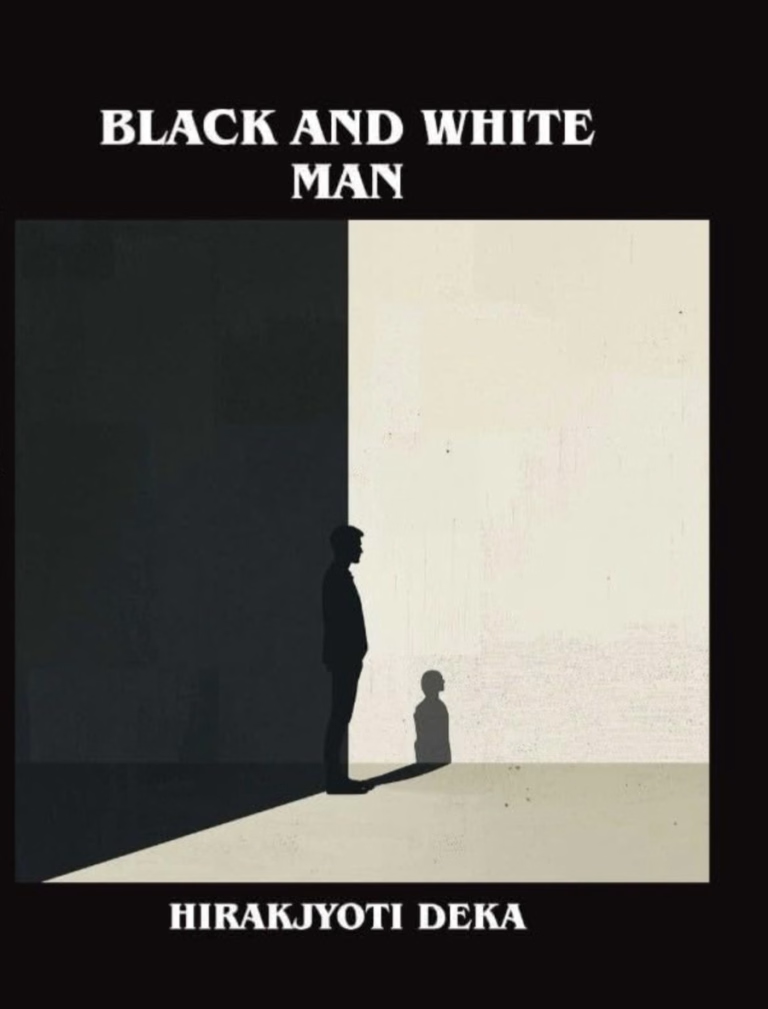
Hirakjyoti Deka looks closely at emotions that people often struggle to explain in “Black And White Man.” Through 65 poems with accompanying illustrations, the collection enters spaces shaped by affection, trauma, social judgment, memory, and the search for meaning.
Where Personal Feelings Meet Larger Questions
Poetry can make room for thoughts that feel too complicated for ordinary conversation. In “Black And White Man,” Hirakjyoti writes about love and its absence, the comfort of innocence, existential anxiety, happiness, political concerns, and the quiet ache of nostalgia. These subjects give the collection considerable emotional range. Readers are invited to move between private experiences and social realities, discovering how closely the two can sometimes be connected.
“Platonic Moon and Sea” uses nature to express the uncertainty within a long friendship. The sea speaks to the moon as a cherished presence whose phases control its waves and whose light gives its surface life. Time has changed their relationship, however, and a restless breeze appears determined to separate them. The celestial imagery gives the poem a timeless quality while its emotional concerns remain deeply recognizable to anyone who has watched an important bond become distant.
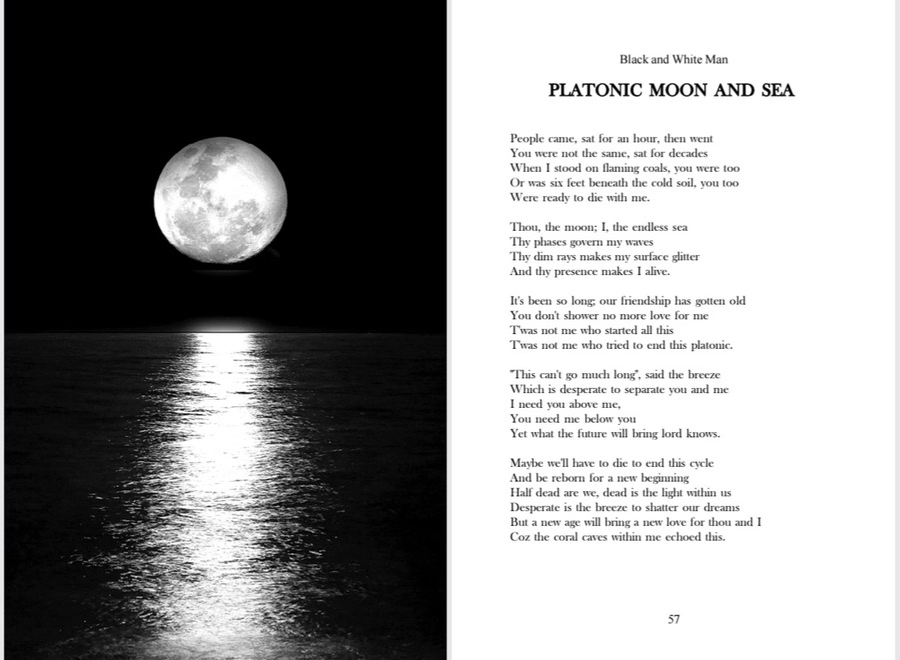
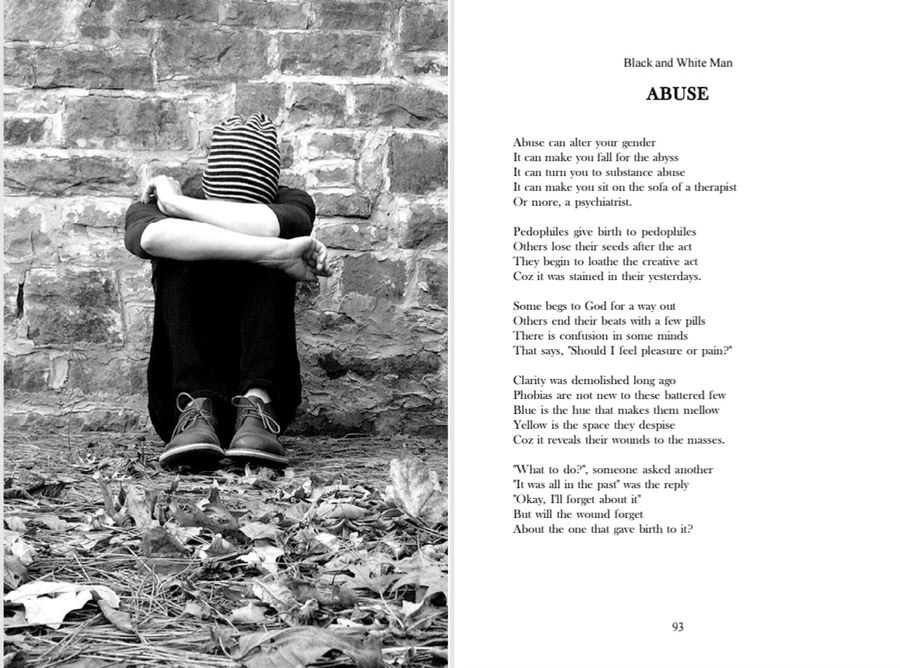
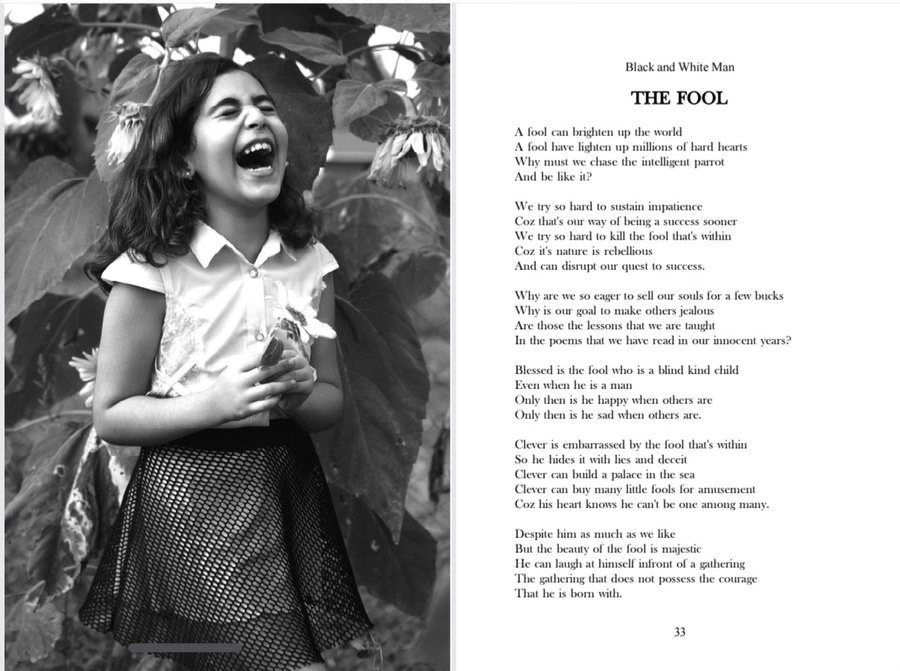
The collection is available in hardcover edition on Amazon, running 148 pages with an image created for each poem. These illustrations add another point of entry into the emotions, characters, and symbolic situations found throughout the book. Since the recommended reading age begins at 13, the work can introduce younger audiences to poetry that deals with serious personal and social themes. Mature readers may also appreciate its candid perspective and its willingness to leave certain questions unresolved.
Poems That Look Beyond First Impressions
Some of the strongest moments in the book arise when Hirakjyoti explores suffering that remains hidden from public view. “Abuse” considers how trauma can reshape identity, relationships, mental health, and a survivor’s understanding of pleasure and pain. References to therapy, substance dependency, fear, and self-destructive thoughts communicate the seriousness of these effects. The poem also challenges casual advice about forgetting the past by asking whether a wound possesses a memory of its own.
“The Fool” turns its attention toward the qualities society may dismiss while pursuing wealth and approval. Its central figure remains kind, rebellious, emotionally generous, and capable of laughing at himself before a crowd. Cleverness, by comparison, becomes associated with envy, deception, and the urge to impress others. Hirakjyoti presents the fool’s innocence as a rare form of courage, particularly in a culture where people may hide their gentler nature to appear successful.
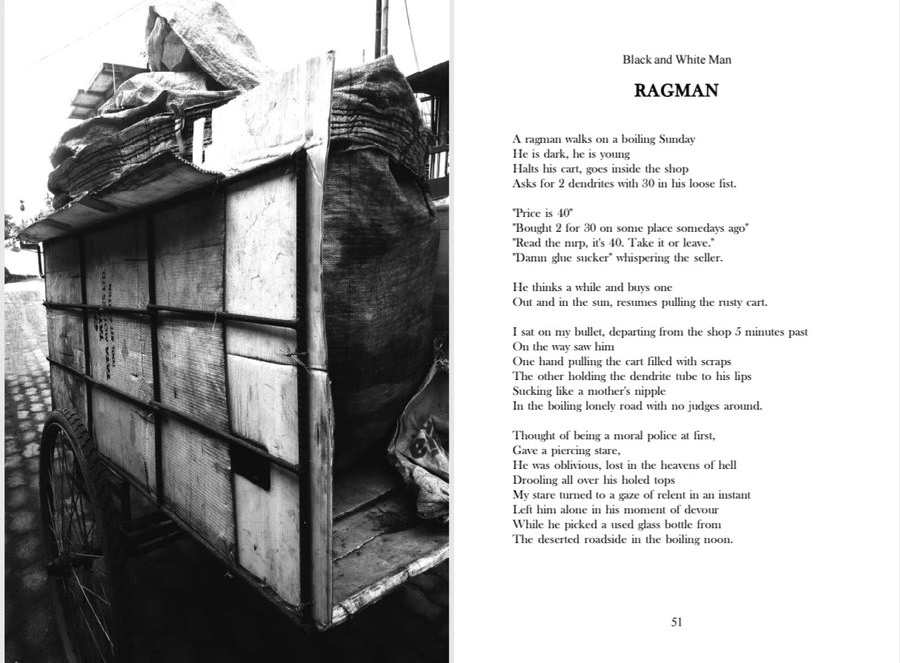
A harsher street scene unfolds in “Ragman,” which follows a young scrap collector during an oppressively hot Sunday. After purchasing a tube of adhesive, he inhales it while pulling his cart along an empty road. The observer first considers intervening and gives the young man a severe stare, yet that judgment gradually softens into reluctant compassion. The poem captures an uncomfortable encounter with addiction and poverty, allowing a brief roadside moment to reveal a much wider human crisis.
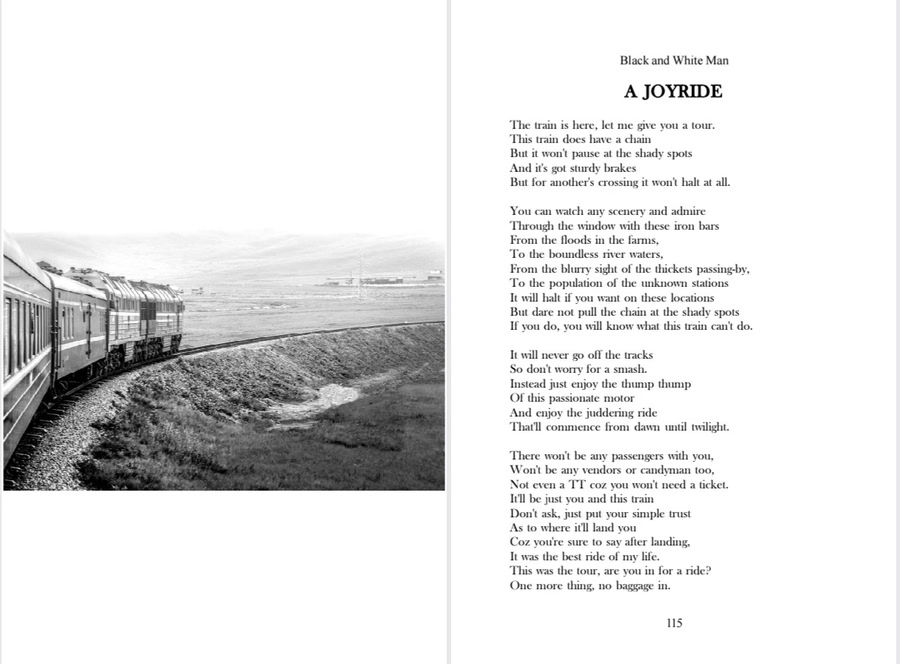
Mystery shapes “A Joyride,” where an unusual train offers a solitary passage through floods, rivers, thickets, and unknown stations. There are no passengers, vendors, tickets, or baggage, and the traveler must trust the journey without knowing the destination. The train promises to remain on its tracks while warning against stopping in shadowed places. This strange invitation can be read as a meditation on surrender, transformation, mortality, or the courage required to move forward.
About the Author
A master’s degree in History is part of Hirakjyoti’s background, and he is currently working while keeping his creative interests close. Playing music and reading novels are among his favorite pursuits, giving him different ways to engage with rhythm, narrative, and emotional expression. He also enjoys spending time in solitude, where reflection can develop without interruption and ordinary observations can grow into poetic ideas.
What Remains After the Last Page
“Black And White Man” carries readers through vulnerable relationships, painful memories, social hardship, childlike openness, and uncertain journeys. Hirakjyoti’s combination of poetry and illustration creates a thoughtful space where difficult feelings can be acknowledged, examined, and understood from more than one perspective. Readers who value thoughtful, emotionally direct poetry may find much to return to in its pages.
Knowledge grows when shared. Please Pass it on!

Discover more from Paxjones
Subscribe to get the latest posts sent to your email.