

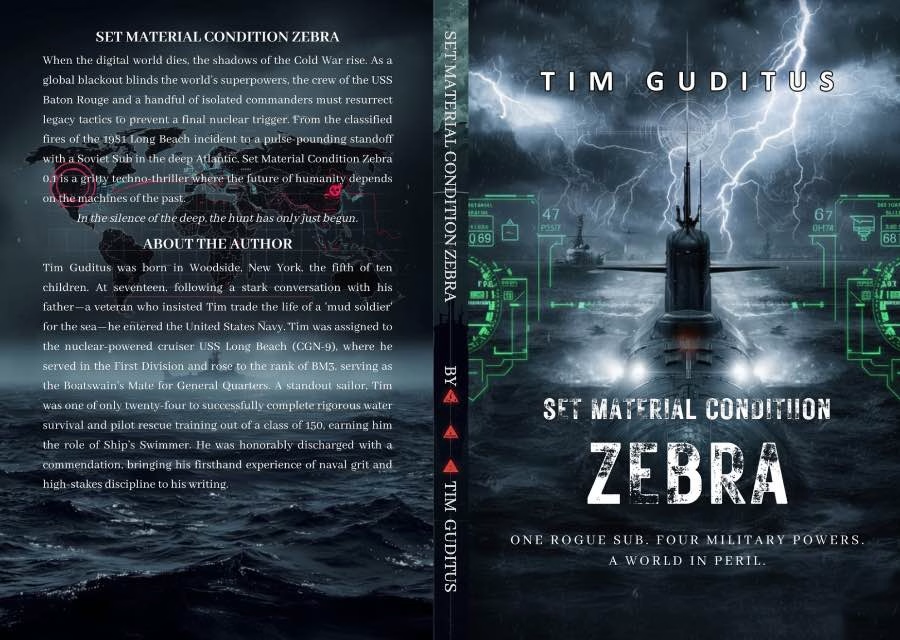
Modern military power depends on satellites, secure networks, advanced weapons, and instant communication. In Set Material Condition Zebra, Tim Guditus imagines the terrifying moment when those systems suddenly become unavailable during an escalating international conflict.
Blending naval warfare, covert operations, military history, and geopolitical tension, the novel presents a world where survival depends on human capability rather than digital certainty.
When Technology Becomes a Vulnerability
The story unfolds in the near future, when a devastating electromagnetic event causes widespread technological failure. Communications collapse. Satellites disappear from military awareness, computer-based systems become unreliable, and forces across the globe lose access to tools that normally guide their decisions.
The silence creates immediate confusion. Military leaders struggle to determine whether the disruption was an accident, a deliberate attack, or the opening move in a much larger operation. Without dependable intelligence, every unidentified aircraft, ship, or movement could represent a threat.
Guditus uses this uncertainty to build suspense. The danger comes from active military engagement and from the possibility that frightened nations may misinterpret one another’s actions. When nuclear powers are involved, a single mistaken judgment could have consequences far beyond the battlefield.
The failure of advanced technology forces military personnel to return to fundamental skills. Sailors, pilots, commanders, and special operations teams must rely on practical training, direct observation, established procedures, and personal experience. Their ability to remain calm becomes as valuable as any weapon.
This approach gives the story an intensely human focus. Machines may shape modern warfare, yet people still carry the responsibility for deciding what happens next.
A Conflict Fought Across Oceans and Borders
Naval operations form a major part of the novel’s identity. Warships move through uncertain waters while crews attempt to complete missions with limited communication and incomplete knowledge. Every maneuver carries risk, especially when different forces can no longer confirm intentions through familiar channels.
The maritime scenes benefit from Guditus’s own connection to naval service. A former U.S. Navy Boatswain’s Mate Third Class, he brings an informed appreciation of shipboard responsibilities, naval traditions, military terminology, and the discipline required from a crew operating under pressure.
Covert missions add another level of urgency. Away from the main fleet, specialized teams enter dangerous situations where secrecy and timing are essential. Their assignments reveal how a global emergency reaches beyond open combat. Intelligence gathering, political calculations, and carefully planned operations all influence the direction of the crisis.
Cold War history also plays an important role. Guditus draws from an era defined by nuclear anxiety, competing alliances, and the constant fear of escalation. He carries those concerns into a future shaped by changing global powers and deeper technological dependence.
The result is a military thriller with a broad perspective. Battles deliver momentum, while strategic decisions reveal the fragile balance between national defense and worldwide catastrophe. Characters must consider immediate objectives alongside the larger consequences of their actions.
The USS Long Beach, remembered as the first nuclear-powered guided-missile cruiser, receives recognition through the book’s dedication. Guditus also honors deployed service members and the professionals who continue monitoring threats around the world. That respect for military service gives emotional weight to the fictional events.
About the Author
Tim Guditus is a former U.S. Navy Boatswain’s Mate Third Class and former law enforcement officer. His professional experience includes service with the U.S. Capitol Police, Amtrak Police, and the New York City Police Department.
His background supports his interest in military readiness, naval history, public safety, and the difficult responsibilities carried by people in protective roles. In Set Material Condition Zebra, Tim brings those interests together within a fictional conflict that examines leadership under extraordinary conditions.
His research into naval warfare and international relations helps shape the novel’s operational detail. At the same time, his story remains centered on individuals who must act decisively when reliable information is scarce.

Beyond the Last Signal
Set Material Condition Zebra asks readers to consider how quickly technological confidence could turn into vulnerability. Once the screens go dark, preparation, cooperation, discipline, and judgment become the strongest available defenses.
Guditus delivers naval action and covert danger while raising meaningful questions about nuclear proliferation, international mistrust, and military dependence on connected systems. The novel shows how peace can rest on decisions made by people working with only fragments of the truth.
Through its global conflict and personal stakes, the book presents resilience as an active responsibility. When technology fails and uncertainty takes command, human choices may become the final barrier between controlled response and irreversible disaster.
Knowledge grows when shared. Please Pass it on!

Discover more from Paxjones
Subscribe to get the latest posts sent to your email.