
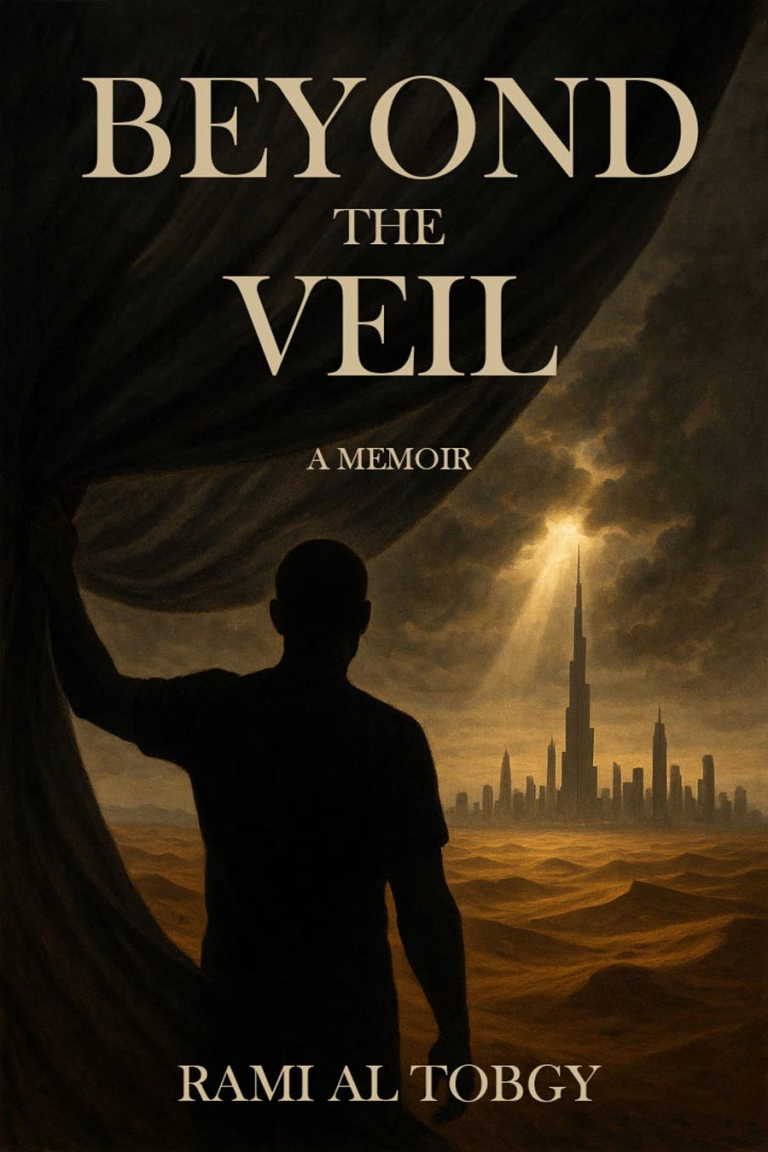
Success can appear straightforward when measured through career milestones, financial progress, or public recognition. In Beyond the Veil, Rami Al Tobgy discovers that its meaning becomes far more personal after fatherhood. His son, Adam, gives familiar experiences a new emotional frame and encourages him to reconsider what a worthwhile life truly requires.
A Different Measure of Success
Rami’s story begins long before he becomes a father. His childhood is shaped by the invasion of Kuwait, followed by a move to the UAE at sixteen for university. Those years develop his independence and ambition, qualities that later carry him into Dubai’s energetic professional and social world.
Events, hospitality, technology, and automotive ventures become part of a varied entrepreneurial journey. Dubai’s nightlife scene also provides a vivid setting for friendships, relationships, bold decisions, and difficult consequences. For a young man building his identity, achievement often seems connected to momentum. New opportunities create excitement, while constant activity offers a visible sign of progress.
As Rami looks back, his earlier definition of success begins to feel incomplete. Experience has given him a wider view of the choices he made, the people affected by them, and the emotional habits that influenced his direction. Memory allows him to return to those moments, while fatherhood changes the questions he asks about them.
Adam’s arrival gives responsibility an immediate human presence. Success gradually becomes linked with dependability, emotional awareness, and the kind of home a parent creates. The future’s no longer an abstract destination. It becomes something shaped through daily conduct, small promises, and the example a father sets when his child is watching.
Fatherhood Brings the Past Into Focus
One of the memoir’s strongest qualities is the way fatherhood deepens Rami’s understanding of his own history. Becoming a parent encourages him to examine experiences from the perspective of care. Decisions that once seemed private now appear connected to a longer story involving values, relationships, and what one generation passes to the next.
This shift adds weight to his reflections on anger, pride, love, marriage, and mistakes. Rami approaches uncomfortable memories with candour and accepts that accountability may grow over time. An event can retain the same facts while gaining a different meaning. Years later, a person may recognise motives and consequences that were difficult to see in the original moment.
His relationship with Adam also reshapes his ideas about strength. Fatherhood asks for patience, presence, and the willingness to respond thoughtfully during uncertain moments. These qualities influence how Rami interprets previous struggles, including years of debilitating pain that restricted his daily life and pushed him towards sustained reflection.
Spiritual experiences later challenge his scepticism and invite further questions about belief, intuition, and meaning. The memoir leaves these questions open. That uncertainty feels appropriate because parenting also involves moving forward without complete knowledge. A father makes choices, learns from their results, and continues refining his understanding of what his child needs.
The book began as a private journal, which gives these reflections a close and searching quality. Readers can sense Rami working through the distance between experiencing life and understanding it. Adam provides an emotional centre for that process, reminding him that reflection has practical value when it leads to greater awareness and responsibility.
Positive responses from Kirkus Reviews, Independent Book Review, Readers’ Favorite, and Literary Titan recognise the memoir’s honesty and emotional openness. Its warmth comes from a father’s willingness to consider how his past may inform the person he wishes to become for his son.
About the Author
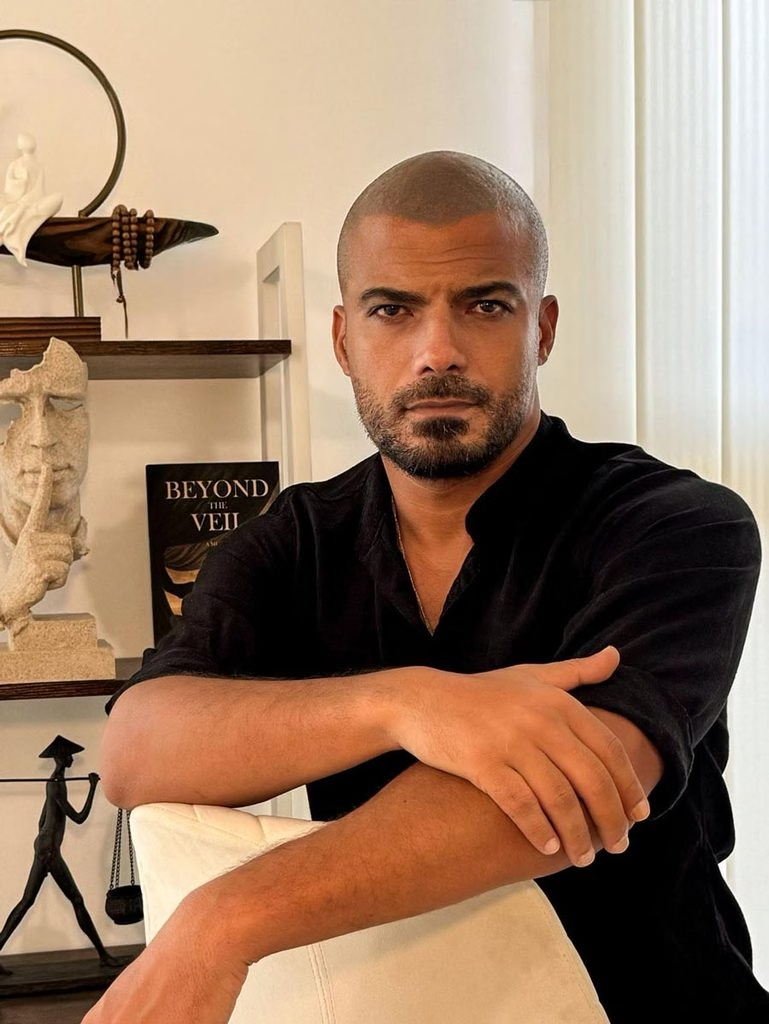
Rami is a Dubai-based father, entrepreneur, and writer. Born in Egypt and raised in Kuwait, he moved to the UAE at sixteen to pursue his university education. His work across several industries has given him a rich range of professional and personal experiences.
Beyond the Veil is his debut memoir and part of Project RT, a creative platform joining his books, music, and reflections. Through this work, he explores memory, identity, relationships, responsibility, and belief. The memoir’s available through Amazon and listed on Goodreads.
What a Father Leaves Behind
Beyond the Veil presents success as an idea capable of changing with experience. For Rami, fatherhood brings its meaning closer to love, accountability, presence, and the legacy created through everyday behaviour.
Adam’s place in the memoir gives its reflections tenderness and purpose. By reconsidering his life through the eyes of a father, Rami offers readers a thoughtful reminder that achievement can be found in the person someone chooses to be for those who depend upon them.
We spoke with Rami Al Tobgy about fatherhood and Beyond the Veil. Below are selected moments from our discussion.
Hi, thank you so much for joining us today! Please share your journey with our readers.
I was born in Egypt, grew up in Kuwait and moved to the UAE at sixteen for university. My life took me through business successes and failures, close friendships, loss, marriage and raising my son Adam, as a single father.
For a long time, I kept moving towards whatever came next. Writing made me stop and look at what I had carried from one experience into another. I began with a private journal after experiences that challenged how I understood my life. As I traced things backwards, I found myself questioning my own reactions as much as anyone else’s. My family encouraged me to turn those pages into a book, and Adam helped me refine it. The process became part of the story.
What are the strategies that helped you become successful in your journey?
I wouldn’t describe my journey as a straightforward success story. Some things worked; others cost me a great deal. Looking back, I did my best work when I cared about what I was creating, rather than starting with how much it might earn.
I also had help. My family and people who stood by me made rebuilding possible. Becoming a father gave me a reason to reconsider where my time went. Choosing more time with Adam meant stepping away from opportunities, but it remains a choice I would make again. What counts as success depends on what you want your life to hold.
Thank you so much, Rami, for sharing your story. Best wishes for the exciting journey ahead!
Knowledge grows when shared. Please Pass it on!

Discover more from Paxjones
Subscribe to get the latest posts sent to your email.