
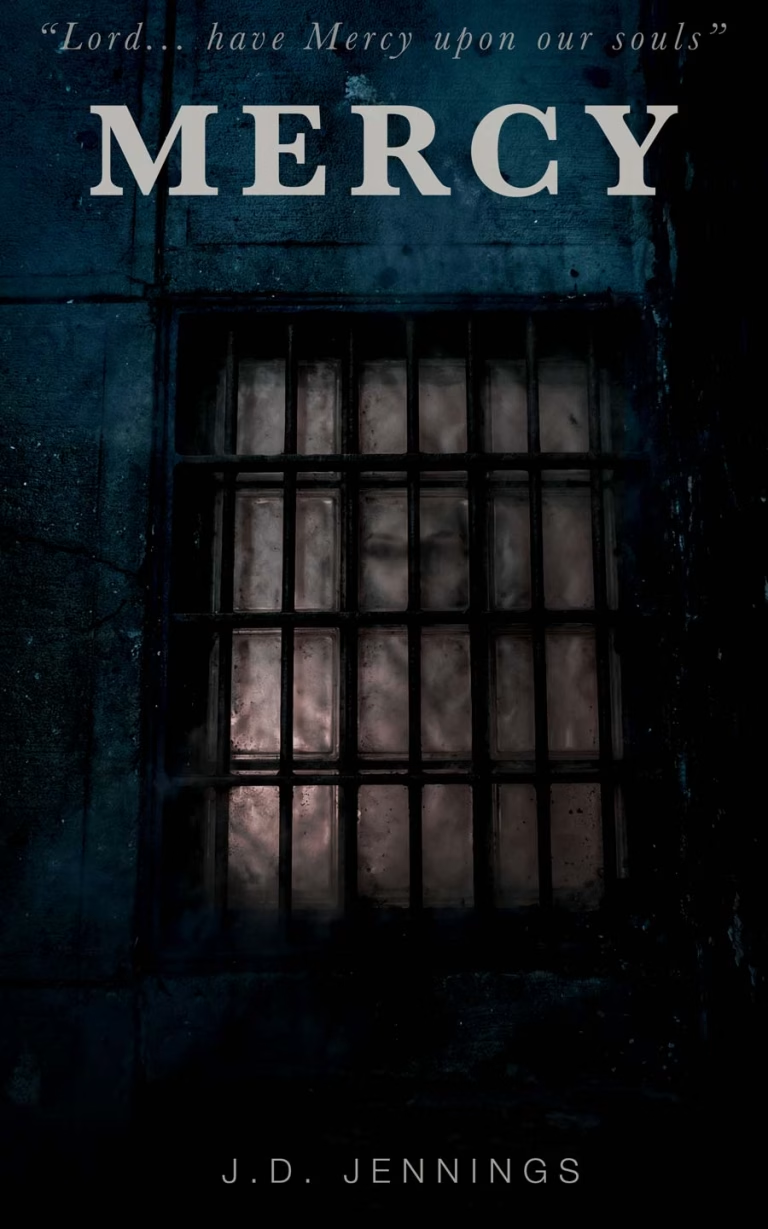
Some horror stories rely on loud moments. Others work quietly, settling into the reader’s mind long after the final page. MERCY by J.D. Jennings belongs firmly in the second category, offering a psychological experience that feels both intimate and deeply unsettling.
Set within the familiar yet shadowy streets of Philadelphia, this debut novel unfolds a story where one small decision spirals into something far more dangerous than expected.
First Impressions: A Simple Encounter That Feels Wrong
Chad Wick is only thirteen, yet he already understands how to move through his environment. His daily walk home through Fitler Square follows a routine built on awareness and caution. Keep your head down. Avoid unnecessary attention. Stay in your lane. That routine breaks in a single moment.
As Chad passes along Cypress Street, curiosity takes over. He glances down through a cellar grate and sees something that immediately feels out of place. A girl, around his age, is bound below ground level. She is not screaming or panicking. She is watching him, calm in a way that feels unnatural.
She introduces herself as Mercy.
Her story sounds believable. A foster child trapped by the people who were supposed to care for her. Her words carry a quiet urgency that pulls Chad in. There is no hesitation in his response. He wants to help.
That instinct, while understandable, becomes the turning point of the narrative.
Beneath the Surface: The House That Holds More Than People
The Delancey family home at 2400 Cypress Street stands as more than just a setting. It carries a presence that feels heavy from the start. The family itself appears layered and complicated. Jack, the composed corporate fixer. Ryan, unpredictable and intense. Rina, a school counselor whose identity is rooted in helping others.
Rina’s role adds a strong emotional core to the story. Her willingness to care for Mercy reflects genuine kindness. It is easy to trust her intentions. Yet that very trust becomes part of the tension that builds throughout the novel.
Inside the house, small details create a growing sense of unease. The lingering smell of bleach. The texture of old stone. The constant suggestion that something exists beyond what can be seen. Jennings uses these elements to construct an atmosphere that feels oppressive without needing constant action.
The surrounding neighborhood, Devil’s Pocket, strengthens this effect. Its history feels embedded in the story. The old saying, “the river provides,” carries a quiet warning. It suggests a past shaped by exchanges that were never clearly understood, only accepted.
The True Horror: When Compassion Becomes a Vulnerability
What makes MERCY compelling is its focus on psychological tension rather than spectacle. The story raises a question that feels uncomfortable to consider. Can empathy be used against someone?
Mercy is presented as someone in need, yet her presence quickly begins to challenge that perception. There is something calculated about her situation. Something that feels intentional rather than accidental.
As the narrative unfolds, it becomes clear that the horror does not come from a traditional source. It emerges from the way characters respond to Mercy. Their willingness to care becomes the very thing that places them in danger.
This approach shifts the reader’s perspective. Acts of kindness, usually seen as strengths, begin to feel uncertain. The line between helping and being manipulated becomes blurred. That uncertainty creates a deeper level of tension that stays with the reader.
Chad’s journey reflects this shift. His initial decision is driven by a desire to do the right thing. As events unfold, that choice leads him into a situation that feels impossible to escape. His experience captures a gradual loss of control, where each step forward only deepens the sense of unease.
Why It Matters: A Debut That Leaves a Lasting Mark
J.D. Jennings delivers a strong opening statement with MERCY. His writing shows a clear understanding of how to build tension through atmosphere and character rather than relying on constant action. The pacing allows the story to develop naturally, giving each moment room to resonate.
The Philadelphia setting plays an important role in grounding the narrative. It adds authenticity and texture, making the story feel rooted in a real place. This connection enhances the impact of the supernatural elements, allowing them to blend seamlessly into the environment.
Another notable aspect is the story’s connection to a larger creative vision. MERCY serves as more than a standalone novel. It acts as a foundation for a game currently in development, suggesting that the world Jennings has created will continue to expand.
This layered approach adds depth to the reading experience. It gives the sense that the story exists beyond the page, with more to uncover and explore.
About the Author
J.D. Jennings is a Philadelphia-based writer who specializes in psychological horror. Drawing inspiration from his surroundings, he brings a sense of realism to his storytelling that enhances the emotional impact of his work. MERCY marks his debut novel and reflects his passion for crafting narratives that explore fear through human behavior and perception. The book also connects to a broader creative project, including a game in development, highlighting Jennings’ interest in expanding storytelling across multiple platforms.
Final Thoughts
MERCY presents a story that lingers quietly, building tension through emotion, atmosphere, and difficult questions. It challenges familiar ideas about trust and compassion in a way that feels both engaging and unsettling.
For readers who appreciate psychological horror that focuses on depth rather than spectacle, this novel offers an experience that stays with them long after the story ends.
Knowledge grows when shared. Please Pass it on!

Discover more from Paxjones
Subscribe to get the latest posts sent to your email.