
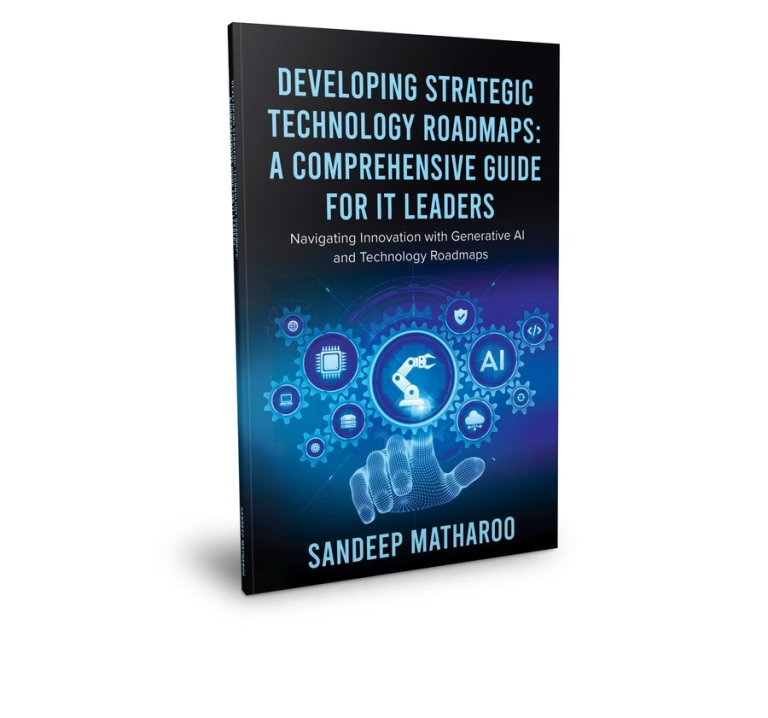
Navigating Innovation with Strategic Technology Roadmaps
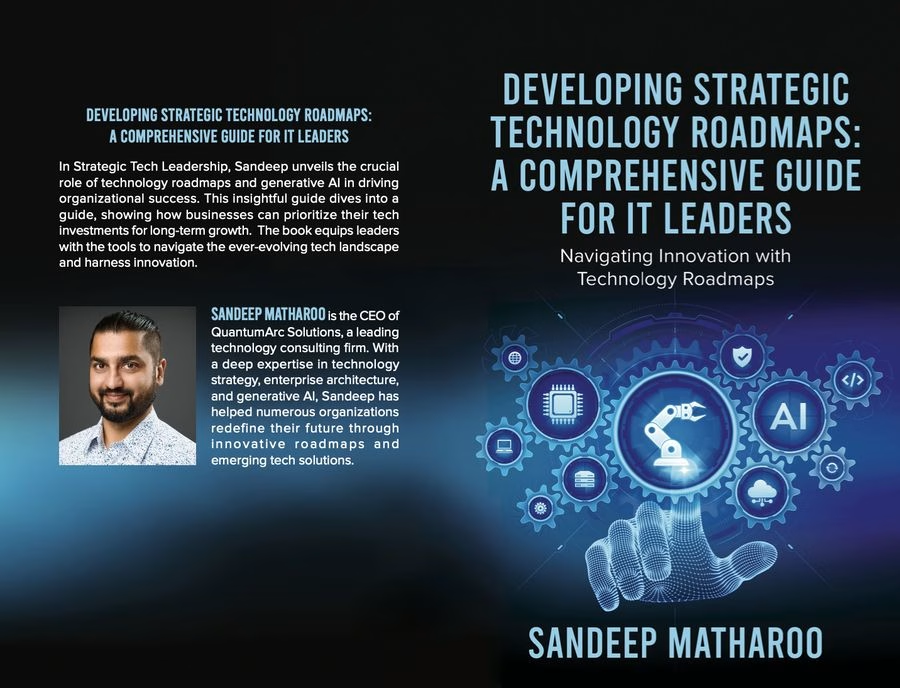
Technology is moving faster than ever, and IT leaders are expected to balance innovation with business alignment. Sandeep Matharoo’s book, Developing Strategic Technology Roadmaps: A Comprehensive Guide for IT Leaders, offers a clear path for managing this responsibility. With over 20 years of experience as a Senior Enterprise Architect, Matharoo condenses his expertise into a framework that helps leaders design, implement, and sustain effective technology roadmaps.
Why Technology Roadmaps Matter
A technology roadmap is a tool that connects technology decisions to business objectives, ensuring that every initiative contributes to long-term goals. Matharoo explains how roadmaps provide clarity, reduce ambiguity, and give leaders a shared vision to guide investment and execution.
Different kinds of roadmaps serve different purposes. A product roadmap supports new offerings, a service roadmap enhances delivery, and a capability roadmap highlights organizational maturity. Each type serves as a bridge between strategy and execution. For IT leaders, the value lies in creating alignment across stakeholders while setting clear priorities for the future.
Building the Foundation
The success of any roadmap depends on the groundwork. Matharoo stresses the importance of defining the purpose and scope before the process begins. Without clear objectives, a roadmap can quickly lose direction. Leaders are encouraged to ask: What challenges should this roadmap solve? What outcomes are expected?
Stakeholder engagement is another crucial step. The book highlights how including executives, business managers, and technical teams early ensures buy-in and prevents disconnects later. Matharoo also recommends forming a dedicated roadmapping team that brings together people with diverse expertise. This team gathers insights, collects data, and validates assumptions, creating a strong base for the roadmap itself.
Preparation may seem time-consuming, but it saves effort by reducing rework. The upfront investment ensures the roadmap reflects both organizational strategy and realistic technology possibilities.
The Seven Steps to Roadmapping Success
At the center of Matharoo’s book is a step-by-step process that leaders can apply directly. His seven-step methodology provides a roadmap for building the roadmap:
-
Define strategic objectives to establish clear goals.
-
Assess the current state of systems, tools, and processes.
-
Identify technology drivers and trends to anticipate external forces shaping the landscape.
-
Generate ideas and opportunities with creativity and collaboration.
-
Prioritize and select initiatives based on impact, cost, and feasibility.
-
Develop the roadmap by layering initiatives into a coherent timeline.
-
Communicate and implement the plan across all levels of the organization.
This process transforms strategy into a living document. Each stage builds momentum, ensuring the final roadmap is practical, actionable, and aligned with organizational goals.
Making Roadmaps Visual and Actionable
Once developed, a roadmap must be presented in a way that engages stakeholders. Matharoo devotes significant attention to visualization. He explains how timelines, layered structures, and graphical tools make complex information digestible. A well-designed roadmap helps executives see the bigger picture and technical teams understand their immediate priorities.
Developing Strategic Technology Roadmaps: A Comprehensive Guide for IT Leaders also provides advice on keeping roadmaps alive. Implementation is only the beginning. Roadmaps need to be integrated into planning cycles, measured for progress, and updated as conditions shift. Leaders are encouraged to treat roadmaps as evolving guides rather than static charts. By refreshing them regularly, organizations remain responsive to market shifts and emerging technologies.
Overcoming Challenges Along the Way
Matharoo is realistic about the obstacles IT leaders face. Resistance from stakeholders, lack of reliable data, and shifting priorities can derail the process. His book provides strategies to work through the problems. He advises leaders to focus on strong communication, continuous stakeholder engagement, and a culture that values adaptability. These practical insights reflect his years of guiding organizations through complex transformations.
What Sets This Guide Apart
Many books on technology strategy focus heavily on theory, leaving readers struggling to apply the concepts. Matharoo’s approach is different. He combines his background in enterprise architecture, cloud technologies, and AI integration with straightforward explanations and structured processes. His experience leading digital transformations across industries adds depth and credibility to the advice.
The guide is not limited to large enterprises. Its methodology scales to medium-sized organizations and can be tailored to different industries. Whether leaders are starting their first roadmap or refining an existing approach, the content remains relevant and practical.
Closing Thoughts
Developing Strategic Technology Roadmaps: A Comprehensive Guide for IT Leaders equips readers with the tools to bring order and clarity to fast-moving technology environments. It gives leaders a framework to link IT decisions directly to business strategy while also providing techniques to manage change, visualize progress, and keep initiatives aligned.
Sandeep Matharoo has turned decades of professional experience into a practical guide that IT leaders can trust. For anyone responsible for steering technology strategy, this book provides not only direction but also confidence. In a world where innovation never slows down, having a clear roadmap may be the difference between moving ahead with purpose and getting left behind.
We had the privilege of interviewing the author. Here are excerpts from the interview:
Thank you so much for joining us today! Please introduce yourself and tell us what you do.
I’m Sandeep Matharoo, a Senior Enterprise Architect with over 15 years of experience in shaping technology strategies for large organizations in sectors like nuclear energy, consulting, and technology. I specialize in enterprise architecture, cloud solutions, AI/ML integration, and strategic technology roadmaps. Currently, I’m an Enterprise Architecture Consultant at Quantum Arc Solutions in Toronto, where I help major clients align their business goals with innovative IT solutions. I’m also the author of Developing Strategic Technology Roadmaps: A Comprehensive Guide for IT Leaders, a book designed to empower IT leaders to navigate innovation and drive digital transformation.
Please tell us about your journey.
Early on, I founded Santek Systems, an IT consulting firm. This entrepreneurial experience shaped my ability to translate business needs into technical solutions.
I then honed my expertise at top-tier firms like McKinsey, PwC, where I led transformative projects. At Quantum Arc Solutions, I continue to drive strategic alignment, help implement AI capabilities and implementing governance frameworks for major clients. My book reflects this journey, distilling lessons from years of leading digital transformations and fostering innovation in complex environments.
What are the strategies that helped you become successful in your journey?
Several strategies have been key to my success:
- Alignment of Business and Technology: I focus on deeply understanding business objectives and mapping them to technology capabilities through tools like capability modeling and enterprise architecture frameworks. This ensures IT solutions deliver measurable value.
- Governance and Collaboration: Establishing robust governance frameworks, like Architecture Review Boards, has been critical for enforcing standards, mitigating risks, and fostering cross-functional collaboration.
- Continuous Learning and Adaptation: Staying ahead of industry trends—such as AI/ML, cloud technologies, and microservices—has allowed me to integrate cutting-edge solutions into strategic roadmaps.
- Stakeholder Engagement: Strong facilitation and communication skills have helped me build trust, align stakeholders, and drive buy-in for transformative initiatives.
- Data-Driven Decision Making: My work on data governance and enterprise data lakes has taught me the power of leveraging data to enhance decision-making and operational efficiency.
These strategies, combined with a commitment to innovation and resilience, have been instrumental in my career.
Any message for our readers?
To IT leaders and aspiring architects: Embrace strategic alignment as your north star. Technology is most powerful when it serves clear business goals. Invest in understanding your organization’s needs, build robust governance, and stay agile in adopting emerging technologies like AI and cloud solutions. My book, Developing Strategic Technology Roadmaps, offers practical tools to navigate this journey. Stay curious, collaborative, and focused on delivering value—success will follow.
Thank you so much, Sandeep, for giving us your precious time! We wish you all the best for your journey ahead!
Knowledge grows when shared. Please Pass it on!

Discover more from Paxjones
Subscribe to get the latest posts sent to your email.