

Unlocking the Power of Privacy in Church Life
Conversations about privacy usually center on social media, online shopping, or workplace data. Yet there’s one place where privacy plays an equally vital role, though it’s often overlooked: the church. Grace Buckler, a thoughtful writer and privacy educator, brings this issue to light in her three-book Church Privacy Series. Each book focuses on a distinct angle, guiding readers through the steps of protecting themselves, their congregations, and the bonds that hold their communities together.
Book One: Church Privacy: Who Cares? You!
Grace begins her series with a bold call to action. Church Privacy: Who Cares? You! challenges the idea that privacy is a luxury or a technical detail. She shows that it’s a form of care every member can extend to others. With storytelling and accessible teaching, she explains how small lapses can spiral into bigger problems, from legal exposure to broken trust. This book equips readers with practical ways to protect both personal and community information. Topics include how to handle digital communication safely, how to establish privacy-friendly practices during church events, and even how to bring scripture into conversations about protecting boundaries. Grace also includes resources that help readers create a personal privacy policy, making the material highly actionable. Instead of presenting privacy as a burden, she reframes it as an act of stewardship. Church members learn to feed the flock by building safe spaces, starve risks by addressing vulnerabilities, and ditch liabilities by complying with privacy requirements. It’s a mix of inspiration and practical know-how that encourages immediate steps toward safer church life.
Book Two: Church Privacy Team
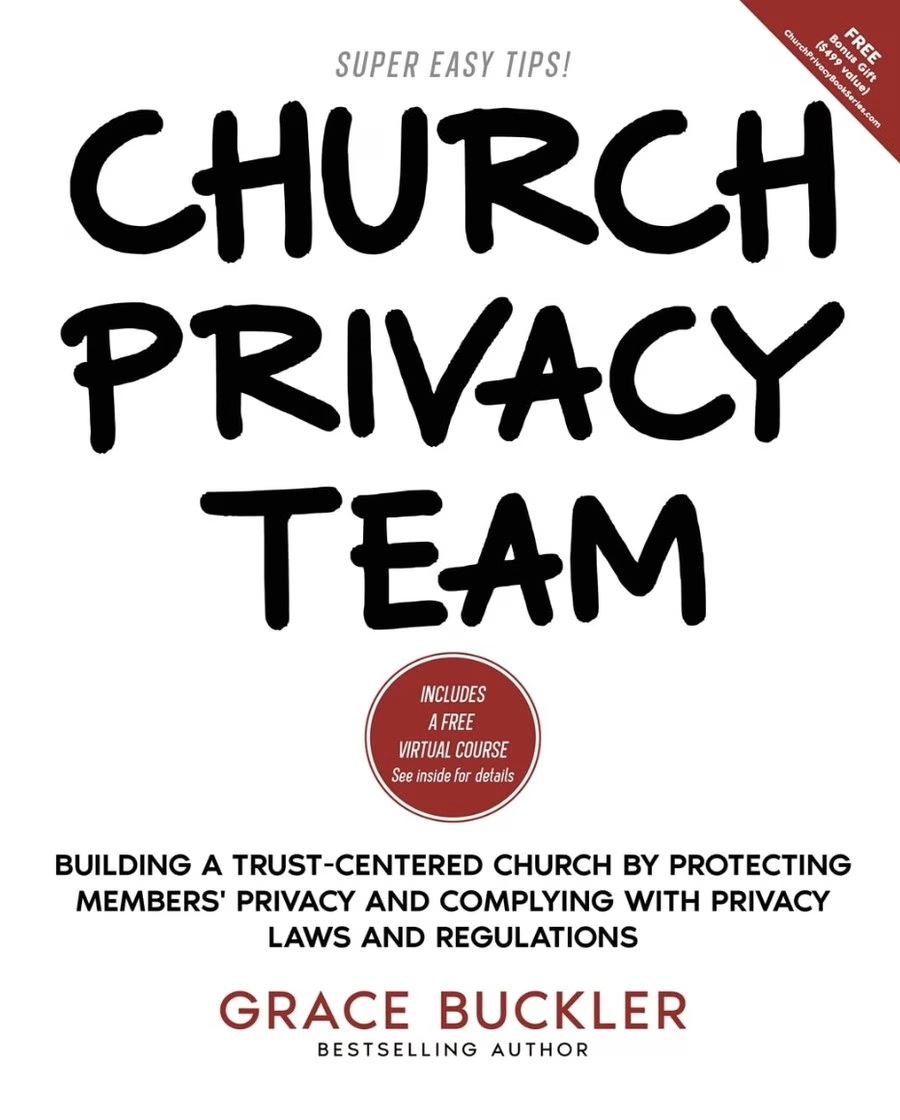
While the first book empowers individuals, Church Privacy Team zeroes in on the collective. This guide is tailored for leaders, ministry workers, and volunteers who shoulder responsibilities in their congregations. Grace understands the reality: most teams feel stretched thin and worry they lack the budget or expertise to address privacy effectively. Her book offers reassurance that meaningful progress is possible, even with limited resources. She explores questions that many church workers hesitate to ask. What are the risks of mishandling financial transactions? How do you ensure sensitive prayer requests remain private? What happens when children’s personal information isn’t adequately secured? By answering these concerns, Grace removes uncertainty and provides a roadmap for compliance with both domestic and global privacy regulations. The book’s strength lies in its clarity. Grace outlines how to reduce risks, strengthen trust, and avoid penalties. She positions privacy as an essential foundation for dignity and healing within church life. Every checklist, example, and strategy is designed to be realistic, even for small congregations. Readers walk away with tools to implement changes that make their churches safer and more welcoming.
Book Three: Church Privacy 101
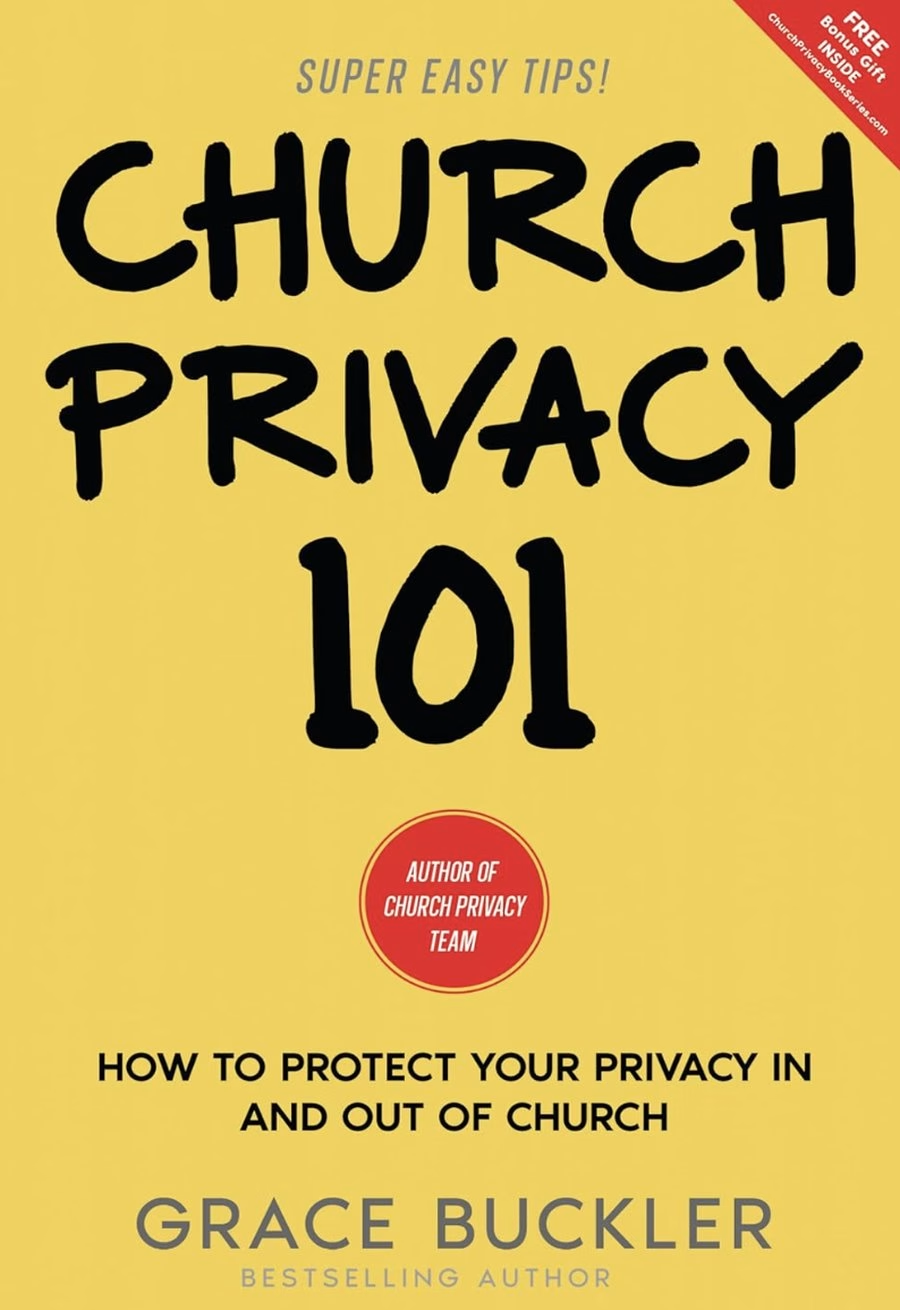
The final installment, Church Privacy 101, takes the subject beyond organizational practices and into the personal realm. Grace makes a compelling case that privacy is a vital part of healthy, respectful relationships. She addresses everyday scenarios familiar to anyone involved in church life: sharing personal struggles in prayer groups, discussing mental health with trusted members, or setting boundaries within friendships. With straightforward advice, she shows how to respect both your own privacy and the privacy of others. The book helps churchgoers rethink how they communicate and how they honor the dignity of those around them. What sets this work apart is its emphasis on balance. Grace acknowledges the importance of openness while teaching how to maintain discretion. She equips readers to protect themselves from overexposure and to cultivate connections rooted in mutual respect. For anyone who has hesitated to put boundaries in place, this book provides the encouragement and strategies needed to reclaim autonomy.
A Complete Resource for Churches and Individuals
Together, Grace Buckler’s three books form a complete guide for navigating privacy in faith communities. Church Privacy: Who Cares? You! inspires individuals to see privacy as an essential responsibility. Church Privacy Team equips groups to comply with laws, prevent liabilities, and strengthen trust. Church Privacy 101 empowers churchgoers to protect dignity and foster authentic relationships. The Church Privacy series is practical, approachable, and deeply human. Grace never reduces privacy to technicalities. She consistently returns to its core: respect, dignity, and trust. Whether you’re a church leader handling sensitive data, a volunteer managing event registrations, or a member seeking healthier boundaries, these books provide clarity and encouragement. In a time when transparency often overshadows discretion, Grace’s message is refreshing. She reminds readers that true hospitality and compassion can only flourish in spaces where privacy is honored. By following her guidance, churches can become places of safety, healing, and deeper connection.
We had the privilege of interviewing the author. We have divided the interview into sections for the benefit of our readers. Here are excerpts from the interview:
Why This Series Matters
Grace Buckler’s Church Privacy Series is timely, practical, and deeply compassionate. Each book can stand on its own, yet together they form a comprehensive guide to privacy in faith communities. From foundational awareness in Church Privacy: Who Cares? You! to collective action in Church Privacy Team: Building a Trust-Centered Church and personal empowerment in Church Privacy 101: Protecting Privacy In and Out of Church, Grace gives readers everything they need to safeguard both individuals and congregations.
Churches that engage with these works can cultivate cultures of trust where dignity is protected, relationships are strengthened, and hospitality shines brighter. Grace’s voice reminds us that privacy is less about restrictions and more about respect—a value that resonates deeply in every community of faith.
For leaders, volunteers, and churchgoers alike, these books are essential roadmaps to a safer and more compassionate future.
From National Security to Church Service
Q: From crawling under federal government fences and into ceilings to protect national security in the US and overseas, to becoming an award-winning US Secret Service consultant, leading privacy compliance efforts for Fortune 500 companies, and serving on the advisory board of the largest global privacy association—how did you end up in church, writing about churches, and writing for churches?
That sounds cinematic, doesn’t it? But I didn’t just end up in church. I am the church. That’s the definition of church—the people. Before I ever went on a national security mission or worked in cybersecurity and privacy, I was first a missionary. Of course, not by title. I was born on a church mission field. From church plants to mature churches, I’ve seen the church unfiltered—more than most people I know.
Add my professional background, personal experiences, and years of tending to church members’ privacy wounds, and you’ll see the insights that shaped these books.
A Defining Moment in Sweden
Q: You mentioned in your book being in Sweden during the early stages of writing this series. What was the significance?
A church volunteer there had faced a lawsuit for a privacy violation. By God’s design, a business award had taken me to Scandinavia, and I couldn’t shake off that case from my mind.
The lesson: sometimes our fiery zeal for ministry can unintentionally create blind spots that could result in privacy violations. My heart broke for both the victims and violator. That was one of my defining confirmations that I was meant to help prevent similar lawsuits in churches.
Unique Challenges in Churches
Q: What’s interesting about working with churches compared to big corporations or the federal government?
While corporations and the federal government are distinct in their own ways, churches are very unique. The approach is different. I don’t show up, listen, and offer strategies and plans. Instead, I bring scriptural, regulatory, and legal solutions—ensuring that the church’s sacred responsibilities are clear, alongside regulatory and legal obligations.
I meet people where they are. Often, I’m put on the spot to explain or defend scriptures and align them with privacy requirements. That doesn’t happen in other markets. I don’t pray out loud with teams or explain scriptures to corporations. That’s what makes church work unique and very interesting
Roles in the Church
Q: You wear many hats in churches. What privacy roles do you play most when supporting them?
I serve as a contract Director of Information Governance, Chief Privacy Officer (CPO), Director of Privacy Compliance, Privacy Advisor, and Instructor.
Q: What does a Director of Information Governance do?
It’s like governing a pantry of information. Churches, like corporations, have information assets critical to their mission. I take a holistic view: how information is created, collected, valued, used, retained, and eventually deleted.
I assess risks, define strategies, and ensure proper privacy and security measures are in place, all while meeting legal and regulatory obligations. It’s a high-level role that sets direction for information managers who execute policies day-to-day. My tools include policies, procedures, standards, training, and regulatory requirements.
Privacy Advocacy
Q: Are you a privacy advocate?
I am the Privacy Advocate. I’m the founder of The Privacy Advocate. I advocate both in corporations and churches.
For churches, I give a voice to what members are afraid to say or don’t know they should say. I also say what leaders don’t know to say—or don’t want to say—because they fear they might appear weak. The love for God and people should be stronger than fear and pride. I advocate for church members and leaders alike.
Faith and Privacy
Q: It must be scary to tie scriptures to business solutions?
It once was scary but not anymore. People who ask scriptural questions are earnest and genuinely seeking relevant answers. The Bible is loaded with privacy principles. Those are cherished learning moments for me. I learn from those I serve, and that drives me to study, know my Bible, and always be ready to give an answer.
Writing the Series
Q: What troubled you most when writing this series?
That I might be misunderstood. That privacy would be dismissed as an obsession, a trend, or just a money-making concept. That I’d be seen as anti-transparency, anti-testimony, anti-fellowship, and anti-community.
I’ve never attended seminary, divinity school, or Bible college. I’m not a clergy person. I worried my intentions might be silenced, or that people might ask, “By whose authority do you say these things to us?” Those were the distracting voices I wrestled with before I wrote. They stopped when I started writing.
Q: How would you have dealt with that question?
Humor. I sometimes practiced answers in the mirror: “By the highest authority” or “By the One Who kept me awake at 3 a.m. until I wrote this book to help you.” I laughed at my answers. Humor gets me going. When you understand your assignment, you want people to ask you questions.
I didn’t want this assignment, but I knew it was mine. I’m equipped for it. I may not understand every verse in the Bible, but I know privacy risks and their negative impacts. I know what it’s like to be hurt, unseen, or unheard in church. I understand the pain of leaving a once-cherished church community because it no longer felt safe mentally, emotionally, spiritually, or physically.
Consulting and Books
Q: And all your roles are part of your privacy consulting work?
Yes. They’re part of the services offered exclusively to churches through The Privacy Advocate, LLC.
Q: What was the process of planning the book series like?
It wasn’t planned at all. I was content with speaking engagements at churches. I didn’t want to write about churches—it was daunting. I had no church privacy books to reference, and that turned out to be a blessing in disguise. It stretched me.
I felt that the timing was bad: COVID-19, church closures, churches scrambling to offer remote worship services, and privacy regulatory upheaval. It was my most challenging ministry assignment. Corporations knew they needed me; the church was just discovering me. A lot was happening at once.
Originally, I had planned to write for Fortune 500s. That project went on hold. The church privacy books had no outline—the outlines came after the books were written. What started as the book I hesitated to write became the start of a series, sparked by churches opening up about their concerns. It became clear this was beyond me and beyond one book.
A Message to Readers
Q: Anything you want to tell your readers?
Your privacy matters. If you leave a church because of a privacy violation but only say, “The Lord has called me elsewhere,” you’re not helping make it better for the next person. Write a note—anonymous if necessary.
The violators need to know. If you’re afraid, blame it on me: “Grace said it.” And when asked “Who?”—hand them one of my books (Church Privacy: Who Cares? You! and Church Privacy Team). My contact details are inside churchprivacybookseries.com.
To leaders: privacy is a love and trust language. Respecting and protecting it demonstrates care to your people. The church handles some of the most personal and sensitive information. Privacy is urgent. Also allow anonymous exit notes. Love God, love people.
Thank you so much, Grace Buckler, for giving us your precious time! We wish you all the best for your journey ahead!
Knowledge grows when shared. Please Pass it on!

Discover more from Paxjones
Subscribe to get the latest posts sent to your email.