
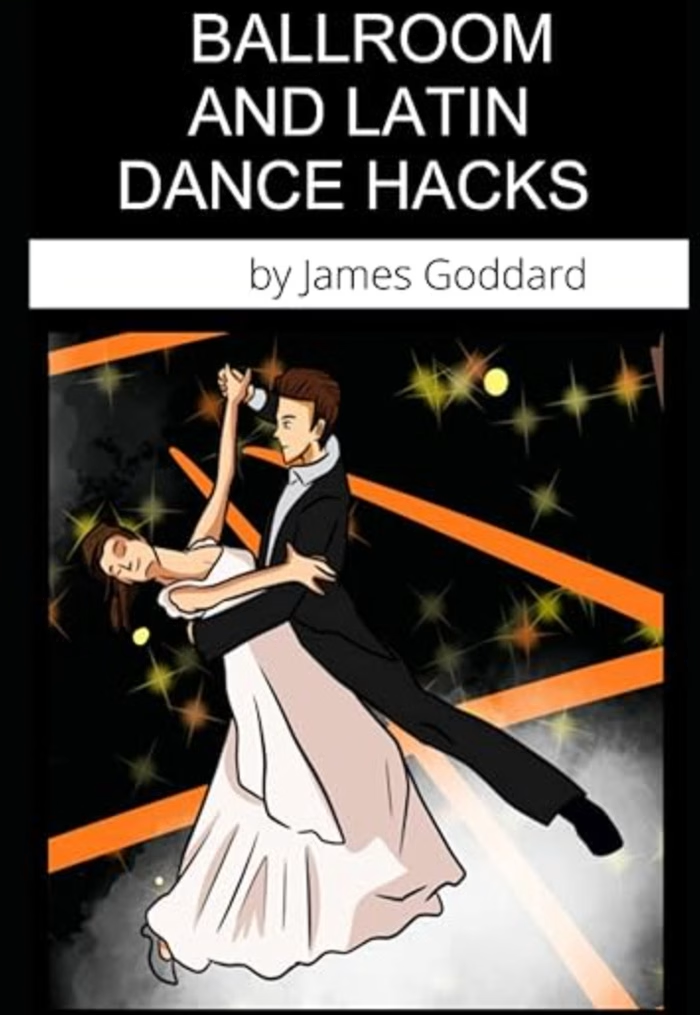
Dance Made Simple with James Goddard’s Practical Guide
Ballroom and Latin dance have a way of capturing attention. The music sets the tone, the steps carry energy, and the overall atmosphere feels both elegant and inviting. Yet for many newcomers, stepping into this world can feel intimidating. James Goddard understands that feeling all too well. With years of experience across multiple dance styles, he has created Ballroom and Latin Dance Hacks: Goddard Method, a book that turns hesitation into confidence and complexity into something approachable. Subscribers to Kindle Unlimited can obtain this book free of charge.
A Resource for Every Dancer
The beauty of this book is that it doesn’t matter if someone is just learning their first waltz or already familiar with samba rhythms. Goddard wrote it with both beginners and experienced dancers in mind. The goal is simple: to make readers feel prepared for classes, social dances, and even formal events.
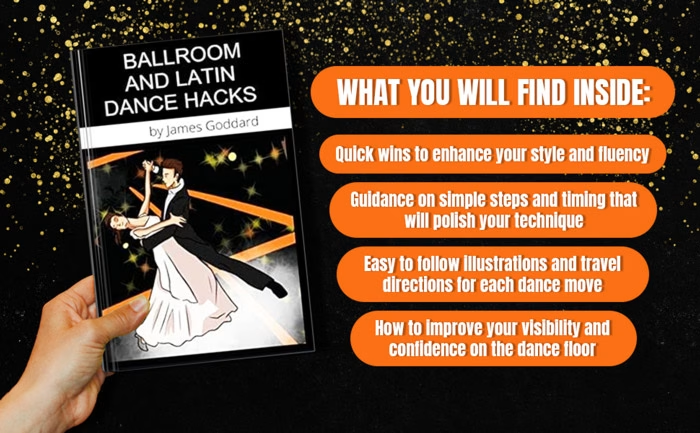
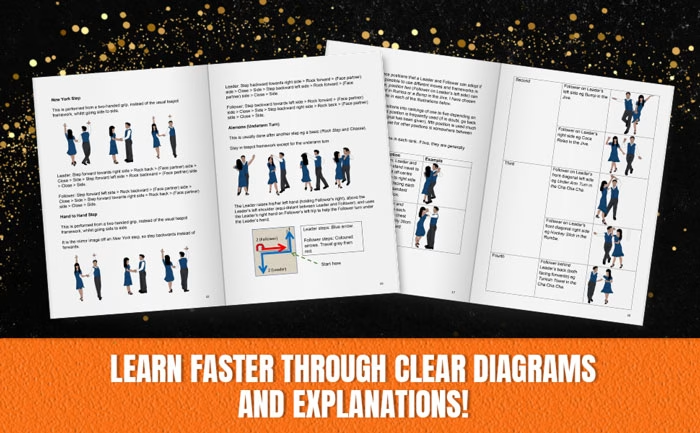
The layout of the book reflects this mission. Each section provides core techniques followed by variations, allowing readers to practice the basics before experimenting with more advanced combinations. Instead of bombarding dancers with long lists of movements, the book uses diagrams and travel directions that show exactly where to place feet and how to move with a partner. That clear structure means dancers can absorb new skills quickly without feeling lost.
Beyond Steps and Timing
 Learning to dance isn’t only about memorizing movements. Confidence, style, and the ability to interact smoothly with a partner all play major roles in how someone appears on the dance floor. Goddard dedicates space in his book to these often-overlooked aspects. He introduces quick wins that polish style immediately, like adjustments to posture or arm positioning. These details might seem small, but they transform how others perceive a dancer.
Social etiquette is another important theme. In partner dancing, respect and understanding matter just as much as technical ability. Goddard offers guidance on how to invite someone to dance, how to adapt to different learning styles, and how to be a considerate partner throughout the experience. These lessons give readers the tools to succeed not only in movement but also in creating enjoyable social interactions.
Ballroom and Latin Dance Hacks also focuses on building visibility on the floor. Many dancers, especially newcomers, hesitate or try to blend into the background. Goddard encourages the opposite. By teaching how to project presence and carry oneself with assurance, he helps readers shift from being uncertain participants to confident performers, even in casual social settings.
The Author’s Unique Perspective
James Goddard brings more than dance experience to his teaching. Alongside ballroom and Latin, he has studied salsa, Argentine tango, and Ceroc, giving him a wide perspective on different dance traditions. His interest in martial arts and yoga has shaped the way he views movement itself. Over time, he began noticing patterns that link seemingly different disciplines. That realization became a driving force behind this book.
Instead of treating each dance as a completely separate skill set, Goddard highlights the principles that run across them. A movement in judo might share a foundation with a turn in tango. Recognizing these connections speeds up learning and makes dance feel less intimidating. It also gives readers a sense of creativity as they realize how familiar motions can translate into new dance contexts.
Goddard’s humor also shines through. He often jokes about using more judo on the dance floor than in the dojo. While lighthearted, it emphasizes a truth: dance is about flow, balance, and awareness—qualities martial artists and dancers alike rely on.
Why This Book Resonates
Readers who have explored other dance manuals will notice a difference in Goddard’s style right away. Rather than focusing only on the “what,” he explains the “what, how, and when.” This three-layer approach ensures that each step makes sense in context, rather than existing as an isolated instruction.
Illustrations provide a constant point of reference, letting learners check their form against accurate yet simplified visuals. This means dancers don’t just read about the correct position—they can see it and apply it immediately. As a result, confusion drops and progress speeds up.
One reviewer summed it up perfectly: the book makes complicated dance steps feel simple, and the instructions are so clear that losing track mid-step becomes unlikely. More than that, the writing style is warm and encouraging, drawing in readers who might not have considered themselves dancers at all. That friendly tone makes the book feel less like a technical manual and more like a supportive teacher guiding each step.
A Practical Companion for the Dance Journey
Ballroom and Latin Dance Hacks: Goddard Method positions itself as a reference that readers can return to again and again. Dancers can revisit diagrams, practice variations, and refine their timing whenever needed. It isn’t meant to sit on a shelf after a single read. Instead, it works as a partner in the learning process, offering steady guidance at every stage.
Whether someone wants to join a social dance, impress at a formal event, or simply enjoy moving with music, this book provides the keys to unlock that potential. With its blend of technical clarity, confidence-building advice, and insights from a uniquely experienced author, it delivers both knowledge and inspiration.
Dancing might seem like a challenge reserved for the naturally gifted, but Goddard proves that anyone can find their rhythm. All it takes is the right approach, and with his book, that approach is now accessible to everyone.
Knowledge grows when shared. Please Pass it on!

Discover more from Paxjones
Subscribe to get the latest posts sent to your email.