
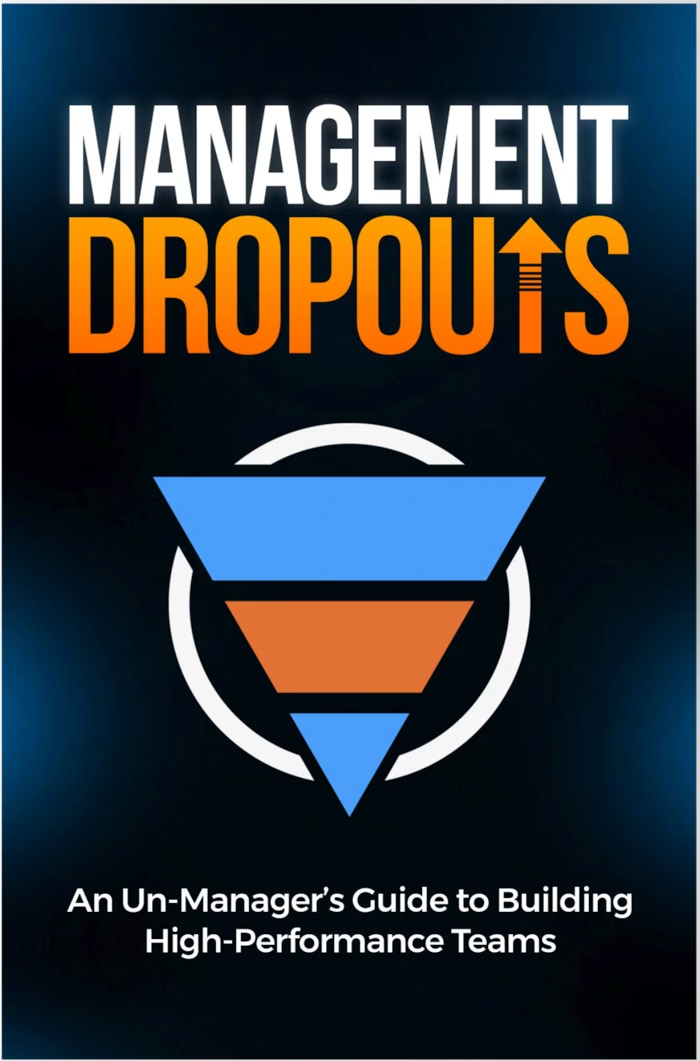
A Fresh Look at What Leadership Should Feel Like
Jason Greco invites readers to imagine a workplace where leaders guide people with intention instead of relying on layers of procedures. His book Management Dropouts: An Un-manager’s Guide to Building High-Performance Teams challenges long-held assumptions about what it means to manage. Jason explains that many organizations still treat management as a set of administrative chores. Employees end up reporting to individuals who track tasks and shuffle resources without creating real inspiration. This gap affects culture, motivation, and long-term performance.
Jason believes today’s teams crave purpose, context, and human connection. They want leaders who help them move toward meaningful outcomes rather than managers who oversee compliance. His book encourages readers to step away from old models and embrace a modern, influence-driven style of leadership that speaks to the way people work today.
Why Traditional Management Falls Short
Jason describes how traditional management structures evolved for a different era. These systems were built around control. Managers were trained to enforce expectations, deliver updates, and keep people in line with preset goals. This structure worked in environments built on repetition and predictability. It doesn’t work as well in workplaces that depend on innovation, speed, and collaboration.
Teams often get stuck in cycles of meetings, approvals, and status reports. Jason explains that this creates a surface-level sense of order while draining energy from the people responsible for delivering results. Without clear purpose and genuine leadership, teams lose the spark that drives creativity and progress. Jason wants readers to recognize that the problem isn’t the people. It’s the outdated model guiding them.
His book reframes the role of a leader as someone who builds trust, creates clarity, and elevates the people around them. He urges readers to let go of the administrative mindset and lean into a style that drives engagement and momentum.
The Core of the Un-management Framework
At the center of Jason’s message is the Un-management Framework. It’s a practical, four-part philosophy that leaders can apply immediately to strengthen culture and performance. Each part works individually, yet together they create a system that feels energized and aligned.
The first tenet, Drive Clarity, reminds leaders that people perform better when they understand what they’re working toward. Jason encourages leaders to define the vision, set measurable objectives, and create clarity around each role. When expectations are transparent, uncertainty fades. Teams gain direction and purpose in their daily work.
Improve Continuously is the second tenet. Jason believes excellence grows out of steady, consistent refinement. He points to tools like Maturity Models to help teams identify strengths and development areas. Leaders who adopt this mindset encourage experimentation and learning. Progress becomes a natural part of the team’s rhythm, helping them elevate their work over time.
The third tenet, Communicate Relentlessly, focuses on the importance of steady and meaningful communication. Jason encourages leaders to break away from relying too heavily on email. He promotes conversations that create understanding and real connection. Leaders who communicate consistently shape stronger relationships. These relationships become the foundation for effective collaboration.
The final tenet, Value Completely, brings heart into leadership. Jason explains that people want to know their work has meaning. They want opportunities to grow. Leaders who invest in development paths, recognition, and emotional support create teams that feel committed. When people feel valued, they show up with energy and loyalty.
These four principles together offer a guide for leaders who want to uplift their teams and create environments where people thrive.
The Author Behind the Movement
Jason brings deep experience to this approach. Over the span of more than twenty years, he has influenced culture and strategy in global organizations like Goldman Sachs, where he held CTO roles. He also founded Enginuity Technologies, building solutions in fast-moving, innovative environments. His background stretches across AI-driven software development, IT operations, product management, and sales. Each role shaped his understanding of how organizations succeed when leaders prioritize clarity, communication, growth, and value.
Jason also contributes to the broader leadership community through speaking engagements at events such as CRHRA/CRATD and NAFCU conferences. He teaches Project and Portfolio Management at the State University of New York – University at Albany, guiding future leaders with practical frameworks and real-world insight.
A Guide for Leaders Ready to Evolve
Management Dropouts gives readers a chance to adopt a leadership style that aligns with today’s fast-paced and people-centered workplaces. Jason offers tools and insights that help leaders replace outdated habits with intentional influence. His perspective encourages readers to build cultures driven by purpose, communication, and complete value for every individual.
The book is available on Amazon for readers who want to create stronger, more connected, high-performing teams.
We had the privilege of interviewing the author. Here are excerpts from the interview:
Hi, it’s great to have you with us today! Please share about yourself with our readers.
Hi, I’m Jason Greco, a technology leader and strategist with 25+ years of experience developing teams and leading large-scale digital transformation. I’ve worked across roles as a CTO, startup founder, Goldman Sachs alum, and team builder, and each chapter shaped how I approach leadership and innovation today. I focus on aligning technology with real business growth, building high-performing teams, and turning complex challenges into measurable results. I thrive at the intersection of strategy and execution, and I’m driven by creating environments where people and ideas can truly thrive.
Please tell us about your journey.
I started my career as a software engineer and ultimately became a team leader to try to make a more meaningful impact. I’ve found building teams to be incredibly rewarding.
What are the strategies that helped you become successful in your journey?
Perseverance, persistence, and empathy. Oh, and an open mind!
Any message for our readers?
An unconventional approach to leadership is the key to building a successful team that performs beyond expectations.
Thank you so much for giving us your precious time! We wish you all the best for your journey ahead!
Knowledge grows when shared. Please Pass it on!

Discover more from Paxjones
Subscribe to get the latest posts sent to your email.