
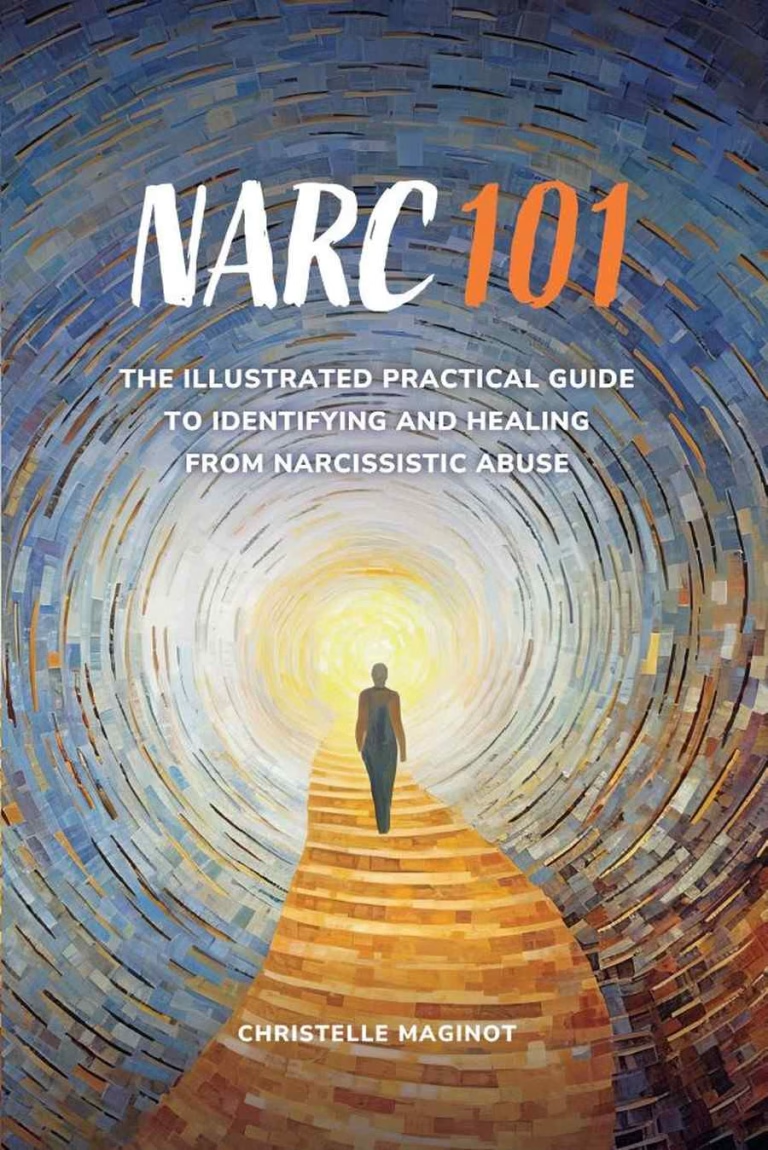
Narc 101: A Clear Path Out of Narcissistic Abuse
For many people, the hardest part of an unhealthy relationship is recognizing what’s really happening. You might feel constantly drained, unsure of yourself, or stuck in a cycle of highs and lows. Christelle Maginot’s Narc 101: The Illustrated Practical Guide to Identifying and Healing from Narcissistic Abuse is written to bring that confusion into focus. It’s designed for anyone who’s ready to name the problem, understand the damage, and begin building a healthier life.
Seeing What’s Been Hidden
Narcissistic abuse often hides behind charm and charisma. At the start, the relationship may feel like a fairytale. The compliments, attention, and intensity create a powerful connection. Over time, though, the mask slips. Sarcasm creeps in. Promises don’t match actions. Criticism becomes routine. Before you realize it, you’re questioning your own memory, avoiding conflict, and sacrificing your needs just to keep the peace.
Christelle explains these shifts with clarity. She shows readers how tactics like gaslighting, love bombing, and silent treatments erode self-worth. Survivors often share the same realization after reading her book: the problem wasn’t that they were “too sensitive” or “overreacting.” The problem was the steady pattern of manipulation. Having language for these experiences provides both validation and relief.
Rebuilding Step by Step
What makes Narc 101: The Illustrated Practical Guide to Identifying and Healing from Narcissistic Abuse especially valuable is its focus on practical recovery. Christelle offers step-by-step guidance for reclaiming strength and direction. That includes:
- Learning how to identify red flags early in relationships
- Practicing self-compassion to reduce guilt and shame
- Breaking the trauma bond with realistic strategies
- Creating boundaries that protect emotional health
- Finding the confidence to rebuild identity and trust
The book emphasizes small, consistent actions. Survivors can begin with a single tool—like journaling daily thoughts or practicing positive affirmations—and gradually move toward bigger changes. Each page offers both encouragement and concrete advice.
Why the Book Focuses on Romantic Partners
Christelle made a deliberate choice to frame the narcissist as a romantic partner. While narcissistic traits can show up in parents, friends, or bosses, the romantic relationship is often where the pain becomes undeniable. The stakes are higher, the intimacy deeper, and the damage harder to ignore.
She also notes that most readers of self-help books are women, which influenced her decision to use “he” when describing the narcissist. It keeps the writing clean and easy to follow. Still, Christelle stresses that narcissism affects all genders and identities. The behaviors she describes apply broadly, even if the examples are specific. Survivors across the spectrum will find themselves reflected in these pages.
Meet Christelle Maginot
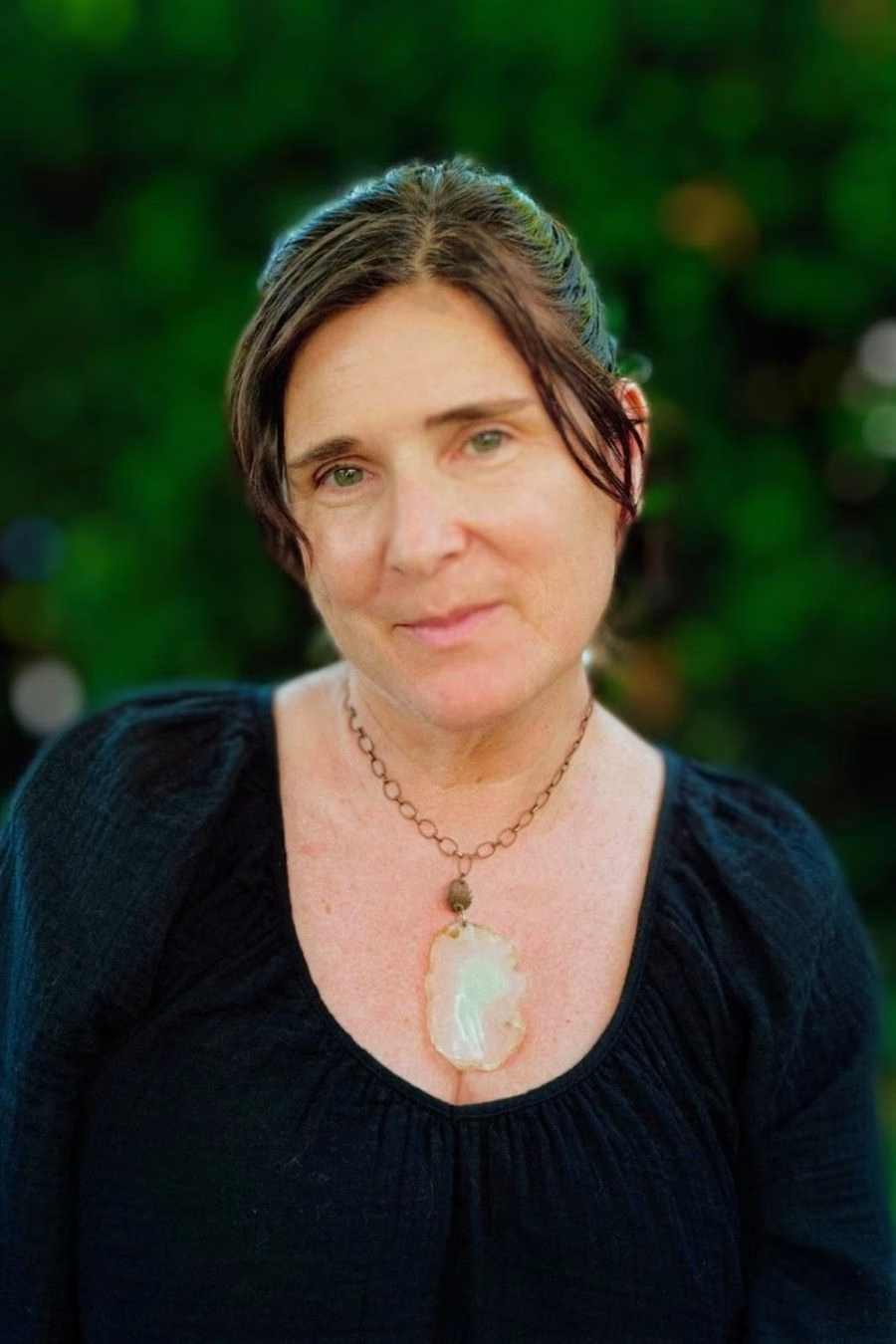
The strength of Narc 101 comes from its author’s personal journey. Christelle Maginot is a survivor who spent decades piecing together her own understanding of narcissistic abuse. She’s also a multilingual writer, translator, and editor, which brings precision and clarity to her storytelling.
Christelle lives in Fairfield County, Connecticut, where her home is filled with her children and a lively crew of rescue cats. She practices sound healing, reads widely, and spends time hiking forest trails. These personal details show how she embodies the lessons of her book. She has learned, through experience, that putting yourself first is necessary.
A No-Nonsense Guide with Heart
Plenty of books on narcissism exist, but survivors often complain that they’re either too clinical or too vague. Narc 101 strikes a balance. It delivers serious insight without drowning the reader in theory. It uses straightforward language, approachable examples, and even a touch of humor. Readers feel guided by someone who understands the terrain rather than judged or overwhelmed.
One of the book’s most empowering messages is that healing is possible regardless of circumstances. Even if someone isn’t ready to leave a relationship, they can still begin strengthening their inner world. And for those who have left, the book provides tools for rebuilding identity and cultivating healthier connections in the future.
Why Readers Will Keep This Book Close
Survivors who pick up Narc 101 aren’t just looking for knowledge. They’re looking for hope and direction. This book delivers both. By naming the tactics of abuse, it dissolves confusion. By offering tools, it creates a sense of momentum. By sharing the author’s story, it reassures readers that they’re not alone.
Christelle reminds survivors that freedom isn’t only about leaving a toxic partner. It’s about regaining self-respect, joy, and peace of mind. Narc 101 shows that thriving after abuse isn’t just a dream—it’s a reality that begins with one clear step forward.
We had the privilege of interviewing the author. Here are excerpts from the interview:
Hi, Thank you so much for joining us today! What inspired you to write Narc 101?
Hello, you could say I’m a lifelong student of narcissism—but not in the catchy tagline kind of way. Narc 101 was born from a lifetime of lived experiences (plural), not just research. I wrote it to give survivors what I wish I’d had: clear, practical insight into what narcissistic abuse really looks like, what it does to your mind, and how to start healing without getting lost in the noise. Despite all the resources out there, it took me decades to connect the dots. I wish the process had been faster, and that’s what I’m aiming to offer survivors through this book.
I’ve spent years supporting people in recovery forums, and one thing stands out: many survivors delay their healing because they’re chasing the wrong solutions. They’re stuck in mental loops, using tools that don’t fit the experiences and the trauma they’ve lived through. Narc 101 is my way of cutting through that confusion, offering clarity, compassion, and a path forward. I’m sharing with readers what to look for but also what to expect, the traps not to fall in, and much-need shortcuts to healing, whether they choose to stay in the relationship or not.
Who is Narc 101 meant to reach—and what kind of journey does it invite them into?
Narc 101 is the book I wish I’d had at the beginning of my adult life—when I didn’t yet realize how my childhood trauma would shape my romantic choices and decisions…then later, when I was confused and full of self-doubt…At the start of my healing journey, when I was grieving something I couldn’t even name…Or even only a few years ago, when I was already deep into recovery and trying to rebuild my identity.
This book is for anyone who feels confused about their relationship or their partner’s behavior. Women and men who feel unsupported, undervalued, emotionally drained, or deeply lonely in a relationship that’s supposed to feel safe. People who find themselves walking on eggshells to keep the peace, questioning their reality, second-guessing their choices, or feeling hopeless despite having a seemingly “good life.” Those who feel trapped in their relationship but don’t understand why or can’t yet imagine a way out.
It’s also for young women and men just stepping into adulthood—especially if they’re coming from a difficult childhood and want to protect themselves from repeating painful patterns. It’s a gentle but clear introduction to narcissism and emotional abuse, helping readers recognize red flags early on and build the self-trust they need to choose healthy relationships.
For those already on the path to healing, Narc 101 is a reminder of how far they’ve come and how far they can go—a glimpse into the journey behind and the one beyond. It’s the kind of book you share with a sibling who doesn’t understand why you’re struggling in a seemingly perfect marriage, or a friend who hasn’t yet found the words for what’s wrong in her own relationship. It’s the kind of book you can smile at once the pain is no longer raw—when you’ve stopped blaming yourself for not seeing, tolerating, hoping, trying to make it work, staying, or leaving.
It’s a lifeline to clarity and healing for people of all ages, genders, and backgrounds. I hope it helps readers recognize the signs of narcissistic abuse, understand how it erodes self-worth, self-trust, and self-identity, and begin to reclaim their emotional strength and peace. Ultimately, I hope it helps them protect themselves so they can move toward healthy relationships rooted in respect, safety, reciprocity, and love.
You chose to focus Narc 101 on romantic relationships and made the “Narc” a man. Why?
As I mention in the preface of Narc 101, if someone set out to write a comprehensive guide on narcissism, they’d end up with an encyclopedia! That wasn’t my goal. I chose to focus on romantic relationships because, while narcissism shows up in childhood and other dynamics, many survivors don’t recognize it until they’ve experienced it firsthand in an adult relationship. That’s often the moment the fog begins to lift.
I also wanted the message to remain clear and undiluted. Once you start branching into narcissistic parents, friends, or bosses, the emotional terrain shifts—and so does the reader’s focus. While the patterns may echo across relationships, the way they’re felt and navigated in romantic partnerships is distinct, and I wanted that distinction to come through.
As for portraying the “Narc” as male, it was both a practical and grammatical decision. Statistically, most readers of self-help books are women, and using “he/she” or “they” repeatedly made the writing clunky and harder to follow. I hope my male readers understand that this choice isn’t rooted in bias, but in clarity. Narcissism doesn’t discriminate—it transcends gender and sexual identity.
How does Narc 101 compare to books such as Dr. Ramani Durvasula’s It’s Not You or other books on narcissistic abuse?
There’s no comparison, but not in the sense you might expect. Narc 101 is a complement to the incredible work of the renowned experts in the field. I deeply admire Dr. Ramani Durvasula’s work; she’s a true light-bringer in this space, and my personal hero. Her clarity, compassion, and courage have helped bring narcissistic abuse into public conversation and dismantle the stigma around it. Her work literally saves lives, and I hold her contributions—alongside the one from other modern pioneers like Dr. Karyl McBride—in the highest regard.
Narc 101 is unique in its own right. To my knowledge, it’s the only illustrated book on narcissism currently available. It’s intentionally structured, visually engaging, and packed with practical, relatable examples. Every page is designed to be both validating and actionable—so readers don’t just understand what happened to them, they feel seen and equipped to make decisions and move forward. It’s not meant to replace the foundational work of experts like Dr. Ramani—it’s meant to walk beside it. A companion for those who need clarity, hope, and healing, in a format that’s both accessible and unforgettable.
What message do you hope survivors take away from Narc 101?
Narcissistic abuse is far more common than most people realize—and yet, survivors often feel profoundly alone. The world around them may side with the abuser, unaware of the manipulation and harm that happens behind closed doors. I want survivors to know: Your pain is real, and your truth matters. You are not imagining it, and you are not alone. My hope is that this book empowers you to reclaim your life—without guilt or shame. Whether you choose to leave the relationship or not, I want you to know that healing is not only possible, but it’s yours to shape!
Above all, I want to offer hope. No matter what narcissistic abuse has taken from survivors, self-worth, self-love, self-trust, and self-respect are not lost forever. They can be rebuilt. We are all worthy of a life rooted in truth, safety, and genuine love. With the right tools, we can build a different tomorrow for ourselves.
What advice would you give to someone who suspects they’re experiencing narcissistic abuse?
The first step is clarity. Narcissistic abuse often follows a rigid and recognizable pattern, but it’s a pattern that victims are slowly conditioned to overlook. Early red flags may be dismissed as quirks or misunderstandings, and by the time victims begin to question them, the trauma bond has often taken hold, making it harder to trust their instincts or make empowered choices.
Unlike other relational dynamics, narcissism isn’t something that responds to couple therapy or negotiation. That’s why it’s crucial to assess what you’re truly dealing with—because that understanding will shape your next steps.
It seems simplistic, but one of the most powerful tools for reclaiming clarity is journaling. It helps you document what your mind has been trained to forget or minimize. Over time, you’ll begin to see the patterns for what they are. As Dr. Ramani wisely reminds us: “Once is a mistake, twice is a coincidence, three times is a pattern.” Keeping a journal keeps you grounded and helps remind you that you’re not imagining things. It helps you trust yourself and stick to your truth—and that’s the first step toward healing.
Your chapter “Should I Stay or Should I Go?” speaks to a pivotal moment many survivors face. From your personal perspective, how do you approach that question?
As I say in Narc 101, the answer to that question isn’t something anyone will find in a book. It’s not black and white—despite how the question might sound. Often, the choice isn’t between leaving a cruel, intentionally abusive partner or staying in a toxic, soul-crushing, possibly dangerous situation. Narcissism exists on a spectrum, and so does narcissistic abuse.
Some survivors feel that staying in the relationship might destroy them. Others carry deep compassion for their partner’s backstory and hope the relationship can be salvaged. Not to mention, everyone’s resilience level is different. And then there’s the emotional entanglement—shared history, children, the trauma bond—that makes the decision far more complex than outsiders often realize.
Even identifying someone’s personality style or discerning whether what binds us to them is love or trauma doesn’t necessarily bring clarity. The decision to stay in the relationship or leave it is deeply personal, shaped by factors unique to each survivor. Someone whose safety or children’s well-being is at risk faces a very different reality than someone navigating a relationship with a benign narcissist who now feels equipped to manage expectations and protect their peace. Likewise, someone with no support or financial resources isn’t in the same position as someone who knows they can rebuild on their own.
Ultimately, only survivors can decide what’s best for them. No one else can define what they’re comfortable with, what they’re willing to sacrifice, or what they need to prioritize. It’s their call—and their healing begins with reclaiming that agency.
Narc 101 was written to offer clarity and guidance for whatever path survivors choose. For those choosing to stay, it provides tools to begin healing and protect themselves within the relationship. For those still unsure—still gathering information and untangling the emotional knots—it offers clarity, language, and perspective to help them make sense of what they’re experiencing and equip them to make a decision. For those choosing to leave, it offers powerful insight into what to expect so they can move forward without losing more time to confusion, self-doubt or fear.
Can you share a practical tool or exercise from Narc 101 that readers have found especially transformative?
One of the most powerful tools I share in Narc 101 is designed to interrupt rumination—a mental loop that keeps us stuck, whether we’re inside a narcissistic relationship or trying to heal from one. When the brain is constantly analyzing our partner, situations, and even ourselves, it pulls focus away from what truly matters.
Science shows that negative self-talk can shape both our self-image and our reality. The opposite is also true: positive affirmations and targeted mantras can help rewire those trauma-altered neural pathways and guide us back to clarity. What I discovered through my own healing is that some of those affirmations are perfect to stop rumination. As I often say: Curb rumination, and half your work is done!
One affirmation I created has been especially transformative for readers. It’s intentionally long—almost a tongue twister—to demand focus and override intrusive thoughts. It requires lots of focus at first, but after hundreds of repetitions, it becomes a mental anchor and just starting it is enough to break the loop and stop any thought it its track. Here it is: “I value myself and my time enough not to think of things that do not serve me.”
It’s deceptively simple, but it works. When recovering from narcissistic abuse, your brain can feel like your biggest enemy. This tool is one of many that helps survivors reclaim control—thought by thought, word by word.
How do you define healing in the context of narcissistic abuse, and what does it look like in real life?
Healing from narcissistic abuse isn’t straightforward. Not all narcissistic relationships are created equal, of course, but for many survivors, the journey isn’t about recovering from just ‘one’ relationship; it’s about untangling a lifetime of trauma. It means confronting patterns rooted in childhood or earlier relationships, challenging internalized beliefs, and reclaiming a sense of self that may have been eroded over time.
Healing is muddy. Messy. Multifaceted. Anything but linear. It’s filled with grief, self-doubt, and the slow, deliberate work of rebuilding. No single modality can address everything survivors face—regulating the nervous system, processing their experience, breaking the trauma bond, reconnecting with their identity, rebuilding their “selves” (self-worth, self-trust, self, respect, self-identity, self-love). Therapy can be transformative, but healing demands more than sessions alone. It requires a conscious, active role: choosing growth, setting boundaries in all areas of our life, and nurturing the parts of ourselves that were silenced or shamed.
Ultimately, healing isn’t a modality—it’s a lifestyle. It’s how we show up for ourselves every day, how we speak to our inner child, how we choose relationships, and how we honor our truth. It’s not something we complete—it’s something we live day to day.
How do you address the shame and self-blame that many survivors carry?
One of the hardest parts of healing is facing the shame and self-blame that often follows narcissistic abuse. Many survivors don’t direct their anger at their abuser—they turn it inward. They blame themselves for missing the red flags, for giving too many second chances, for ignoring their instincts, for silencing their own needs, for not setting boundaries, for losing precious years, etc.
It’s true that our personal patterns—like people-pleasing, conflict avoidance, or unresolved wounds—can play a role in why we stay in an abusive relationship. But it’s equally important to understand the grip of the trauma bond. This bond is formed through cycles of manipulation, intermittent reinforcement, and “built” emotional dependency. It’s an almost unbreakable bond that mimics love, but that’s rooted in control and manipulation.
The trauma bond can make leaving feel impossible. Even when we know the relationship is toxic—or even dangerous—the thought of walking away triggers panic and a deep sense of disorientation, grief, and loss. It can feel like life outside the relationship doesn’t exist.
So yes, shame and self-blame are common, but they’re not rooted in truth. Survivors didn’t “fail”—they survived. Healing begins with self-compassion; with recognizing that what kept us stuck wasn’t weakness, but trauma. There can be no healing without self-forgiveness.
How can friends, family, and professionals better support survivors?
Being in a narcissistic relationship is profoundly isolating. Narcissists often appear charming, charismatic, or even kind and morally upright, making it difficult for outsiders to suspect what’s happening behind closed doors. As the saying goes: abusers are only abusive to their victims.
When survivors finally muster the courage to speak up, believing them, or simply listening to them—without minimizing, doubting, or redirecting—is everything! Manipulation has already eroded their self-trust. They question their own reality and have internalized blame, believing the narcissist’s narrative that they’re the problem. That confusion is often reinforced by the outside world: well-meaning friends who downplay their experiences, therapists who guide them in the wrong direction, and enablers who echo the narcissist’s words.
Supporting survivors doesn’t require suspecting everyone of being a narcissist or even having a deep understanding of narcissism. It requires creating a middle ground—a space where survivors are met with compassion, curiosity, and informed guidance.
Despite narcissism becoming a mainstream topic, many professionals still lack the education to recognize the patterns and effects of narcissistic abuse. Trauma-informed care is essential, but narcissism-informed training—like the programs offered by Dr. Ramani—is equally critical. Without it, survivors can spend years following advice that inadvertently keeps them stuck, like trying to “improve communication” with someone who’s actively distorting reality.
True support begins with listening, learning, and believing. Survivors don’t need rescuing; they need validation. They need to be seen and heard so they feel empowered to move forward in their quest for answers.
In Narc 101, you explore the “internal signs” of narcissistic abuse. Could you elaborate on what those signs typically look like and how they manifest?
We often focus so intently on spotting narcissistic behaviors—those external “red flags”—that we overlook the signs within ourselves. But those internal cues matter just as much. In fact, they’re often the first to appear when we enter a harmful dynamic.
At first, these signs can range from a vague sense of unease to full-blown panic attacks. It’s the body sounding an alarm about something the mind may be unconsciously unwilling or unable to acknowledge. As I write in my book, the body is a barometer of truth. It speaks in sensations long before we can name the experience.
Over time, if ignored, these stress signals can evolve into chronic issues through the cortisol pathway: digestive problems, dermatological issues, insomnia, autoimmune flare-ups, C-PTSD, and much, much more. That’s why tuning into our physical and emotional responses is so vital. Idioms like “gut feeling”, “pit in the stomach” or “heartache” aren’t just poetic—they’re rooted in ancient wisdom we’ve forgotten. It’s time we remember, and it’s time we listen! Most importantly, it’s time we trust what our body is trying to tell us.
How do you respond to concerns that narcissism is being overused or treated as a trendy topic?
Despite decades of research and testimony from world-renowned psychologists and mental health professionals, narcissistic abuse is still dismissed by many as exaggerated, overhyped, or just another trending hashtag. To be fair, the term has gone mainstream and tends to be used casually and often inaccurately by anyone with grievances. In today’s social media landscape, it seems every cheating spouse, volatile parent, difficult sibling, or arrogant manager is labeled a narcissist. And while some may be, not all are. Ironically, the effort to shed light on a very real and devastating experience has cast a shadow of skepticism over it.
But for victims and survivors of narcissistic abuse, this is no exaggeration. Experts estimate that roughly one in six people exhibit a narcissistic personality style—that’s a guesstimated 40 million adults in the U.S. alone! You’d think such a staggering number would be impossible to overlook, especially given the destruction they leave in their wake. Yet they often go unnoticed. They wear masks. They blend in. They feed illusions to everyone around them.
Outside of the grandiose narcissists with public personas, most narcissists are invisible—except to their targets. To the rest of the world, they appear as the perfect PTO mom, the charismatic preacher, the humble boss who praises his team, or the supportive husband. What people don’t see is that the PTO mom relentlessly invalidates her daughter, the preacher’s family lives in fear, the boss’ vendettas have quietly ruined careers, and the “supportive” husband’s wife is driving herself to chemo.
That’s why narcissism education matters. It helps us distinguish genuine cases of narcissistic abuse from other forms of dysfunction—and it gives survivors the clarity, validation, and guidance they deserve.
How did the illustrations in Narc 101 come to be?
Many years ago, I ran a blog about dysfunctional relationships where I shared simple doodle-style illustrations alongside my writing. People enjoyed my posts, but they especially connected with my drawings. So, when I began working on Narc 101, I knew I wanted to bring that same visual charm into the book to make the content feel lighter and more engaging.
Since I didn’t have the time (or the technical skills) to create print-ready illustrations myself, I partnered with a gifted illustrator from Indonesia who goes by the artist name MadRaihan. Raihan immediately grasped the heart of my concepts and brought them to life with warmth and creativity—often adding his own thoughtful touches. Collaborating with him was a pleasure. I loved brainstorming ideas and watching them evolve into illustrations that now help carry the emotional tone of the book. I’m looking forward to working with Raihan again when language versions of the book are in the works.
You’ve shared that friends jokingly call you a “Narc magnet.” Is that a thing?
Yes and no. Let me explain… In romantic relationships, narcissists seek out people who can meet their need for “supply”—that is, anything that feeds their ego and need for control. What counts as supply varies wildly: physique, beauty, intelligence, status, wealth, race, nationality, connections, dependence, character, praise… the list is endless and shaped by each narcissist’s individual cravings. That means literally anyone could be a target.
That said, whether consciously or unconsciously (the jury’s still out even among experts), narcissists tend to gravitate toward traits that make someone easier to manipulate. These might include high agreeableness, emotional flexibility, low or porous boundaries, a tendency to please, and a reliance on external validation. When these traits are present, it makes their job easier.
So it’s not that certain people inherently “attract” narcissists more than others. It’s more that some people project qualities that signal that they might be easier to control and keep in the relationship through intermittent reinforcement. On the flip side, traits like healthy boundaries, internal validation, and strong “selves” (self-trust, self-worth, self-love, self-respect, self-identity) can make narcissists feel the game isn’t worth the candle.
And yet, even those with solid boundaries and strong “selves” can still become targets, especially as some types of narcissists enjoy bringing people down out of their need for control and dominance. It’s important to remember that narcissistic abuse isn’t about “weakness”. It’s often about access, timing, and the narcissist’s perception of control.
In Narc 101, you write that “a narcissist is as likely to stop being narcissistic as an empath is likely to kick a puppy for fun.” Can you unpack that metaphor a bit? Are you suggesting that narcissism is incurable, or just deeply ingrained?
I’m suggesting neither. Let me explain…
Narcissism is a very rigid core personality type formed in childhood, like all others core personalities. A core personality reflects the fundamental traits, motivations, and emotional patterns that shape how someone consistently thinks, feels, and behaves. Extroversion, for example, is a core personality trait. While a personality can evolve over time, these core/foundational aspects tend to remain stable, forming the psychological blueprint of who we are.
In narcissism, those core traits include:
- Antagonism and exploitation
- Inflated self-importance, entitlement and/or arrogance
- Extreme self-focus and a strong need for admiration
- Lack of empathy, challenged empathy or impaired emotional empathy
- Poor emotional regulation
To illustrate this, let’s look at other core personalities: An introvert might enjoy a night out with friends but will eventually need solitude to recharge—because their nervous system is wired to regain energy in low-stimulation environments. Similarly, someone with a deeply empathetic nature is unlikely to ever find joy in causing harm. That’s the metaphor: an empath kicking a puppy for fun is as improbable as a narcissist spontaneously shedding their narcissistic traits.
Even when narcissism is diagnosed as Narcissistic Personality Disorder (NPD), it’s not considered a disease, so there’s nothing to “cure” per se. Treatment focuses on increasing self-awareness, developing empathy, and improving interpersonal skills. So the real question isn’t whether narcissists can be “cured” but rather: Can they change?
Experts agree that change is possible, but rare. It requires:
- Enough self-awareness to recognize their narcissism
- A genuine desire to change
- A long-term commitment to therapy, which demands accountability and vulnerability
This last part is especially difficult. Acknowledging their flaws often triggers a narcissistic injury—a deep wound to their inflated self-image. That’s why change is unlikely, though not impossible.
A narcissist with enough initial self-awareness to recognize their harmful patterns, and enough empathy to care about the impact, might commit to the work. But in my experience, while habits can shift, core personality traits tend to remain. So while I believe in growth, I don’t personally expect lasting, meaningful transformation in narcissists—especially when it comes to sustaining healthy relationships. At least, not based on my personal experience.
What part of Narc 101 was the most personal or meaningful for you to write?
Narcissistic abuse is one of those subjects that demands lived experience to write about with true resonance. Without that firsthand “knowing”, it’s hard to speak to the pain, the confusion, the quiet unraveling—and just as importantly, the rebuilding. While I wove many personal experiences (plural) into Narc 101, the act of writing itself was the most meaningful part for me. Healing from trauma is one journey. But stepping back to analyze the patterns, distill what works, and shape those insights into tools for others, that’s another kind of transformation! Even as a professional writer, that process stretched me in unexpected ways. Some might call it cathartic; for me, it was deeper than that. It helped me process more fully, and ultimately, detach from the experiences themselves— not with numbness, but with even more clarity.
Trauma bonding gets mentioned a lot in survivor circles—but what does it really mean, and how do people begin to break free from it?
The trauma bond is best described as an unhealthy, one-sided attachment formed through a cycle of abuse and intermittent reinforcement—where moments of kindness or affection are strategically interspersed with manipulation, neglect, or cruelty (sometimes, even violence). It’s forged in an imbalance of power between abuser and victim, and it’s incredibly rigid. Almost unbreakable. Worse, it masquerades as love—yet it lacks every ingredient real love is built on.
Imagine knowing you’re in a toxic relationship. You understand your partner may never change. You recognize the damage to your mental, emotional, and sometimes, physical health. You feel you’ve lost yourself. And yet, the thought of leaving the relationship triggers panic, grief, and a sense of annihilation—as if you don’t exist without them. That’s the grip of the trauma bond. It convinces you that staying in a stressful, painful, or even dangerous situation is safer than facing the unknown.
Breaking it can feel like tearing your soul apart. But it’s not impossible. In fact, with the right tools, it’s entirely doable. The key is to approach the trauma bond with detachment—almost scientifically. Once you analyze it as a psychological pattern, you understand that the panic and grief you’re feeling are artificially induced—not rooted in a real, healthy connection. That’s when you begin to reclaim your power…
However, breaking it isn’t the one-time magic pill people imagine. It goes hand in hand with your healing, and it requires active, conscious work. Time helps, but it’s not enough. The journey involves physically and/or emotionally detaching from the abuser, calming your nervous system, interrupting rumination, rewiring your brain, working on your own patterns, and rebuilding your “selves”: self-worth, self-respect, self-trust, self-love, and self-identity. Personally, I believe that if you manage to curb rumination, you’ve already done half the work.
For more tools and guidance, you’ll want to dive into Narc 101. It’s all there!
How do you handle dating knowing what you know about narcissism?
I don’t—lol. Not because I think the dating world is a minefield (though let’s be honest, it kind of is), but because I’m too busy enjoying my life. It took me a long time to get here: to feel genuinely happy with who I am and the life I’m living.
I’ve found deep joy and purpose in helping victims of narcissistic abuse understand what they’re dealing with, and guiding survivors toward healing. My days are full—between writing, working full-time, being a soccer mom, and rescuing stray cats like it’s a calling. I even have hopes for a psychology title if time ever decides to be kind!
What sustains my romantic hopes is the belief that surely, there must be others like me out there—givers who value growth and accountability over control and manipulation. So I’m not ruling out dating forever. But right now? I’m good.
To survivors considering dating again, I say: Take your time. Heal the deeper layers of your “self”. Don’t rush into a relationship. In fact, don’t even consider one until you’re truly comfortable being alone. That’s when you begin to radiate something powerful—and safer: an “aura” that says “I have boundaries. I respect myself. I am worthy of a love that honors me.”
It’s not a foolproof shield against narcissists, but paired with vigilance, it can lead to a different kind of tomorrow—one rooted in real love, i.e., a relationship anchored in trust, respect, communication, compassion, accountability, and reciprocity.
Thank you so much, Christelle, for giving us your precious time! We wish you all the best for your journey ahead!
Knowledge grows when shared. Please Pass it on!

Discover more from Paxjones
Subscribe to get the latest posts sent to your email.