
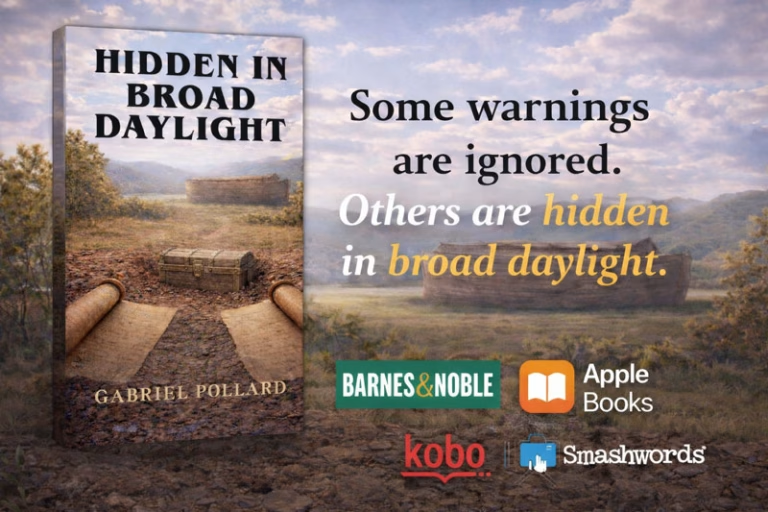
Stories about the end of days have echoed through history, yet few authors approach the subject with the personal urgency and conviction that Gabriel Pollard brings to his work. In Hidden In Broad Daylight, he invites readers to look again at the world around them and consider whether what seems ordinary may carry deeper meaning.
A World That Refuses to See
Hidden In Broad Daylight opens with a sobering observation. Many people move through life assuming that unusual weather patterns, social unrest, and global instability are simply part of nature’s rhythm. According to Gabriel Pollard, this quiet dismissal reflects a pattern humanity has repeated before.
The book draws a striking parallel to the days of Noah. In scripture, people continued their routines, unaware or unwilling to accept the warnings unfolding before them. Gabriel suggests that modern society mirrors that mindset. Signs are present, he argues, yet they are brushed aside as coincidence or seasonal change. The result is spiritual complacency.
Rather than presenting these ideas as distant theology, Gabriel frames them as immediate and relevant. He challenges readers to reconsider what they define as normal. Through careful reflection on biblical prophecy, he suggests that history does not simply move forward in a straight line. It moves in cycles. Patterns repeat. Warnings reappear. The question becomes whether anyone is truly listening.
Trumpets, Prophecy, and Patterns in Scripture
One of the central images in the book is the sounding of trumpets. In biblical tradition, trumpets signal announcements of significance, often tied to judgment or divine intervention. Gabriel explores these references in depth, treating them as symbolic markers that humanity ignores at its own peril.
He weaves together passages from scripture with historical context, encouraging readers to see prophecy as layered rather than isolated. Events from ancient texts are placed alongside modern occurrences, inviting comparison without sensationalism. The tone remains serious, yet reflective.
Gabriel emphasizes that prophecy is not meant to provoke panic. It is meant to awaken awareness. In his view, the tragedy of the flood narrative was not merely destruction. It was the refusal to heed clear instruction. People were given time. They were given warning. They continued as if nothing required their attention.
Throughout this section, Gabriel speaks to a spiritual discipline rooted in readiness. Faith, in his perspective, is active. It involves observation, humility, and a willingness to change course. He encourages readers to examine their own lives, asking whether they have grown indifferent to spiritual signals.
Buried Truths and Spiritual Treasures
The title Hidden In Broad Daylight reflects Gabriel’s belief that truth is often visible yet overlooked. He describes scripture and ancient writings as treasure maps. The guidance exists, but it requires intention to uncover.
In this portion of the book, Gabriel explores recurring themes of human neglect. Generations receive counsel, ignore it, and then face consequences. This pattern, he argues, reveals more about human pride than divine severity. People assume tomorrow will resemble today. They assume there is always more time.
Gabriel also examines real world events and natural phenomena through a prophetic lens. He does so carefully, framing them as potential indicators rather than definitive proof. The purpose is reflection, not fear. He encourages discernment. Readers are urged to seek understanding instead of reacting impulsively.
What stands out is the personal conviction behind his writing. Gabriel’s life story informs his perspective. A devoted father of two and a committed partner for over eleven years, he grounds his faith in family and resilience. He speaks openly about experiencing trial and tribulation, and credits his relationship with God for guiding him through each storm.
His path has not followed traditional academic routes. He learned outside conventional institutions, drawing inspiration from scholars who emphasize spiritual connection over formal credentials. That unconventional journey shapes his voice. It feels direct, sincere, and rooted in lived experience.
A Sobering Climax and a Measured Hope
As the narrative builds toward its conclusion, the tone grows more urgent. Gabriel describes a world transformed beyond recognition. In his depiction, the opportunity for repentance eventually closes. The window for mercy narrows. The result is finality.
Yet even within this solemn vision, he offers hope. Preparation, he insists, remains possible. Spiritual awareness is within reach. Faith can anchor a person even when external circumstances shift dramatically. His message is serious, though it is never without purpose.
Gabriel’s broader goal becomes clear. He hopes to make the world a better place. He seeks to bring light to dark corners by pointing readers toward what he believes is divine truth. His openness to different cultures, identities, and perspectives reflects a willingness to engage rather than condemn. He invites conversation. He invites reflection.
Hidden In Broad Daylight ultimately serves as both warning and invitation. It asks readers to slow down, look around, and consider whether they have overlooked what matters most.
In a world filled with noise, Gabriel Pollard’s voice calls for awareness and preparation. Whether readers agree with every interpretation or simply appreciate the introspection, the book leaves them with one lingering thought. Some truths have always been visible. The challenge is choosing to see them.
We had the privilege of interviewing the author. Here are excerpts from the interview:
Hi, thank you so much for joining us today! Please introduce yourself and tell us what you do.
Hello, my name is Gabriel Pollard. I’m a self-published author who is a devoted father of 2 amazing children. My life partner and I have been together for more than 11 years, and we have 2 beautiful children that we are raising together.
Please share your journey with our readers.
I am a spiritual believer in God. My life has been full of trials and tribulations. However, my God has shown me how to weather every storm that comes my way. I found the passion for writing over 2 decades ago. Since then, I’ve been writing off and on, and I’ve come to realize that I have quite a bit to say. I have written 4 books so far. They are all self-published.
What are the strategies that helped you become successful in your journey?
Put God first. Never put down the pen. Even when it feels as if you don’t have anything to say, write down your thoughts. When you order your thoughts and dedicate your writings to a higher power, you will find that you have much more material than you can keep up with because you never stopped writing.
Any message for our readers?
We all require a higher power. We’re living in a world and at a time when having a higher power is the only way to navigate without truly becoming swallowed up by this world. Having a higher power will keep you grounded, focused, and ahead of the times when all of the noise and chaos that is driving the world around us seems as if there is no end in sight.
Thank you so much, Gabriel, for giving us your precious time! We wish you all the best for your journey ahead!
Knowledge grows when shared. Please Pass it on!

Discover more from Paxjones
Subscribe to get the latest posts sent to your email.