
Opening Perspective
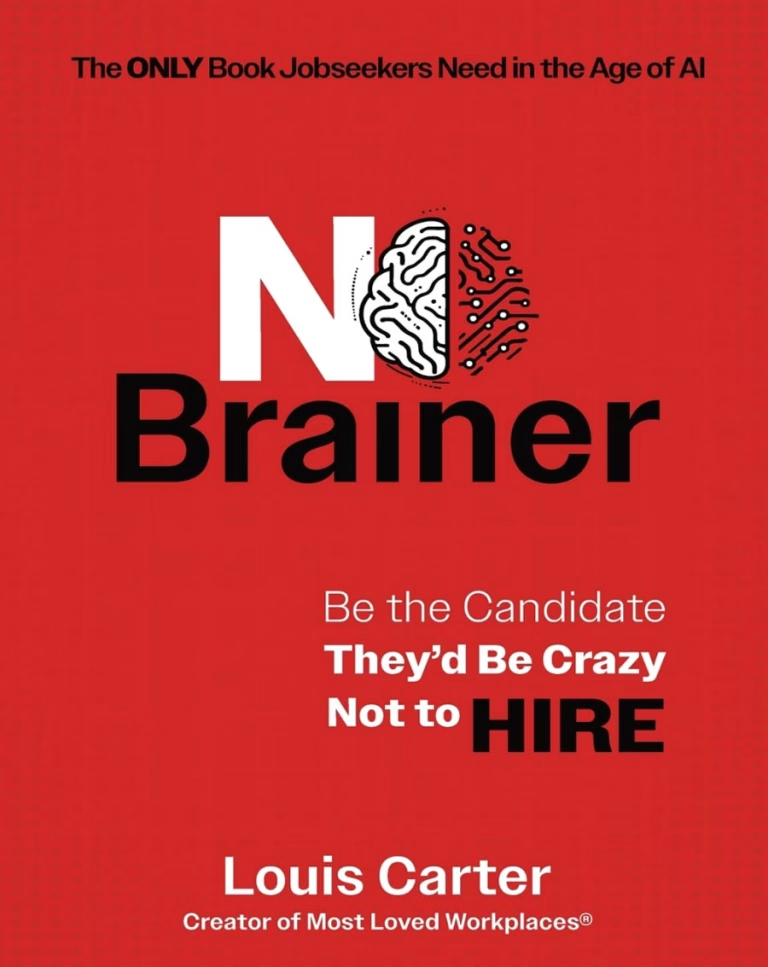
Career conversations have grown sharper, faster, and far less forgiving than they were even a few years ago. Professionals are no longer evaluated only on skills or experience. They are judged on readiness, judgment, and how quickly they can create value. No Brainer: Be the Candidate They’d Be Crazy Not to Hire fits squarely into this reality, offering readers a grounded, practical guide for navigating hiring, promotion, and high-stakes career moments with clarity.
Reading the Modern Hiring Landscape
These days, the hiring world has fully settled into its new rhythm. Automation, AI-driven screening, and compressed decision timelines are no longer trends. They are the norm. In this environment, being qualified is expected. What matters is whether decision-makers see someone as a safe, credible, and valuable choice.
Louis Carter’s No Brainer addresses this shift head-on. Rather than encouraging surface-level tactics, the book explains how leaders actually evaluate candidates when pressure is high and time is limited. Carter draws from extensive research conducted through Most Loved Workplace® and the Best Practice Institute, grounding his insights in real organizational behavior instead of speculation.
The book encourages readers to move away from trying to impress and toward demonstrating judgment and accountability. It explains why some candidates stall despite strong backgrounds and why others advance quickly with fewer credentials. That clarity helps readers recalibrate how they show up in interviews, internal discussions, and career-defining conversations.
Practical Frameworks That Change Outcomes
One of the most compelling aspects of No Brainer is its focus on usable frameworks. The Precision Interview No-Brainers walk readers through realistic interview prompts and show how strong candidates respond in ways that signal trustworthiness and decision-making ability. These examples feel familiar because they mirror conversations leaders have daily.
The Cultural Readiness Scorecard invites readers to assess whether a workplace fits how they work best. Instead of chasing prestige or compensation alone, the scorecard supports better long-term alignment. It encourages professionals to choose environments where they can perform consistently and grow without friction.
The 30/60/90-Day Impact Plan shifts the conversation from potential to contribution. Readers learn how to outline clear priorities and expected outcomes before day one even arrives. For hiring managers, this signals foresight and readiness. For candidates, it provides confidence and direction.
Carter also introduces the Offer Acceptance Filter, a structured way to evaluate opportunities honestly. It helps readers consider leadership style, organizational health, and growth trajectory before committing. This tool reinforces the idea that career success comes from intentional decisions rather than reactive ones.
Grounded in Research and Real Experience
Louis Carter brings credibility that extends well beyond theory. As an organizational psychologist and founder of Most Loved Workplace®, he has spent years studying what makes companies environments people actively choose. His work with the Best Practice Institute further informs the book’s emphasis on how hiring and advancement decisions unfold in practice.
The Feed-Forward Growth Toolkit highlights the role of language in professional success. Readers learn how to communicate resilience, growth, and accountability in ways leaders trust. These skills apply equally to interviews, promotions, and leadership transitions.
Throughout the book, Carter avoids motivational clichés. Instead, he focuses on behaviors that quietly influence decisions. He explains how capable professionals often undermine themselves unintentionally and how small shifts in communication and preparation can change perceptions dramatically. This approach makes the book relevant across industries and career stages.
Engaging With the Reviewer Community
Since its release in hardcover and paperback on Amazon, No Brainer has also been shared with opt-in reviewers through BookSprout. The goal remains straightforward: connect with professionals interested in honest, experience-based career guidance.
Reviewers receive digital copies and are encouraged to share candid feedback based on their genuine experience with the book. Reviews are requested on Amazon, with optional reviews on Goodreads and Barnes and Noble. Participation is voluntary, and opting out is always acceptable.
The BookSprout review copy link is available here:
https://booksprout.co/reviewer/review-copy/view/253804/no-brainer-be-the-candidate-theyd-be-crazy-not-to-hire
This transparent review process reflects the book’s broader philosophy. Trust, clarity, and informed choice matter rather than manufactured praise.
Closing Reflections
No Brainer: Be the Candidate They’d Be Crazy Not to Hire stands out as a clear, practical guide for professionals navigating modern career decisions. By focusing on how hiring and advancement truly work, Louis Carter offers readers tools that help them earn trust, demonstrate value, and choose roles where they can genuinely succeed.
We had the privilege of interviewing the author. Here are excerpts from the interview:
Thank you so much for joining us today! Please introduce yourself and tell us what you do.
I’m Louis Carter. I’m an organizational psychologist, author, and the founder of Most Loved Workplace®, a research-backed certification that looks at how people actually experience work. I also lead Best Practice Institute, where I’ve spent years studying how hiring, leadership, and career decisions are really made.
Please tell us about your journey.
My career has been shaped by watching talented people get overlooked while others advanced—not because they were better, but because they understood how decisions worked. I started researching and advising leaders, teams, and organizations, and over time that turned into books, research, and practical frameworks focused on real-world behavior rather than theory.
What are the strategies that helped you become successful in your journey?
Three things mattered most: paying attention to how decisions are actually made, not how we wish they were made; doing the work consistently over time; and staying grounded in evidence—real data, real feedback, and real outcomes rather than trends or slogans.
Any message for our readers?
Don’t assume effort alone is enough. Learn how decisions are made in your field, communicate your value clearly, and make it easier for others to choose you. Clarity beats hustle.
Thank you so much, Louis, for giving us your precious time! We wish you all the best for your journey ahead!
Knowledge grows when shared. Please Pass it on!

Discover more from Paxjones
Subscribe to get the latest posts sent to your email.