
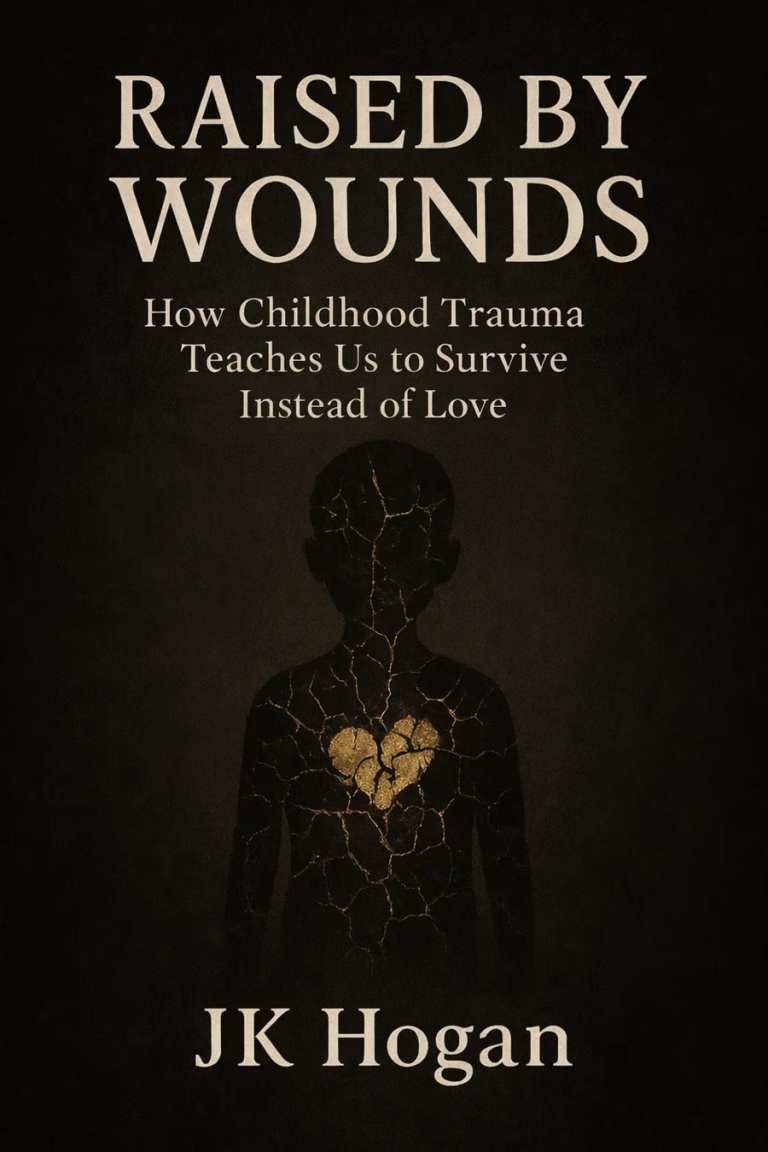
Raised By Wounds: How Childhood Trauma Teaches Us to Survive Instead of Love by JK Hogan is not a conventional read. It is a deeply reflective work that asks readers to look inward and confront the emotional foundations of their lives. From the very first pages, Hogan introduces a thought that lingers long after reading. People are shaped not only by those who raised them, but also by unspoken fears, emotional gaps, and unresolved struggles passed down quietly.
The book is available on Amazon, readers can explore the first chapter for free through JK Hogan’s website.
This book stands apart because it refuses to soften its message. It does not aim to comfort or provide easy reassurance. Instead, it creates a space where readers can recognize the truth of their experiences. Hogan writes with precision and depth, drawing from both personal insight and years of listening to others navigate complex emotional landscapes. His storytelling feels intimate, yet it resonates on a much broader level.
The result is a work that feels less like advice and more like an honest conversation. It meets readers where they are, without trying to reshape them into something else.
When Survival Becomes the Blueprint
One of the central themes Hogan explores is how childhood environments shape the way individuals move through the world as adults. Many children grow up in situations where emotional safety is uncertain. They learn to adjust quickly, often becoming quiet observers, careful responders, or overly responsible at a young age.
These behaviors serve a purpose in childhood. They help maintain stability and prevent conflict. Over time, however, they evolve into patterns that define adult relationships and emotional responses. Hogan carefully explains how people may begin to associate intensity with connection or feel uneasy in calm situations simply because calm was never familiar.
He also sheds light on how individuals may seek reassurance, control, or validation without fully understanding why. These tendencies are often mistaken for personality traits, yet Hogan reveals them as learned responses rooted in early experiences. This perspective allows readers to see themselves more clearly, without attaching blame or shame.
By presenting survival patterns as adaptive rather than flawed, Hogan shifts the narrative. He encourages readers to recognize the strength it took to navigate those early experiences while also acknowledging that those same strategies may no longer be helpful.
Redefining Love Through Awareness
As the book unfolds, JK Hogan moves into a deeper exploration of how people understand love and connection. He challenges the idea that emotional preferences are always natural or fixed. Instead, he suggests that many of these preferences are shaped by what was absent during formative years.
This insight offers a new way of looking at relationships. What feels comfortable may not always be healthy, and what feels unfamiliar may actually be a sign of emotional safety. Hogan presents this realization with care, allowing readers to process it without feeling overwhelmed.
A key part of this section is the concept of self-reconnection. Hogan introduces the idea of reparenting as a way to build internal stability. Rather than relying on others to fill emotional gaps, individuals are encouraged to create a sense of safety within themselves. This process is described as gradual and deeply personal, requiring honesty and patience rather than perfection.
Hogan’s writing remains grounded throughout. He avoids overcomplicating ideas, choosing instead to communicate in a way that feels clear and direct. This approach makes complex emotional concepts more accessible, allowing readers to engage with them at their own pace.
Choosing a Different Path Forward
In its final sections, the book gently shifts toward the idea of change. JK Hogan does not present transformation as a quick or simple process. Instead, he frames it as a conscious decision to break cycles that may have existed for generations.
He introduces the idea of becoming someone who does not pass those patterns forward. This perspective adds a sense of purpose to the healing process. It is no longer just about personal growth, but about creating a different emotional legacy.
About JK Hogan
JK Hogan is an author focused on exploring emotional development, relationships, and personal awareness. With a background in rhetoric and experience working with diverse communities, Hogan brings a thoughtful and measured approach to complex emotional topics. His work centers on helping individuals better understand the patterns that shape their lives and relationships.
Hogan’s background plays an important role in shaping this message. Raised in Chicago and later moving to Dallas, he has spent years engaging with people from diverse experiences. His academic foundation in rhetoric, combined with his time as a youth pastor, gives him a unique ability to listen deeply and communicate with clarity. That combination is evident in every chapter.
Final Reflections
Raised By Wounds is a book for those who have spent years navigating feelings they could not fully explain. It does not offer quick solutions or structured steps. Instead, it provides something far more valuable. It offers understanding, language, and the opportunity to see oneself with greater clarity.
For anyone ready to examine how their past has shaped their present, this work offers a meaningful and thought-provoking place to begin.
Knowledge grows when shared. Please Pass it on!

Discover more from Paxjones
Subscribe to get the latest posts sent to your email.