

Opening Reflections
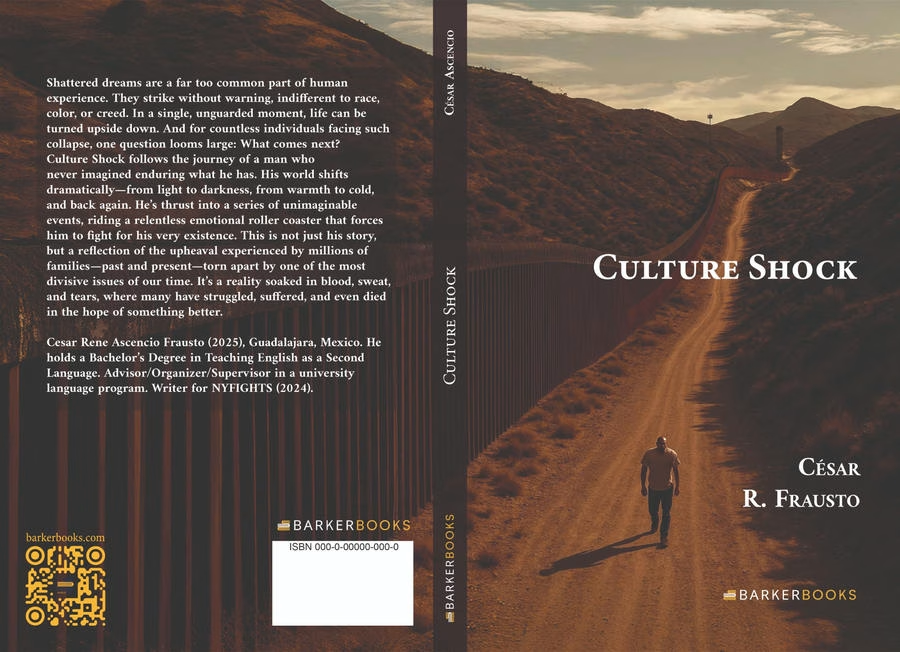
Some memoirs invite readers to observe from a distance, while others quietly pull them inside a lived reality. Culture Shock by César R. Frausto belongs to the latter category. It unfolds as a personal account shaped by movement, memory, and moments that permanently alter the direction of a life.
A Story Rooted in Memory and Place
At its core, Culture Shock traces the journey of a man who grew up believing he belonged entirely to the United States. Brought across the U.S.–Mexico border before his first birthday, his early life was shaped by ordinary experiences. School days, neighborhood routines, family bonds, and the familiarity of Arizona landscapes formed the foundation of his identity. These memories are not presented as dramatic milestones. They appear as quiet, vivid snapshots that ground the reader in a sense of normalcy.
Frausto’s storytelling places strong emphasis on childhood perception. As a young boy, immigration was an abstract concept that held no meaning in his daily life. He focused on toys, clouds in the sky, and the simple rhythm of family routines. This perspective is important because it highlights how deeply rooted his sense of home became before he ever understood the legal boundaries surrounding it. The memoir gently establishes that belonging is often built through lived experience rather than official documentation.
The early chapters move steadily, allowing readers to grow familiar with the environment and relationships that shaped him. By the time the narrative reaches turbulent moments, there is already a strong emotional connection to what stands to be lost.
When Stability Begins to Fracture
As the story progresses, Culture Shock takes a sharp turn. A single incident disrupts everything Frausto believed about his place in the world. This moment does not arrive with excessive buildup or dramatic flourish. Instead, it reflects how life-altering events often appear unexpectedly, leaving little time for preparation.
The memoir follows his passage through arrest, sentencing, and incarceration with measured detail. Frausto focuses on emotional impact rather than procedural explanation. Confusion, fear, and disbelief surface repeatedly, offering readers insight into what it feels like to be absorbed into a system that moves faster than understanding can keep up with. Each transfer and new environment adds another layer of disorientation.
Despite the gravity of these chapters, the writing remains grounded. Frausto does not rely on exaggeration. He allows the weight of reality to speak through lived moments, whether it is the silence of confinement or the strain of separation from loved ones. These sections reveal how identity can be challenged when freedom and familiarity disappear.
Identity, Loss, and Quiet Endurance
One of the most striking aspects of Culture Shock is its focus on internal change. While the physical journey spans borders, detention centers, and institutions, the emotional journey is equally complex. Frausto explores what happens when a person is forced to question who they are after years of certainty.
Family remains a constant presence throughout the memoir, even when physical distance separates them. Thoughts of loved ones provide emotional grounding during periods of isolation. The longing for connection becomes a recurring theme, reinforcing how deeply relationships shape resilience during hardship.
The book also reflects on adaptation. As circumstances shift, Frausto learns to navigate unfamiliar environments and expectations. These moments of adjustment do not come easily, and the memoir does not suggest quick resolution. Instead, it shows progress as gradual and often uncertain, shaped by opportunity, timing, and perseverance.
The Broader Meaning Behind the Story
While Culture Shock is deeply personal, its implications extend far beyond one individual. Immigration is often discussed through statistics, policies, and political rhetoric. Frausto’s memoir shifts the focus to lived experience, offering readers a human perspective that is frequently missing from public discourse.
The story highlights how immigration status can redefine a life long after childhood has passed. It also illustrates how systems affect people who have known only one home, one culture, and one sense of belonging. By centering the narrative on memory and emotion, the book invites empathy rather than debate.
Frausto’s background as an English Teaching graduate from the University of Guadalajara is reflected in his clear, thoughtful prose. His writing balances reflection with forward movement, guiding readers through difficult moments without overwhelming them. The detailed structure of the book reinforces the sense of a long, layered journey shaped by setbacks and moments of possibility.
Closing Reflections on Its Impact
Culture Shock offers insight into identity, belonging, and the lasting effects of decisions made in pursuit of a better life. César R. Frausto presents his experiences with honesty and restraint, creating a memoir that resonates quietly and lingers long after the final page.
Knowledge grows when shared. Please Pass it on!

Discover more from Paxjones
Subscribe to get the latest posts sent to your email.