
Opening Thoughts
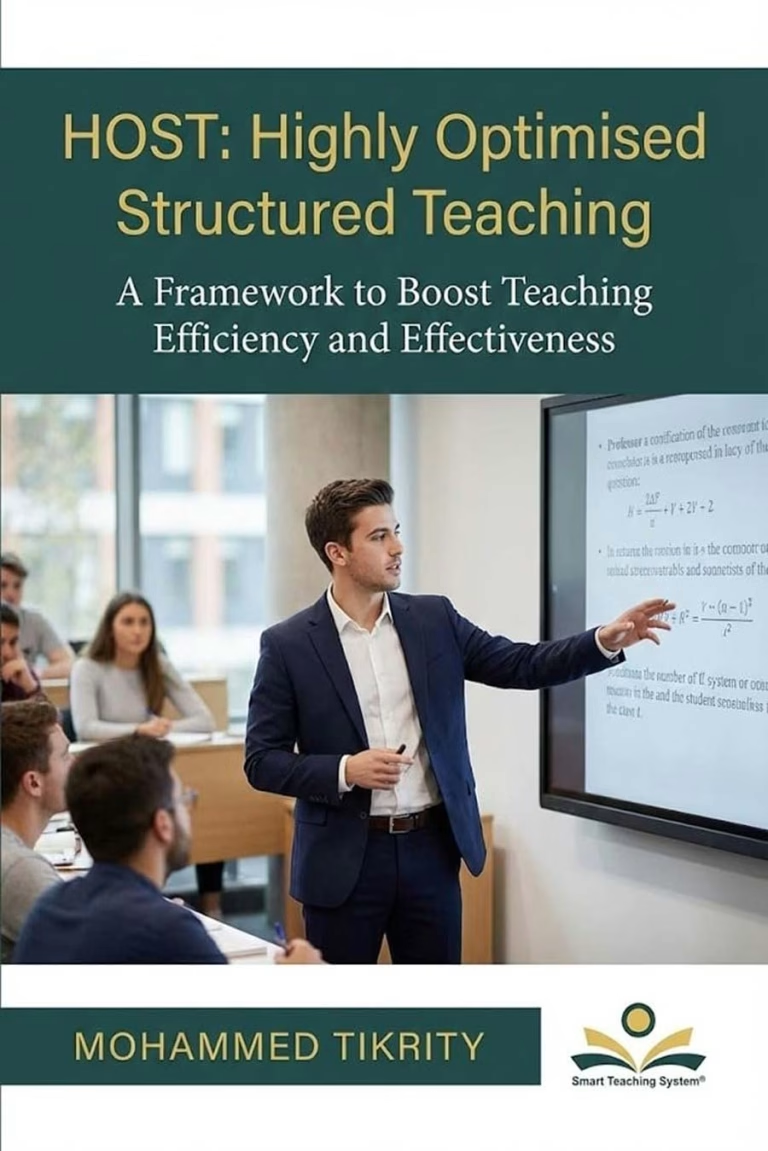
Teaching today involves far more than delivering information. Educators often juggle time pressure, varied student abilities, curriculum demands, and the expectation to produce measurable learning outcomes. In such an environment, having a clear and structured approach to teaching becomes essential. HOST: Highly Optimised Structured Teaching by Dr Mohammed Tikrity offers educators a thoughtful framework designed to help them organise instruction with greater clarity and purpose.
The book explores how teaching can become more efficient and impactful through structured thinking. Instead of presenting scattered tips or short-term solutions, it provides a systematic model that encourages teachers to refine how they plan, deliver, and evaluate their lessons.
Rethinking Instruction Through Structure
Dr Mohammed Tikrity approaches teaching with a perspective shaped by both research and professional experience. His work recognises that most educators are already dedicated and hardworking. They spend countless hours preparing lessons and supporting students. Despite this effort, certain challenges appear repeatedly in classrooms.
Teachers may notice lessons moving faster than expected. Students sometimes require the same concept to be explained several times before it becomes clear. Balancing clarity, pacing, and student participation can feel like a constant adjustment.
Dr Mohammed highlights that these issues often arise because teaching lacks a consistent structural framework. When lessons are organised without a clear system, even strong teaching practices may feel fragmented. The HOST framework addresses this challenge by offering a cohesive way to think about instructional design.
HOST stands for Highly Optimised Structured Teaching, and the framework encourages educators to view teaching as a professional skill that benefits from organisation and deliberate structure. Instead of relying on isolated strategies, teachers learn to approach instruction through a clear model that supports effective learning.
The Three Levels of the HOST Framework
At the centre of the book is a model built around three interconnected levels. Each level focuses on a different aspect of effective teaching, yet they function together during real classroom practice.
The first level is Foundation, which emphasises clarity and organisation. In this stage, educators ensure that lessons are structured so students can quickly grasp essential ideas. Clear explanations, logical progression of concepts, and carefully planned learning sequences form the backbone of this level. When a lesson begins with strong structure, students are able to follow the learning journey with greater confidence.
The second level is known as the Strengthener. Here, the focus shifts toward reinforcing learning so that knowledge remains with students over time. Guided practice, structured review, and targeted questioning help learners revisit important concepts. Dr Mohammed explains that learning improves when students engage with ideas in ways that deepen their comprehension.
The third level is Engagement, which addresses the conditions that encourage students to stay mentally involved in the lesson. Engagement includes pacing, interaction, and the design of learning activities that keep attention focused. A well-engaged classroom allows students to remain connected to the material while actively participating in the learning process.
These levels are interconnected rather than isolated. Effective teaching requires educators to move between them during a lesson. Professional judgement plays an important role as teachers adjust their approach based on student responses and learning progress.
Practical Value for Educators
One of the most appealing qualities of the HOST framework is its flexibility. The book provides a structured lens through which teachers can evaluate and improve their existing practices.
This flexibility makes the framework useful across a wide range of educational settings. School teachers, university lecturers, and professional trainers can all apply the principles of clarity, reinforcement, and engagement within their own subject areas.
Dr Mohammed also focuses on improving efficiency without increasing workload. Educators often face heavy responsibilities, and adding more tasks rarely solves teaching challenges. The HOST framework encourages smarter lesson organisation so that teachers can achieve stronger learning outcomes while using their time effectively.
The author’s background contributes to the practical strength of the framework. Dr Mohammed earned a PhD in Control Systems Engineering from the University of Manchester and spent more than twenty years working in research and development. His experience in systems design shaped the analytical approach used in the HOST model. Alongside this technical expertise, he brings over a decade of experience teaching physics and mathematics.
This combination allows him to analyse teaching through both a scientific and classroom perspective.
Why This Framework Matters
Education benefits when teachers have tools that support thoughtful and structured instruction. HOST: Highly Optimised Structured Teaching presents a framework that encourages educators to think carefully about how lessons are organised and delivered.
Dr Mohammed emphasises that effective teaching evolves through reflection and deliberate improvement. When educators strengthen instructional structure, they gain greater control over lesson flow and student understanding. Over time, this approach can lead to confident teaching and stronger learning experiences.
The HOST framework invites teachers to see teaching as a skill that can be continually refined. Through clarity, reinforcement, and engagement, educators can build learning environments that support both efficiency and meaningful progress for students.
Knowledge grows when shared. Please Pass it on!

Discover more from Paxjones
Subscribe to get the latest posts sent to your email.