
The Harsh Century We Forgot: Climate in the 1800s
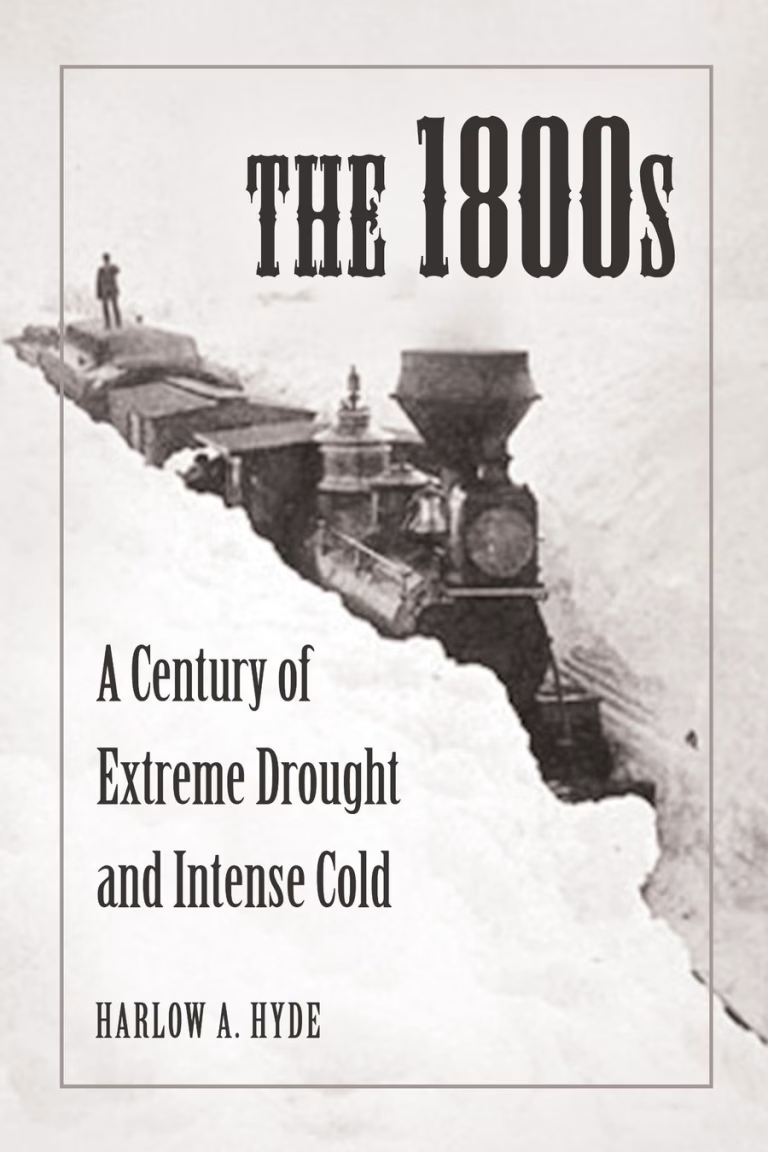
When we think about climate change, the story often starts in the modern age. Factories, cars, and smokestacks fill the picture. Yet long before this industrial image took shape, North America endured a century that tested its people in ways we rarely talk about. The 1800s were defined by drought, bitter cold, and unpredictability. Historian Harlow A. Hyde has made it his mission to bring this lost era back into view with his book, The 1800s: A Century of Extreme Drought and Intense Cold.
Hyde argues that leaving the 19th century out of today’s climate conversation creates a false impression. The belief that the past was calm and balanced gives weight to the idea that only modern industry disturbed the system. A closer look reveals a harsher reality.
Struggles Written in Weather
The century opened with harsh droughts that lingered for years. Crops withered in the fields, forcing families to pack up and head west in search of water and opportunity. Entire communities depended on rain, and when it didn’t come, the consequences were devastating. These dry spells stretched across decades, shaping where people lived and how they survived.
Cold weather brought equal hardship. Winters could be punishing, leaving rivers frozen and supplies dwindling. Diaries from farmers and settlers describe losses of livestock, ruined harvests, and long stretches of hunger. These accounts make it clear that the 1800s were anything but mild.
This part of history is often overlooked. Today, many assume that the climate before the industrial age was gentle and forgiving. Hyde challenges this belief, showing that nature has always had the upper hand. By pretending that the past was calm, we erase the resilience of those who lived through it.
The Turn Toward Abundance
While the 1800s delivered hardship, the dawn of the 20th century brought a remarkable change. Rainfall began to increase across wide parts of North America. The land that had struggled under repeated droughts suddenly became fertile and productive. Farmers planted more, yields grew higher, and food security became more reliable.
Hyde highlights this shifts as one of the great turning points in modern history. The surge in precipitation fueled a century of agricultural growth, powering economies and providing stability to millions. Without that change, the remarkable boom in farming across the United States and Canada might never have taken root.
By drawing attention to this transformation, Hyde shows that climate history swings between extremes. To focus only on recent decades, while ignoring the longer story, risks misunderstanding how the environment has always influenced human progress.
The Historian Who Connects Past and Present
Harlow A. Hyde writes with both the detail of a researcher and the clarity of a teacher. His career has touched on topics ranging from arms limitation to demographic decline in the Great Plains. What ties his work together is a desire to understand how broad forces shape societies. Climate, for him, is one of the most important of those forces.
His earlier book, Climate Change: A Brief History of the Last 50 Million Years, looked at the immense sweep of geological time. With this new volume, Hyde zooms in to show how one century shaped communities and defined survival.
Hyde’s personal history adds depth to his writing. His service in the Peace Corps with his late wife Robin gave him firsthand insight into how people adapt under difficult conditions. His appearances on programs such as Nightline and NPR’s Weekend Edition show his ability to explain complex issues in ways that reach a broad audience. Living in Florida since 2007 and active in Rotary, Hyde continues to share both scholarship and service with his community.
Why It Matters Now
Revisiting the 1800s is about shaping how we see the present. The challenges of drought and cold remind us that humanity has always had to adapt to climate extremes. Our ancestors faced these conditions with far fewer resources, yet they endured. Their resilience holds lessons for today.
Hyde’s perspective widens the frame for current climate concerns. By including the forgotten hardships of the 19th century, the conversation becomes richer and more grounded. We see that climate change is part of a much longer story of fluctuations, challenges, and responses.
This understanding encourages a balanced approach. Instead of fear built on a false image of a perfect past, there’s room for confidence that societies can adapt, just as they always have.
Closing Reflection
The 1800s: A Century of Extreme Drought and Intense Cold reminds readers that history holds valuable lessons. The century that many overlook was one of hardship and endurance. By bringing those stories forward, Harlow A. Hyde helps us see today’s climate debates in a new light.
The past was often brutal, forcing families to struggle against drought, cold, and uncertainty. Remembering that truth strengthens our understanding of challenges faced by the humans. And in that understanding, there’s wisdom worth carrying forward.
Knowledge grows when shared. Please Pass it on!

Discover more from Paxjones
Subscribe to get the latest posts sent to your email.