

Joshua G B steps into the literary world with Kudzu Cradle & The Forgotten Creature of the Lowcountry, a debut novel shaped by both imagination and lived experience. At 51, Joshua brings a perspective that feels grounded and reflective. Raised among the marshes and rivers of Savannah, Georgia, he spent years working in his family’s electrical contracting business before turning toward creative writing. His journey into storytelling came later, inspired by a growing love for reading and a curiosity about building worlds of his own.
Joshua’s approach to writing is deeply emotional. He believes that life’s experiences, both joyful and difficult, allow a writer to capture authenticity on the page. That philosophy is woven into his work, where characters feel real and moments carry genuine weight. For him, storytelling is not simply about events unfolding. It is about understanding what a character feels in those moments and letting that guide the narrative.
Kudzu Cradle’s Uncertain Beginning
At the center of the novel is Kudzu Cradle, a ten-year-old girl navigating the challenges of foster care. Her life has been marked by constant movement, shifting from one home to another without ever finding something permanent. She has memories of her parents, yet stability has always remained just out of reach. Small possessions, like her blankie and a broken Swiss Army knife, become symbols of comfort in an otherwise unpredictable world.
As the story opens, Kudzu finds herself in a rare moment of happiness. She has a clean place to live, two close friends, and the promise of a peaceful summer ahead. That sense of normalcy feels fragile, yet it is enough to give her hope. When she is suddenly told she must leave and spend the summer on a distant island, everything changes. The disappointment is immediate and heavy, as she once again faces the feeling of being uprooted.
Joshua presents this turning point with quiet sensitivity. Kudzu’s reaction is not dramatic or exaggerated. Instead, it reflects the kind of hurt that settles deeply and lingers. Her strength begins to show in the way she continues forward despite that pain.

A Mysterious Island and Its Secrets
Nulle Part Island becomes the stage for Kudzu’s transformation. Known through whispers and rumors, the island carries stories of a haunted hotel, a strange creature, and unexplained happenings hidden within the marshes. These elements create a sense of curiosity that slowly replaces Kudzu’s initial reluctance.
The old hotel, owned by a woman named Sue Sue, stands as the heart of the island. It is quiet, almost forgotten, yet filled with history. Within its walls, Kudzu meets a group of characters who begin to shape her experience. Sue Sue offers a sense of care mixed with mystery, while Ms. Blanche, introduced as an adviser, seems to hold knowledge that goes beyond the ordinary. Even Nostrils, a pig who becomes Kudzu’s companion, adds a sense of warmth and humor that balances the story’s deeper themes.
Joshua’s depiction of the Lowcountry is vivid and immersive. The environment feels alive, with its marshes, rivers, and humid air creating a setting that is both beautiful and slightly eerie. His personal connection to the region brings authenticity, allowing readers to feel as though they are stepping into a place that exists beyond the page.
As Kudzu explores the island, she begins to uncover something unexpected. The world around her does not follow the usual rules of time and space. It feels dreamlike, filled with possibilities that stretch beyond her understanding.
Growth, Belonging, and Quiet Courage
Kudzu Cradle & The Forgotten Creature of the Lowcountry unfolds as a coming-of-age story that focuses on identity and belonging. Kudzu’s journey is not only about solving the mysteries of the island but also about understanding herself. Through her interactions and discoveries, she begins to see that her story is part of something larger.
Joshua’s writing reflects his belief that characters and plot are closely connected. Kudzu’s choices influence the direction of the story, while the events she experiences shape her growth. This balance creates a natural flow, where each moment builds upon the last. Her courage does not appear all at once. It develops gradually, through small decisions and quiet realizations.
Joshua has shared that Kudzu felt very real to him during the writing process. He experienced her emotions alongside her, which made the storytelling process both challenging and meaningful. That connection is evident throughout the novel, where the emotional tone remains consistent and sincere.
The book also carries a gentle sense of humor and a warmth that comes from its Southern roots. The setting, characters, and dialogue work together to create a story that feels inviting. At the same time, the elements of mystery and fantasy add depth, giving the narrative a sense of wonder.
Available on Amazon, this debut novel offers readers a thoughtful blend of heart and imagination. Through Kudzu’s journey, Joshua presents a story that speaks to the desire for connection and the strength it takes to find a place to belong.
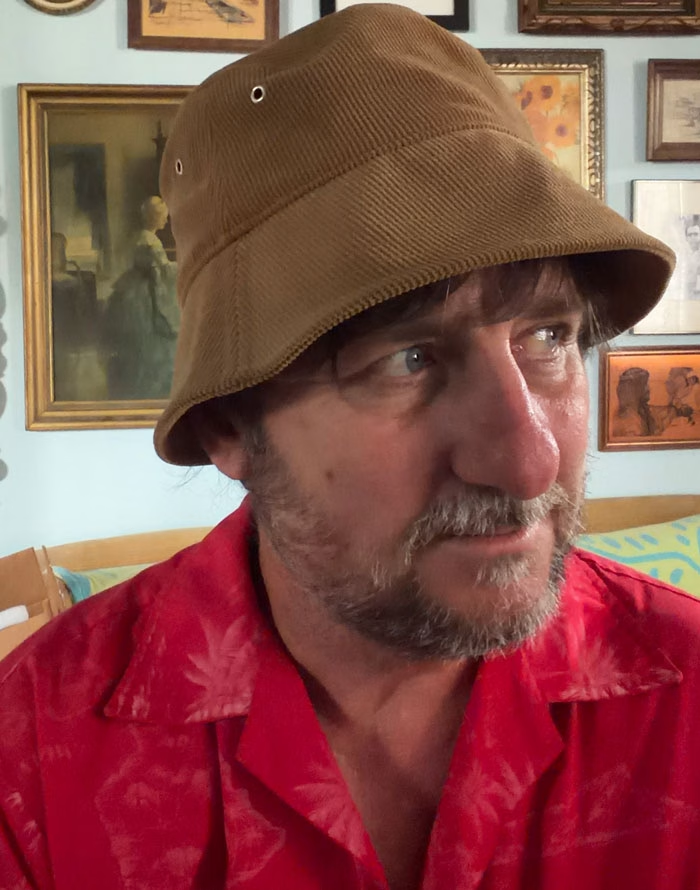
We had the privilege of interviewing the author. Here are excerpts from the interview:
Hi, thank you so much for joining us today! Please introduce yourself and tell us what you do.
My name is Josh Braddy, also known as Joshua G B, the author of a novel entitled “Kudzu Cradle & The Forgotten Creature of the Lowcountry”. I was born and raised in the area where I still reside. I lived in a few other places around the United States, but I always found myself wanting to come back. The marsh and rivers, and the people around me, are as much a part of me as the fingers I use to write this. I worked as an electrician for my family’s business most of my life, except for when I lived elsewhere working on various television shows and movies. I have always been happiest creating or telling stories, and I loved being a part of the filmmaking process. In the present moment, I earn a living as a part-time teacher at a local private school. I love teaching young people, but the most pleasing part is the connection you can gain with students.
Please share your journey with our readers.
This story had been bouncing around inside my head for a ten-year period, but I never seemed to have the mental fortitude to start and finish it. I would write for three weeks or so and then stop. I look back at the time, knowing that it just wasn’t the right moment for me to write Kudzu. I guess I had other things in my life that were taking up my time and energy. But in 2024, after school wrapped up, I made a promise to myself to sit down at the computer and not get up until I got this story out there…It took the next fifteen months to finish a first draft. This was followed by four months of professional editing and formatting. I published the novel last November, but I would classify that as “soft publishing”. I wanted friends and family to read the book first, to possibly give me feedback before sending it out into the world for everyone to read.
I believe the true goal of an artist is the connection you get with a reader or an audience member. If your work touches one person, if it affects one soul or inspires someone, then you’ve accomplished what your work was meant to accomplish. This all sounds great, but it is certainly easier said than done. It bruises the soul when people don’t see your movie or buy your book.
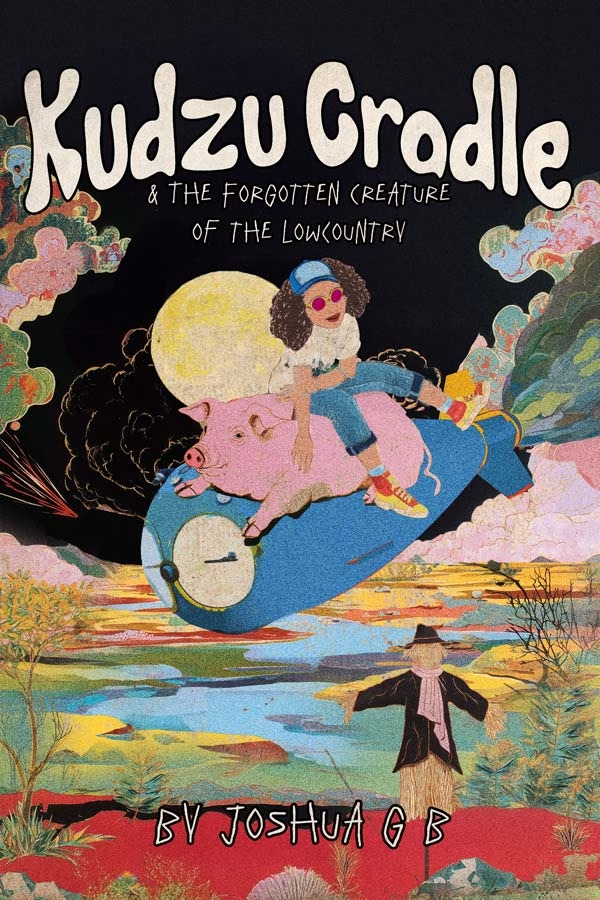
Please tell us about your book.
Kudzu Cradle is a young adult novel about a 10-year-old foster kid who spends her 5th-grade summer months at an abandoned hotel on a nearby mysterious Island. The story takes place in the low-lying rivers and marshes of the Lowcountry. An area that curls up the southeastern US coast from North Florida into the lowlands of South Carolina. A place where I was born and raised, it’s a region that has its fair share of ghost stories, folklore, and local legends that I wanted to blend into Kudzu’s narrative.
The story also happens during the time period when I was the same age as Kudzu. These were moments of my life when I was most happy. Joyful memories of being outside all day: riding bicycles with friends through the woods and forest. Swimming in the creeks and rivers around my house or trudging through the mud chasing fiddler crabs when the tide was low. I remember always wishing to discover anything that was unknown to us… even if this meant exploring those places we weren’t allowed to go. When I set myself to writing “Kudzu Cradle,” I wanted to incorporate these memories and, more importantly, those feelings into the story. It was a labor of love for me, and Kudzu is as real to me as anyone I’ve ever known. I hurt when she hurt, and I laughed when she laughed.
What are the strategies that helped you become successful in your journey?
I’ve read that some authors first produce an outline for their story before writing it. I didn’t do that. I had a loose outline in my mind on how the story was going to unfold, but really, I sat down at the computer and allowed it to unfold. This might sound strange for another to read, but it was almost as if the story of Kudzu Cradle didn’t come from me at all. In a way, it was given to me so I could write it down. I saw the story happening in my mind and tried my best to express that on paper. Being that this is my first novel, the first draft was truly a “rough cut” that needed to be refined and fixed so the book would flow properly. I think writing a novel could best be described as: having a block of marble being plopped down in front of you and knowing what it will be when you are finished. At first, you will chop large chunks from the marble with a big hammer. Then, smaller pieces. Soon, the block of marble takes the shape you have always seen in your mind. You refine it, and refine it (this process could last an eternity, I think) until the sculpture is ready to be polished and finished. I have a couple of secret strategies I used during the writing process, but I won’t discuss them here. If someone wants to know these tricks, they can go to the website or email me, and I’ll be happy to discuss them. 😉
In the end, I’ve done my best to prioritize the reasons I wrote this novel to begin with: To keep a promise to myself and finish something I started. To tell the story of Kudzu Cradle and to get it into the hands of as many people as possible.
Thank you so much, Joshua, for giving us your precious time! We wish you all the best for your journey ahead!
Knowledge grows when shared. Please Pass it on!

Discover more from Paxjones
Subscribe to get the latest posts sent to your email.