
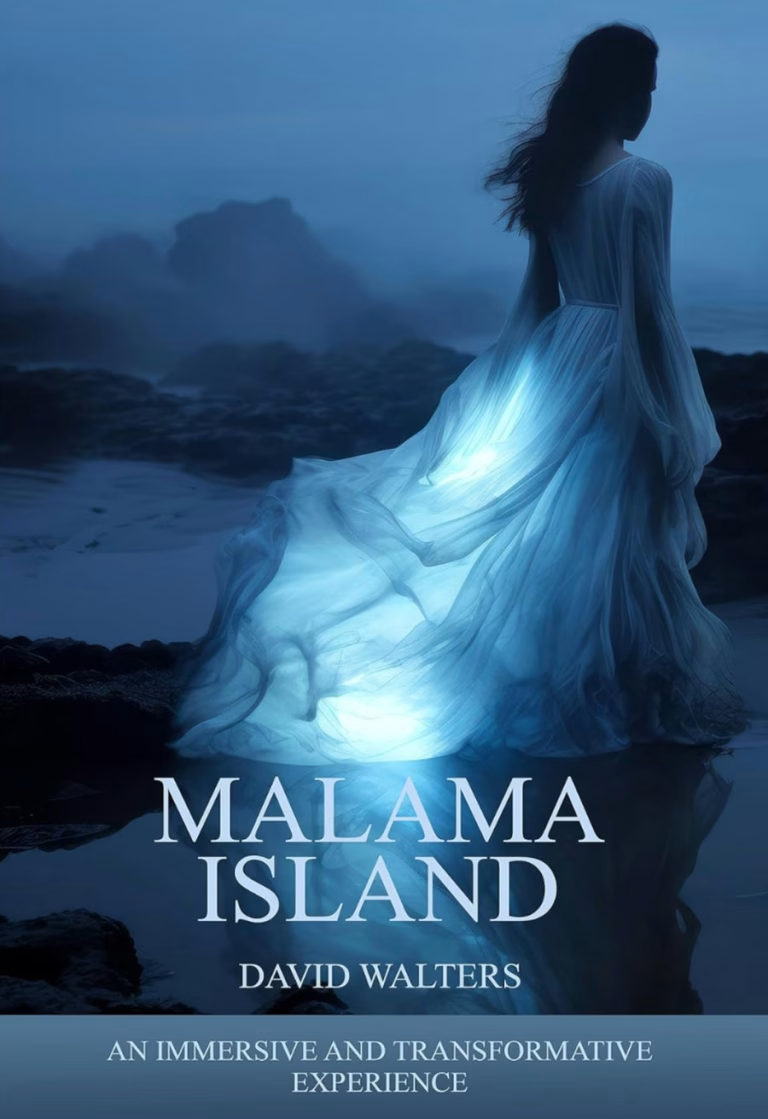
Every once in a while, a novel arrives that feels both transportive and deeply human. Malama Island by David Walters is one of those rare stories, blending science fiction with emotional insight in a way that feels immersive and sincere.
Available in Kindle, hardcover, and paperback editions, this novel invites readers into an expansive yet intimate journey that lingers long after the final chapter.
A Story Set in Motion
At the heart of Malama Island is Kawika, a character whose life unfolds through unexpected discoveries, shifting timelines, and powerful relationships. His journey is shaped by a quiet longing to understand where he belongs. That search drives the narrative forward, giving even the most fantastical elements a grounded emotional core.
Walters introduces time-bending twists that add intrigue without overwhelming the reader. Events ripple across past and present. Hidden islands emerge as more than physical locations. They become symbols of memory, identity, and possibility. Each revelation feels purposeful, pulling Kawika closer to self-awareness.
Romance threads gently through the story. It adds vulnerability and warmth, deepening the stakes without turning the novel into a simple love story. The relationships feel layered. Conversations matter. Small gestures carry weight. Through these connections, Kawika’s growth becomes believable and earned.
The pacing flows with confidence. Some scenes expand with vivid detail, while others move swiftly, creating a rhythm that keeps readers engaged. Walters allows the emotional beats to breathe, giving the story depth and resonance.
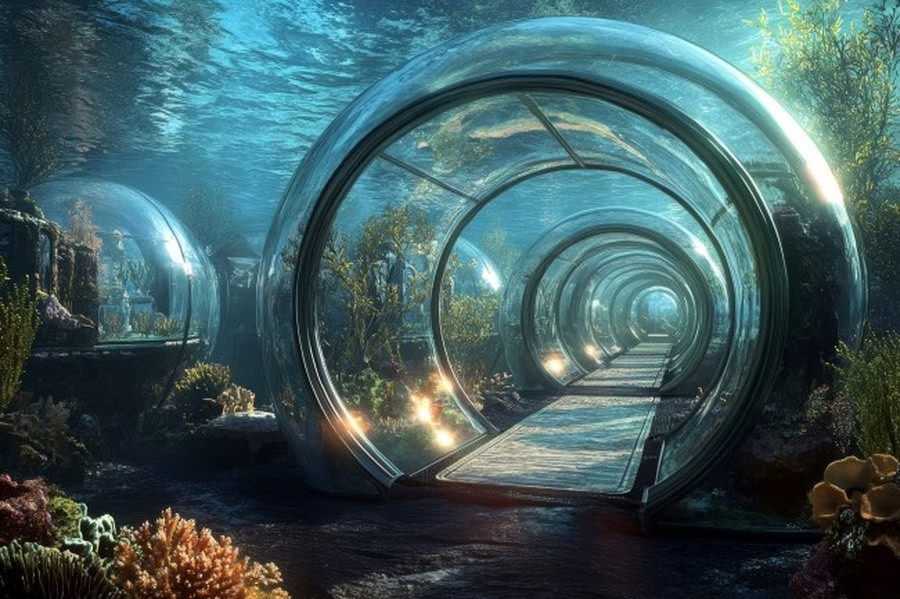
Worlds Shaped by Water and Wind
The settings in Malama Island are striking and carefully rendered. Hawai‘i, Iceland, and Scotland each play a distinct role in shaping the narrative. They are not interchangeable backdrops. They influence mood, memory, and transformation.
In Hawai‘i, the ocean hums with presence. The warmth of the land and the rhythm of the waves reflect heritage and connection. Iceland offers a stark contrast. Its volcanic terrain and sweeping skies evoke introspection and raw beauty. Scotland contributes its own layered atmosphere, rich with history and quiet strength.
Walters’ background as a visual artist is evident in the way he paints these environments. The descriptions feel textured and sensory. Readers can picture jagged coastlines, feel cool mist against their skin, and hear distant winds carrying echoes of the past.
The ocean stands as a unifying force throughout the novel. It symbolizes movement, continuity, and emotional depth. Kawika’s relationship with the sea mirrors his internal journey. At times calm, at times turbulent, always in motion.
This strong sense of place anchors the more imaginative aspects of the story. Even when time shifts or hidden realms are revealed, the physical world remains tangible and believable.

Strength, Empathy, and Human Connection
One of the novel’s most compelling features is its portrayal of strong women. The female characters are written with care and individuality. They guide, challenge, and inspire Kawika in meaningful ways. Their presence shapes the emotional landscape of the book.
These women are not defined by a single trait. They possess resilience, compassion, and quiet determination. Their perspectives enrich the narrative and broaden its emotional range. Through them, themes of empathy and mutual understanding gain depth.
Connection remains central to the story. Kawika’s journey is not solitary. It unfolds through dialogue, shared experiences, and moments of vulnerability. The search for belonging becomes a shared human experience rather than an isolated struggle.
Walters handles these themes with sensitivity. He avoids melodrama, choosing instead to explore feeling through authentic interaction. The result is a story that resonates across age groups. Younger readers may connect with the sense of discovery. Older readers may recognize the reflective tone and emotional nuance.

The Author’s Creative Path
David Walters began writing Malama Island in 2010, embarking on a new creative chapter shaped by both lived experience and imaginative vision. As a visual artist inspired by travels to Iceland and Hawai‘i, he channels those landscapes into the fabric of the novel.
His studies in life sciences and art inform the story’s sense of interconnectedness. Characters evolve organically. Environments feel alive and responsive. There is an underlying awareness of how people and place influence one another.
Walters’ enduring love for the ocean flows through every chapter. Water becomes more than a recurring image. It represents continuity, mystery, and emotional truth. That thematic consistency gives the novel cohesion and depth.
Readers who appreciate thoughtful storytelling will notice the careful balance between fantasy and realism. The sci-fi elements spark curiosity. The emotional arcs provide grounding. Together, they create a reading experience that feels expansive yet intimate.

Why This Journey Lingers
Malama Island offers more than imaginative adventure. It reflects on identity, belonging, and the ties that connect people across time and space. Through Kawika’s extraordinary life, readers are invited to consider their own journeys.
With its evocative settings, layered characters, and heartfelt exploration of connection, David Walters’ novel stands as a meaningful addition to contemporary sci-fi fiction. It is a story that moves gently yet leaves a lasting impression.
We had the privilege of interviewing the author. Here are excerpts from the interview:
Thank you so much for joining us today! Please introduce yourself and tell us what you do.
I’m a retired artist who has worked as a fine artist and illustrator since 1976. My formal education focused on the life sciences and art. I developed technical skills with the airbrush during this time, and it became a primary creative tool for many years. My introduction to computer art began in 1985, and I still use it regularly for creating photo-based art and AI image editing.
I publish under my brand, Islandobscura, which focuses on the creative.
Follow me:
11-david-walters.pixels.com
Please tell us about your journey.
From Art to Words: My Journey Writing Malama Island
Malama Island was originally conceived together with a young surfing friend of mine while playfully toying with the idea of a hidden island sanctuary with dragons, mermaids, and aliens. She was still in school at the time, aspiring to be a writer. Writing stories was not something I’d ever desired to do, but the challenge of doing something so creatively different from visual art appealed to me. It would never have come into being without her sparking my interest.
It became clear how different writing was from the creative projects I was accustomed to. I wasn’t an avid reader, and much of my storytelling experience came from movies and television. The story appeared to me as a movie playing in my head. All I had to do was figure out a way to convert what I imagined into words. It was much more difficult and time-consuming than anticipated. The writing process pulled me into another world completely. It was like living in a dream. The hours passed quickly while I hardly noticed.
After about six months of writing in 2010, I had what became Parts 1 and 2 completed. It was a sloppy, overwritten mess, but the story was fully fleshed out. The manuscript sat untouched for years with just a one-page outline of what would become Part 3.
As a visual artist inspired by my travels to Iceland and Hawaii, and a lifetime of personal experiences, I began a new creative chapter in 2010, setting out to write “Malama Island,” a story shaped by vivid fantastical visions of reality, both lived and imagined. My artistic voice is deeply rooted in my studies of life sciences and art. “Malama Island” embodies my enduring love for the ocean and the environments that have surrounded me throughout my life.
A piece of advice I’ve heard from other, more seasoned writers is “write what you know”. I took this to heart and composed the book along my own timeline. Many of the things that happen to the protagonist in the story are directly taken from my own experiences, although modified and altered in many cases. For me, it makes the story feel real, even with the diversions into metaphorical and symbolic flights of fantasy.
I’ve been told of the importance of conflict and heroic journeys in storytelling, along with a lot of other advice on what makes for good writing. I started my story from “the seat of my pants” without a fully formed plot. I tended to learn and come up with ideas as I went along. For me, it was important not to tell just another huge, violent war story. I’ve had a happy life for the most part, and it seemed unrealistic. The conflicts in my story are very real, and I see them frequently.
I’m currently seventy-three years old as I write these notes about the book. I characterize myself here as a retired artist, which means my artistic interests and desires are not commercially motivated. I’ve always had a tendency to dislike doing art with that kind of pressure or restraint to my creativity. I like what I wrote because it’s honest and comes from my own heart.
What are the strategies that helped you become successful in your journey?
Writing about what I know and have a passion for. Staying true to myself.
Any message for our readers
This book is written from the heart, touching on very real issues and concerns, but can be read in a light-hearted way. It is filled with metaphors and foreshadowing, lending itself to book club discussions. It is set in the islands of Iceland, Hawaii, and Scotland, creating a story that visually plays out as a movie unfolding.
Thank you so much, David, for giving us your precious time! We wish you all the best for your journey ahead!
Knowledge grows when shared. Please Pass it on!

Discover more from Paxjones
Subscribe to get the latest posts sent to your email.