

Mythology has always held a powerful place in storytelling, especially when it blends with modern fantasy. J.M. Lane’s Setanta and the Blood King, the third novel in The Raven Chronicles, continues a series that draws its strength from Ireland’s ancient folklore. Through vivid landscapes and legendary creatures, the book invites readers into a world where the past remains alive beneath the surface.
This installment builds upon the earlier books while expanding the scope of the story. The narrative shifts from a personal tale into a broader struggle involving ancient forces and rising dangers. At its center stands Setanta, a young boy whose life is slowly transforming as he uncovers the truth about his connection to legendary powers.
Setanta’s Path Toward Destiny
Setanta’s character remains the heart of the series. From the beginning, his life has been touched by mysterious events tied to Ireland’s mythic traditions. As the story progresses, those mysteries become more pressing and personal.
In Setanta and the Blood King, Setanta travels toward the River Boyne, seeking guidance from the legendary hero Fionn mac Cumhaill. The journey is fueled by questions about a strange strength growing inside him. He senses a hunger and power that he cannot fully explain, and the uncertainty surrounding it drives him forward.
The search for answers places Setanta in situations that test both his courage and his judgment. While he remains young, the responsibilities he faces grow heavier with every step. Readers witness a character gradually stepping out of childhood and into a role shaped by myth and expectation.
Lane presents this development with care. Setanta feels real because he experiences doubt and confusion alongside moments of bravery. His growth reflects the challenges of accepting a destiny that feels both extraordinary and frightening.
The Return of the Blood King

While Setanta seeks wisdom, a far more dangerous story unfolds across Ireland. Something ancient has awakened, and its influence spreads quietly through the countryside.
The source of that fear is Abhartach, known as the Blood King.
Abhartach rises from legend with terrifying determination. Sustained by blood and driven by an ancient hunger, he gathers dark forces as he moves across the land. The tales once spoken as warnings suddenly become reality. Villages grow uneasy, and whispers of dread travel from one settlement to another.
Alongside him appear the Sluagh, ghostly beings drawn from Irish folklore. Their presence brings an eerie tension to the story as they move through the countryside like shadows. These supernatural figures heighten the sense that the natural world and the mythic world are beginning to merge.
For Setanta, the awakening of the Blood King changes everything. His personal journey turns into a struggle that involves protecting others and confronting dangers far greater than he expected. The challenges he faces demand courage, leadership, and a willingness to sacrifice.
A Fantasy World Rooted in Irish Tradition
One of the most distinctive qualities of The Raven Chronicles is its strong connection to Irish mythology. J.M. Lane uses legendary stories as the foundation of the fantasy world, allowing readers to encounter creatures and figures drawn directly from traditional folklore.
Throughout the series, characters come face to face with beings such as the mischievous Púca and the haunting Sluagh. The presence of the Morrígan and other mythological influences adds further depth to the story’s spiritual and cultural atmosphere.
These elements create a fantasy world that feels grounded in history and tradition. The myths do not simply appear as background details. They shape the story’s conflicts, guide the characters, and influence the fate of the land itself.
The setting plays an equally important role. Rivers, hills, forests, and ancient sites throughout Ireland provide a powerful backdrop for the unfolding events. The landscape carries an atmosphere of mystery, as though it holds memories of stories that have been passed down for generations.
By weaving folklore with imaginative storytelling, Lane creates a narrative that honors the spirit of Irish myth while presenting it in a way that feels fresh and engaging for modern readers.
Why This Book Expands the Series

Setanta and the Blood King marks an important stage in the growth of The Raven Chronicles. The earlier books introduce readers to Setanta and the unusual forces surrounding his family.
The journey begins with Setanta and the Lady by the Water, an award-winning novel that presents the first glimpse of the mythological world influencing Setanta’s life. The story then continues with Setanta and the Hungry Ones, where darker dangers emerge and the young hero begins to recognize the weight of his heritage.
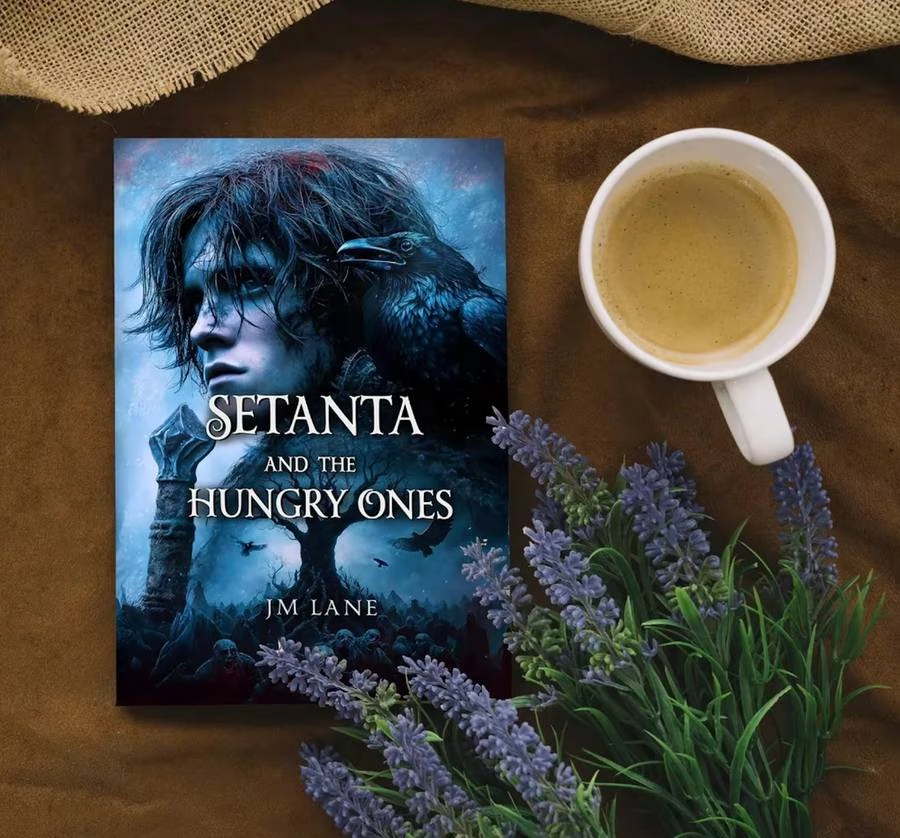
With the third book, the scale of the story grows larger. Ancient enemies return, supernatural creatures roam the countryside, and the consequences of mythological power become impossible to ignore.
Setanta now faces challenges that will shape his future and determine the role he plays in the unfolding conflict between old forces and the people who live in their shadow.
Closing Thoughts
J.M. Lane’s Setanta and the Blood King offers readers an exciting blend of dark fantasy and Irish folklore. Through strong characters, legendary creatures, and a richly imagined setting, the novel continues to build a series that celebrates the enduring power of myth and adventure.
Knowledge grows when shared. Please Pass it on!

Discover more from Paxjones
Subscribe to get the latest posts sent to your email.