
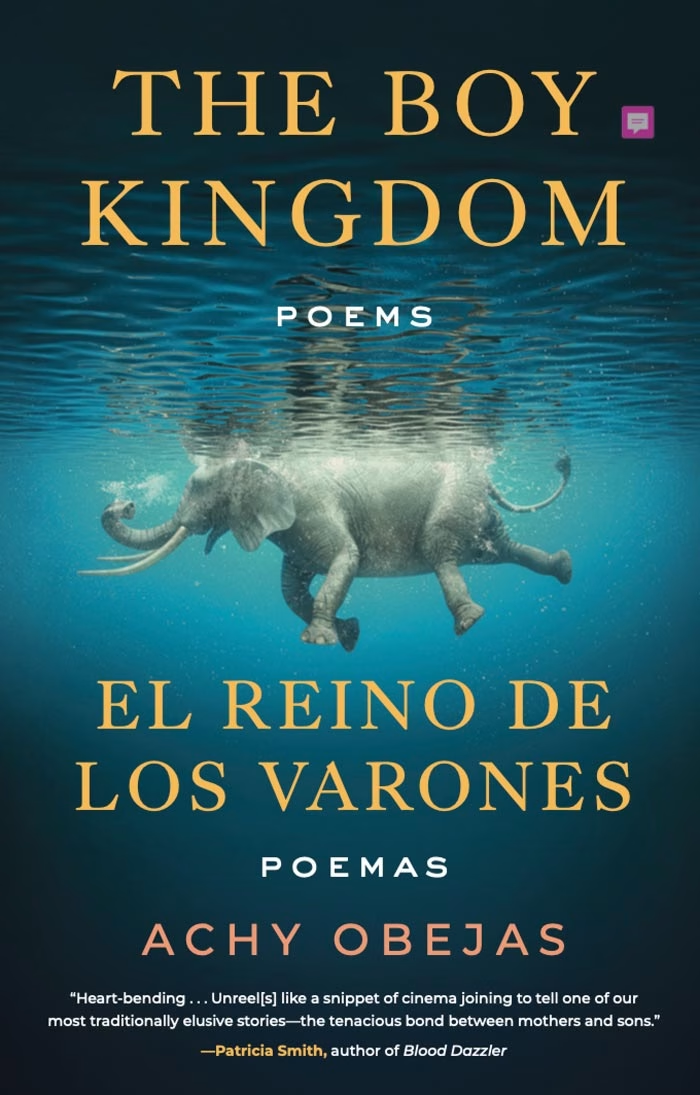
A Bilingual Journey Through Love, Language, and Boyhood
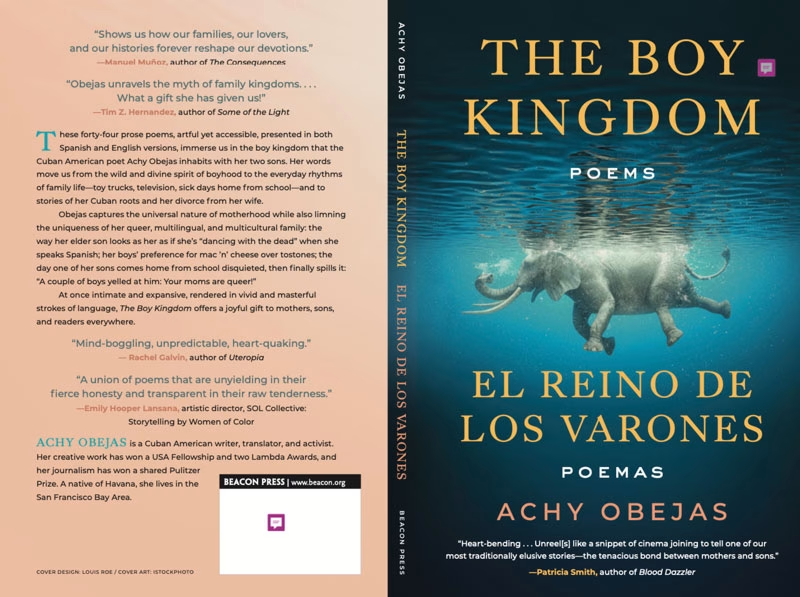
In The Boy Kingdom: Poems / El reino de los varones: Poemas, Achy Obejas opens a door into a world that feels both intimate and universal—a space where motherhood, queerness, and language weave together in shimmering threads. The collection, a bilingual gathering of 44 prose poems, flows effortlessly between English and Spanish, echoing the dualities that define the poet’s life: Cuban and American, Jewish and lesbian, mother and artist.
It’s a book that doesn’t need to shout to make an impact. Each poem, compact yet rich, captures the hum of daily life—the little rituals that make a family whole. There’s laughter over mac’n’cheese, the sound of cartoons playing too loud, the quiet worry of a sick day at home. Obejas takes these familiar moments and turns them into something lyrical, something glowing with meaning.
Inside the Kingdom of Boys
The “boy kingdom” is both literal and symbolic. It’s the world Obejas inhabits as a queer mom raising two sons, full of noise, energy, and wonder. There’s mud and mischief, endless questions, and tender goodnights. But there’s also a subtle undercurrent—an awareness of how difference moves through this space.
In one poem, her older son watches her speak Spanish and says she looks like she’s “dancing with the dead.” It’s a hauntingly beautiful image—how heritage, loss, and memory live inside language. In another, her son comes home from school shaken. “A couple of boys yelled, ‘Your moms are queer!’” he confesses. The moment stings, yet Obejas doesn’t flinch away. She lets the truth settle in, shows how love absorbs the blow, then keeps moving.
Her writing turns motherhood into art—not through grand declarations, but through truth told plainly. These poems don’t romanticize the daily grind; they honor it. They remind readers that love isn’t just felt—it’s practiced, every single day, over and over.
The Shape of a Life Told in Four Movements
The Boy Kingdom unfolds in four parts, each one deepening the reader’s understanding of who Obejas is and where she comes from. The first focuses on her sons—their growing pains, their curiosities, their world seen through her eyes. Then the poems shift outward, tracing her family roots back to Cuba, exploring the stories of her parents, and reflecting on her divorce from her wife.
What’s remarkable is how fluid it all feels. There’s no abrupt break between these worlds. Each piece flows into the next, like waves brushing the same shore. The bilingual form enhances this rhythm—Spanish carrying the soul, English carrying the pulse. Readers can feel how one language leans into the other, how both hold weight in her identity.
These prose poems may look simple on the page, but they’re layered with meaning. Obejas uses everyday language to talk about complex things: belonging, grief, love, faith. There’s humor, too—the kind that comes from being in the thick of family life. And beneath it all, there’s music, a soft backbeat of memory that keeps everything connected.
The Poet Behind the Words
Achy Obejas isn’t new to capturing the mess and magic of identity. Born in Havana and raised in the United States, she’s spent her career writing about borders—those that separate countries, and those that divide hearts. Her earlier works, like Boomerang/Bumerán and The Tower of the Antilles, explore themes of migration, language, and love. Her novel Days of Awe remains a touchstone for readers drawn to stories of heritage and faith.
She’s also an accomplished translator, lending her sharp ear and sensitivity to the works of authors such as Junot Díaz and Rita Indiana. And beyond literature, she writes a column for The New York Times, giving voice to the everyday challenges of renters on the West Coast.
Her writing has earned her a USA Artists fellowship, along with support from the NEA and the Cintas Foundation. Yet what stands out most isn’t the list of accolades—it’s her unwavering commitment to telling stories that live in between places.
For more on her work, readers can visit achyobejas.com, a space that feels as welcoming and warm as her poetry itself.
Why Readers Keep Returning to Her Words
The Boy Kingdom arrives just in time for Hispanic Heritage Month—a celebration of voices that carry history, courage, and heart. Obejas gives readers a window into queer motherhood, but she also gives them something broader: an invitation to see love as it truly is—complex, unfiltered, alive.
These poems remind us that identity isn’t something you solve. It’s something you live through—the same way you live through parenthood, or language, or memory. There’s no single truth, just the many ways love shows up, even in a bowl of macaroni or a word spoken between generations.
By the end of the book, readers may find themselves smiling, maybe even a little teary. The journey feels familiar, like flipping through a family album and finding pieces of your own life tucked between the pages.
Because The Boy Kingdom isn’t just about raising sons. It’s about raising a voice—one that sings in two languages, holds two histories, and keeps choosing tenderness, again and again.
Available now on Amazon and Goodreads, The Boy Kingdom: Poems / El reino de los varones: Poemas is a bilingual love letter to motherhood, memory, and the beauty of living between worlds.
Knowledge grows when shared. Please Pass it on!

Discover more from Paxjones
Subscribe to get the latest posts sent to your email.